
 Tiếng Việt
 Home
Home Introduction
 Announcements
 Student Essential
 Event attendance lists
Hello NTTU-ers! Did you know that, despite all being named “hepatitis,” Hepatitis viruses A, B, C, D, and E are actually 5 distinct diseases caused by 5 completely different types of viruses? The liver plays a vital role in detoxifying, metabolizing nutrients, storing energy, and producing blood-clotting factors. When attacked by viruses, liver cells suffer damage, significantly affecting the entire body’s vital functions.
To help you avoid confusing these “5 brothers,” the NTTU Student Affairs Office has compiled a super concise handbook to help you proactively protect your own health and that of your family! 

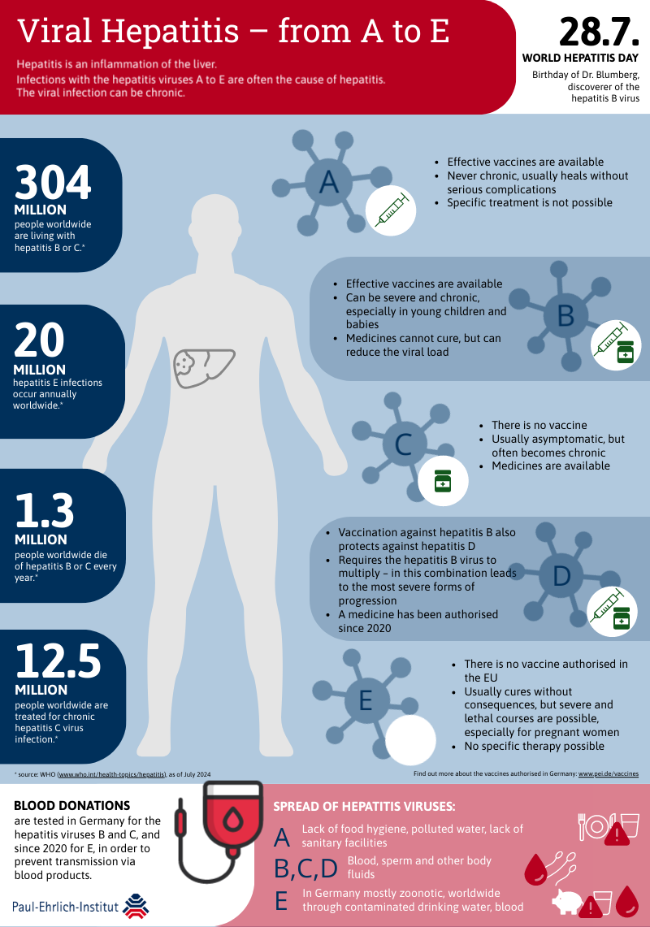
1. TRANSMISSION ROUTES: THE MOST CLEAR-CUT DIFFERENCE!

Remember this extremely simple grouping rule for transmission routes:
 DIGESTIVE TRACT TRANSMISSION GROUP (Hepatitis A and E):
 Transmitted primarily when consuming food or water contaminated with the virus. The disease is often directly linked to poor sanitation conditions or unsafe food preparation. BLOOD AND BODY FLUID TRANSMISSION GROUP (Hepatitis B, C, and D): Hepatitis B (HBV): Transmitted through contact with infected blood, body fluids (such as semen), unprotected sexual contact, from mother to child during childbirth, or from family members to young children. Hepatitis C (HCV): Transmitted mainly through direct contact with infected blood, commonly occurring through shared needles or procedures such as tattooing, body piercing, and beauty treatments using improperly sterilized equipment. Hepatitis D (HDV): This “special” virus can only cause disease in the presence of the Hepatitis B virus (meaning only people infected with Hepatitis B are at risk of contracting Hepatitis D). In cases of co-infection or superinfection, liver damage becomes significantly more severe and the risk of complications rises dramatically.
 DISPELLING MYTHS FOR PATIENTS (No more baseless fear!):
Many worry that simply sharing meals or having normal contact with someone infected with Hepatitis B or C will transmit the disease. Scientific facts have proven otherwise: Hepatitis B and C DO NOT spread through handshakes, hugs, coughing, sneezing, sharing meals, or using the same eating utensils. Let’s work together to eliminate unnecessary stigma against patients!
2. SYMPTOMS & PROGRESSION: A SILENT YET DANGEROUS ENEMY

Regarding disease progression:
 Hepatitis A and E: Most cases cause acute (short-term) illness only, and patients recover completely. However, Hepatitis E can progress very severely in pregnant women or people with pre-existing liver disease. Hepatitis B and C: Particularly concerning because they easily progress to chronic conditions (lasting silently for years). If left undetected and unmanaged, they increase the risk of cirrhosis, liver failure, and liver cancer.
Regarding symptoms: What makes this disease frightening is that many infected individuals display no clear symptoms and appear completely healthy. By the time symptoms like prolonged fatigue, fever, jaundice (yellowing of skin/eyes), dark urine, nausea, pain in the liver area (or diarrhea – specifically for Hepatitis A) appear, significant liver damage may already have occurred.
3. PREVENTIVE “SHIELD” FOR NTTU-ERS

To proactively protect your liver, the Ministry of Health and the CDC recommend following these “golden” principles immediately:
 Get fully vaccinated: Effective vaccines are currently available for Hepatitis A and Hepatitis B. Importantly, receiving full Hepatitis B vaccination is also the key way to protect yourself against Hepatitis D. (Note: There is currently no vaccine for Hepatitis C).
 Eat cooked food, drink boiled water, and use clean water: Washing hands frequently with soap before eating and after using the restroom is a simple yet extremely effective way to prevent Hepatitis A and E.
 Practice safe personal grooming and beauty care: Only undergo tattooing, body piercing, or beauty services at reputable facilities that adhere strictly to equipment sterilization standards. Never share needles, razors, toothbrushes, or items that might carry blood contamination risks.
 Get screening blood tests: The CDC recommends that all adults get screened for Hepatitis B and Hepatitis C at least once in their lifetime because the infection often produces no symptoms.
 Good news regarding treatment: If you unfortunately contract Hepatitis C, do not panic! Oral medications (pills) are now available that can completely cure over 95% of patients in just 8–12 weeks of treatment, usually with no side effects.
Correct knowledge is the very first “shield” to safeguard your health, your family, and our NTTU community. Like, save, and share this meaningful message with your friends today!

Wishing all NTTU-ers a healthy liver to confidently learn and enjoy a vibrant youth!