
 Tiếng Việt
 Home
Home Introduction
 Announcements
 Student Essential
 Event attendance lists
NTTU – HPV is one of the most common sexually transmitted viruses and can cause many serious diseases, especially cervical cancer. However, through vaccination, regular screening, and modern testing techniques, the risk of HPV infection and related complications can be prevented, detected early, and effectively controlled.
HPV (Human Papillomavirus) is a very common group of viruses with over 100 identified types. It appears that mild cases of HPV infection cause no symptoms, and the immune system can fight them off. However, certain high-risk strains (HPV 16, 18, 31, 33, 35, etc.) are considered driving factors for many serious pathologies. Particularly, HPV 16 and 18 are dangerous agents causing cervical cancer, anal cancer, oropharyngeal cancer, and several other genital cancers.
According to the World Health Organization (WHO), overall, more than 90% of cervical cancers are associated with high-risk HPV and it is recorded as one of the most common cancers in women globally.
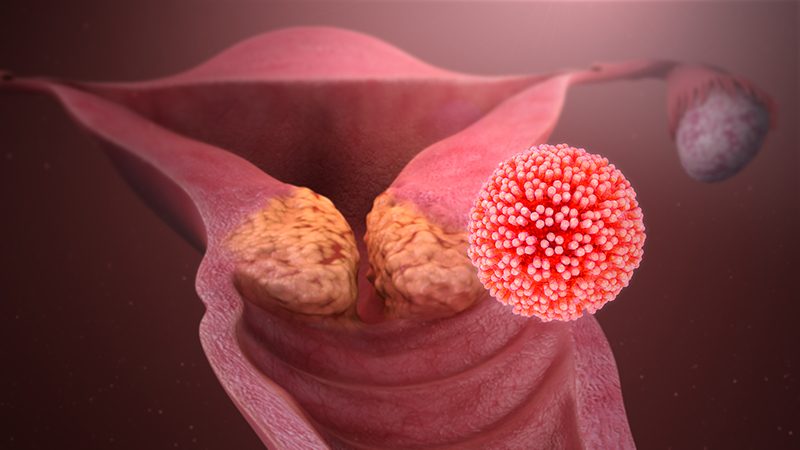
HPV virus is the main cause of cervical cancer
Not only occurring in women, but it is also worth noting that HPV is also found in men. Men can also contract the virus, become a source of transmission, or even experience HPV-related medical conditions. HPV is primarily transmitted through skin-to-mucosal contact during sexual activity. The virus can spread even when the infected person has absolutely no symptoms of the disease.
Some factors that increase the risk of HPV infection include: Unsafe sex, having multiple sexual partners, weakened immune systems, failure to undergo regular screening, etc. Because it does not cause early-stage symptoms, HPV is considered a “silent threat” to reproductive health.
The majority of people infected with HPV have no clear symptoms. However, some people may experience: genital warts in the genital or anal area, itching or discomfort in the intimate area, abnormal bleeding after sexual activity, abnormal vaginal discharge, prolonged pelvic pain (in the late stages of cervical lesions), etc.
Note that the above symptoms are not specific to HPV. To determine the exact cause, patients need to undergo appropriate tests
Cervical cancer is one of the few cancers that can be effectively prevented through vaccination and regular screening. According to WHO, HPV type 16 and HPV type 18 are two high-risk strains responsible for an estimated 70% of cervical cancer cases worldwide. To progress into cervical cancer, it typically takes 10–20 years after contracting an HPV infection. This is precisely the “golden window” for early detection and timely intervention.
HPV tests
In screening and preventing cervical cancer, the Department of Medical Laboratory Technology plays an exceptionally important role:
- HPV DNA Test: This is a method to detect the genetic material of high-risk HPV viruses. Advantages: High sensitivity, early risk detection, supports assessment of cervical cancer risk.
- Cervical Cytology Test (Pap smear): Helps record abnormal changes in cervical cells before they progress to cancer.

Illustration of the cervical cell sampling process to perform a Pap smear (Pap test)
- Thinprep Test: An improved cervical cell smear test compared to the Pap smear, where cells are processed automatically from extraction to smearing on glass slides.
The development of artificial intelligence (AI) is gradually becoming an effective support tool, opening up new opportunities in the fields of testing and preventive medicine. Currently, AI has prominent advantages such as: reading and analyzing cytological preparations, identifying suspicious lesions on microscopic images, analyzing large-scale test data, supporting disease risk assessment, very fast result turnaround times, and reducing subjective elements from medical staff.
The combination of AI and modern testing techniques is expected to enhance the effectiveness of early cervical cancer detection in the future, although doctors will still play the decisive role in directing treatment.
Preventing HPV infection needs to be carried out through synchronized measures, including: vaccination at the appropriate age, safe sexual practices, regular gynecological checkups, and compliance with screening programs guided by medical personnel. Simultaneously, maintaining a healthy lifestyle with a scientific diet, regular exercise, and proper rest also contributes to strengthening the immune system, thereby helping to reduce the risk of HPV infection and related complications.
HPV is a common virus, but it can be completely prevented and effectively controlled. Do not let complacency become a barrier to your own health. Getting fully vaccinated, undergoing regular screening tests, and proactively updating health knowledge are important steps to help reduce the risk of cervical cancer and protect the community.
References
- World Health Organization. (2024). Human papillomavirus and cancer. Retrieved from https://www.who.int/news-room/fact-sheets/detail/human-papilloma-virus-and-cancer, 01 July 2026
- World Health Organization. (2025). Cervical cancer. Retrieved from https://www.who.int/news-room/fact-sheets/detail/cervical-cancer, 01 July 2026
- Vietnam Association of Preventive Medicine and MSD. (2025). HPV Lây Qua Đường Nào? Lối Sống Giúp Phòng Vệ Đúng Cách. Retrieved from https://hpv.vn/hpv-lay-qua-duong-gi-20250917170410522.html, 01 July 2026
- Mai Moc Thao. (2023). Virus HPV là gì? Nguyên nhân, dấu hiệu và phòng ngừa lây nhiễm. VNVC. Retrieved from https://vnvc.vn/virus-hpv/, 01 July 2026
- Thuy Duong. (2025). Sàng lọc ung thư cổ tử cung bằng trí tuệ nhân tạo: 5 phút đã có kết quả. Tuổi trẻ – Cơ quan báo và phát thanh, truyền hình TP.HCM. Retrieved from https://tuoitre.vn/sang-loc-ung-thu-co-tu-cung-bang-tri-tue-nhan-tao-5-phut-da-co-ket-qua-20251220140603405.htm, 01 July 2026
Pham Bich Hien – Faculty of Medical Laboratory Technology (compiled)