
 Tiếng Việt
 Home
Home Introduction
 Announcements
 Student Essential
 Event attendance lists
A pharmaceutical product must go through many stages before being placed on the market, from receiving raw materials, production, and in-process control to testing, packaging, and storage. During an experiential visit to Tipharco Pharmaceutical Joint Stock Company, students majoring in Medicinal Chemistry from the Faculty of Applied Sciences and Technology at Nguyen Tat Thanh University directly traced this process chain, thereby gaining a clearer understanding of how specialized knowledge is applied in a production environment.
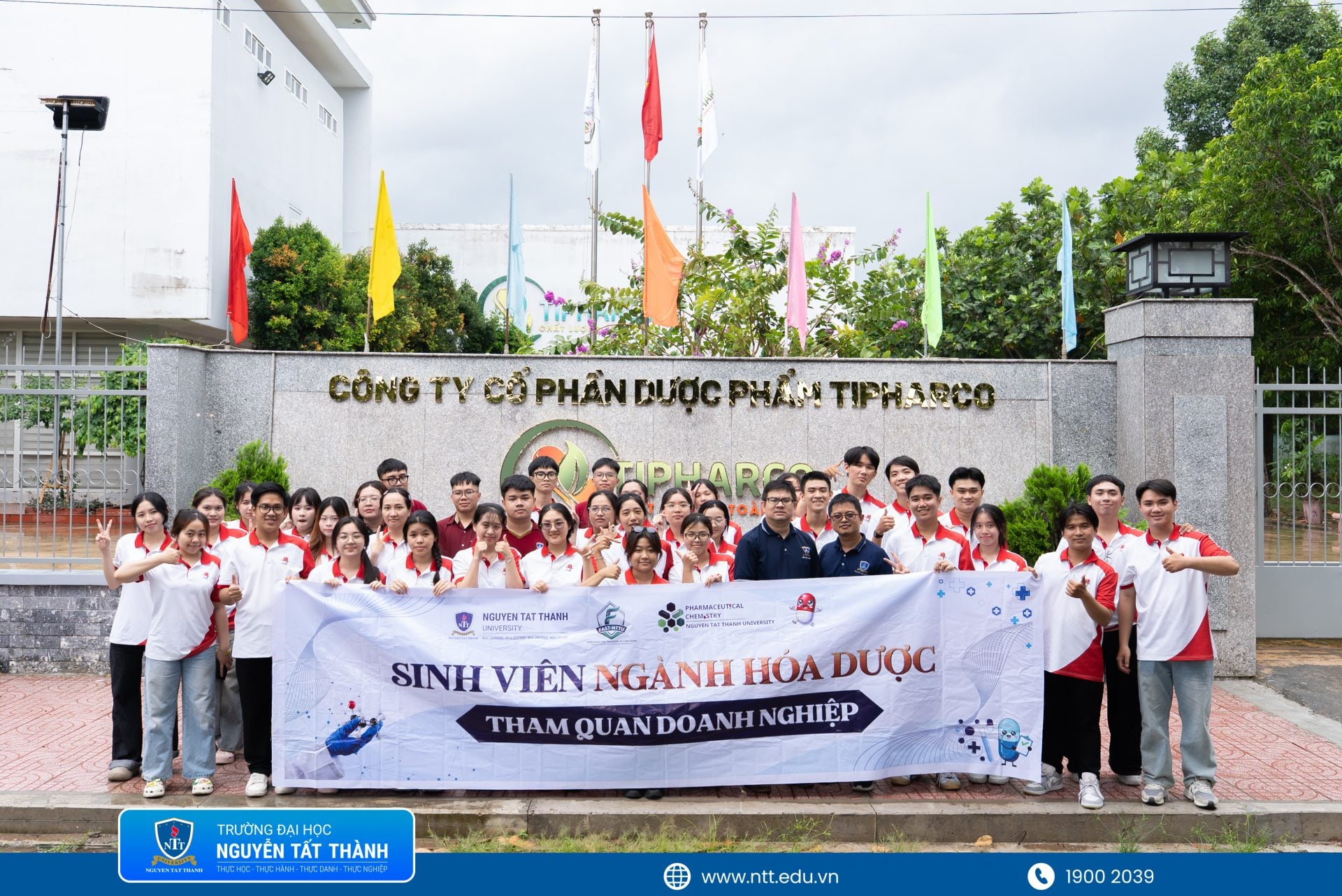
Accompanying 40 Medicinal Chemistry students from the 2024 and 2025 cohorts to Tipharco were Dr. Nguyen Quoc Khuong Anh – Head of the Department of Medicinal Chemistry, and Dr. Pham Le Kim Hoang – lecturer at the Faculty of Applied Sciences and Technology.
Moving beyond the topics encountered in lecture halls, students entered a different learning space where personnel, raw materials, equipment, and specialized departments operate within a unified system. Each area of the factory not only revealed a slice of the manufacturing process, but also helped students better picture the work behind every pharmaceutical product.
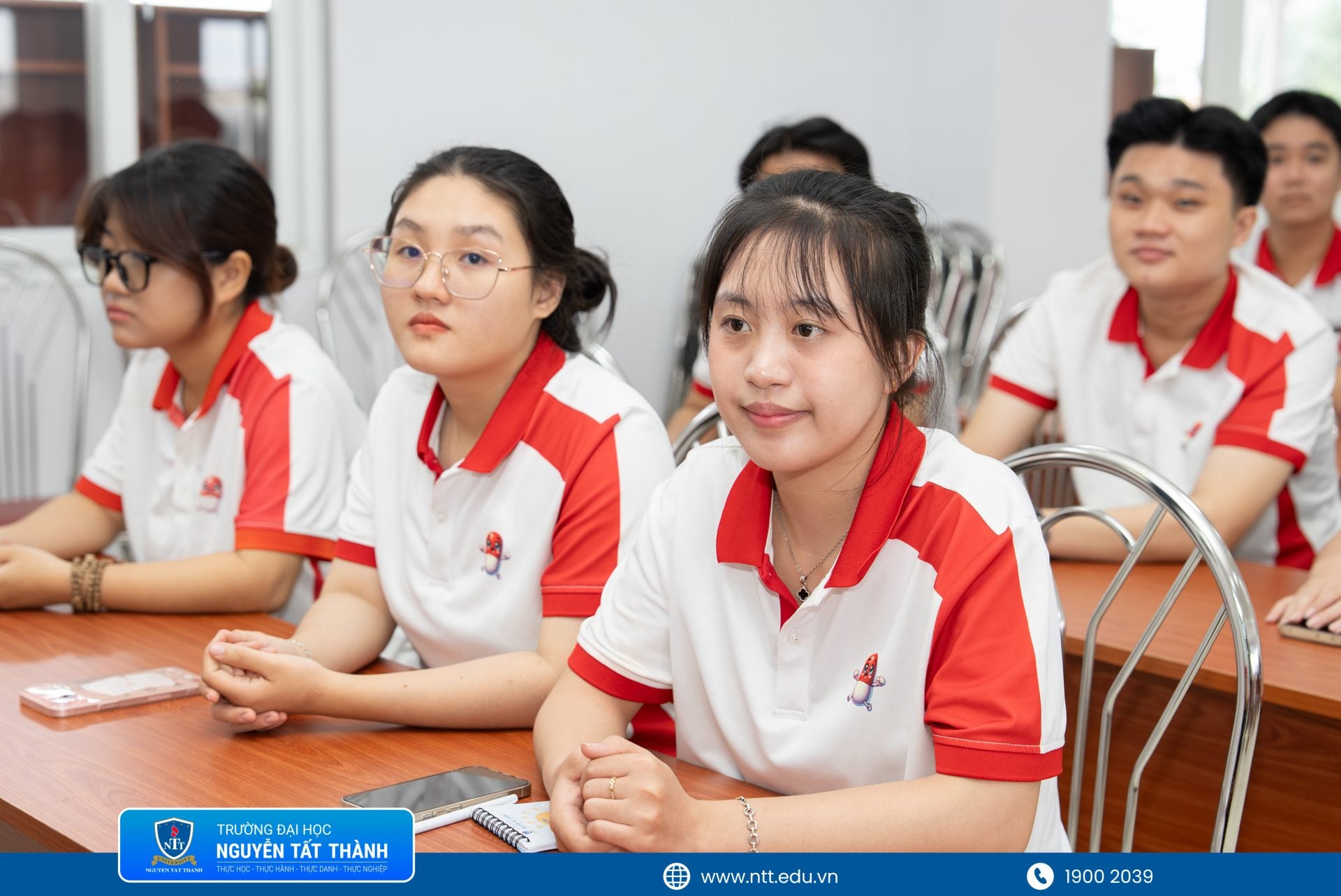
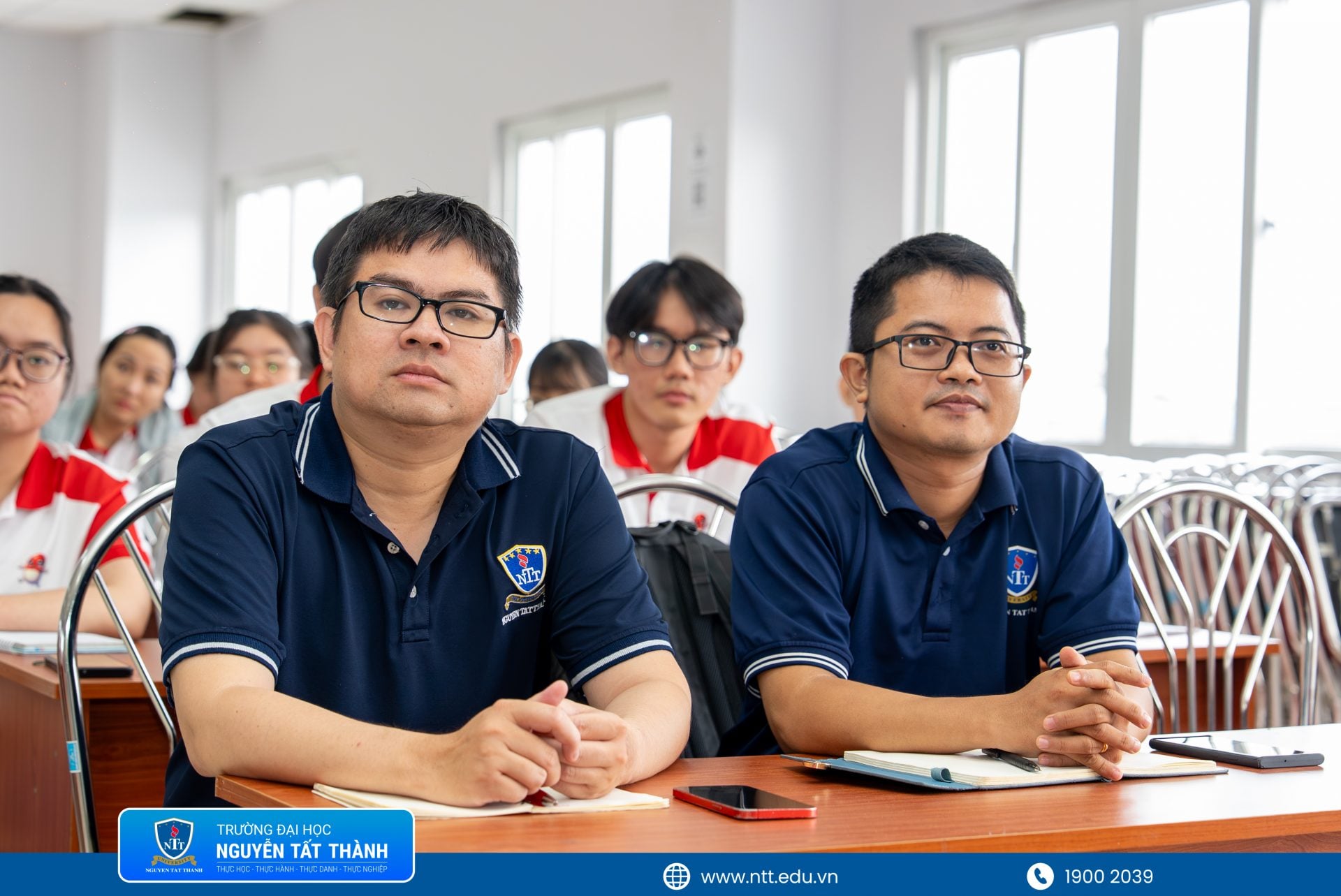
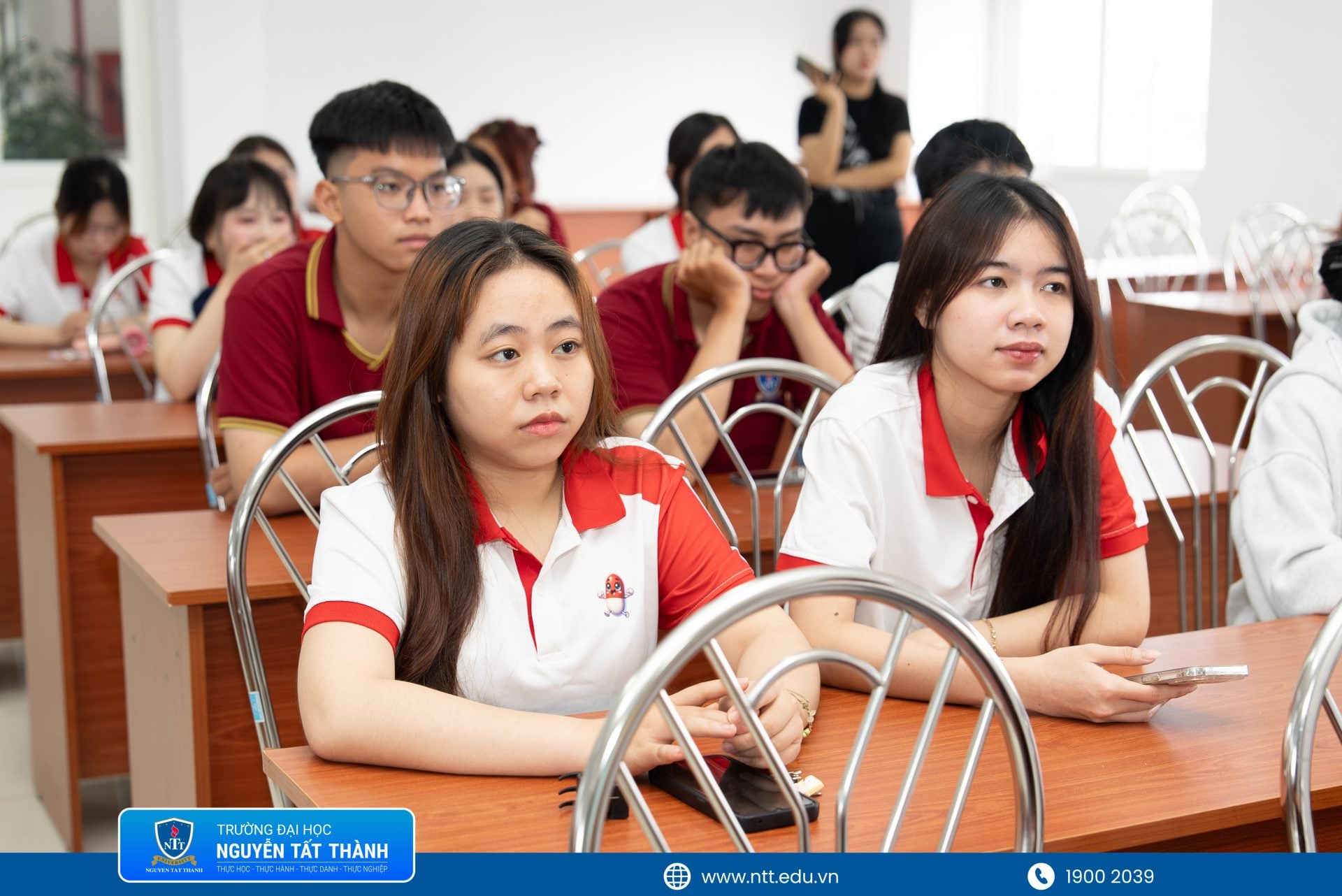
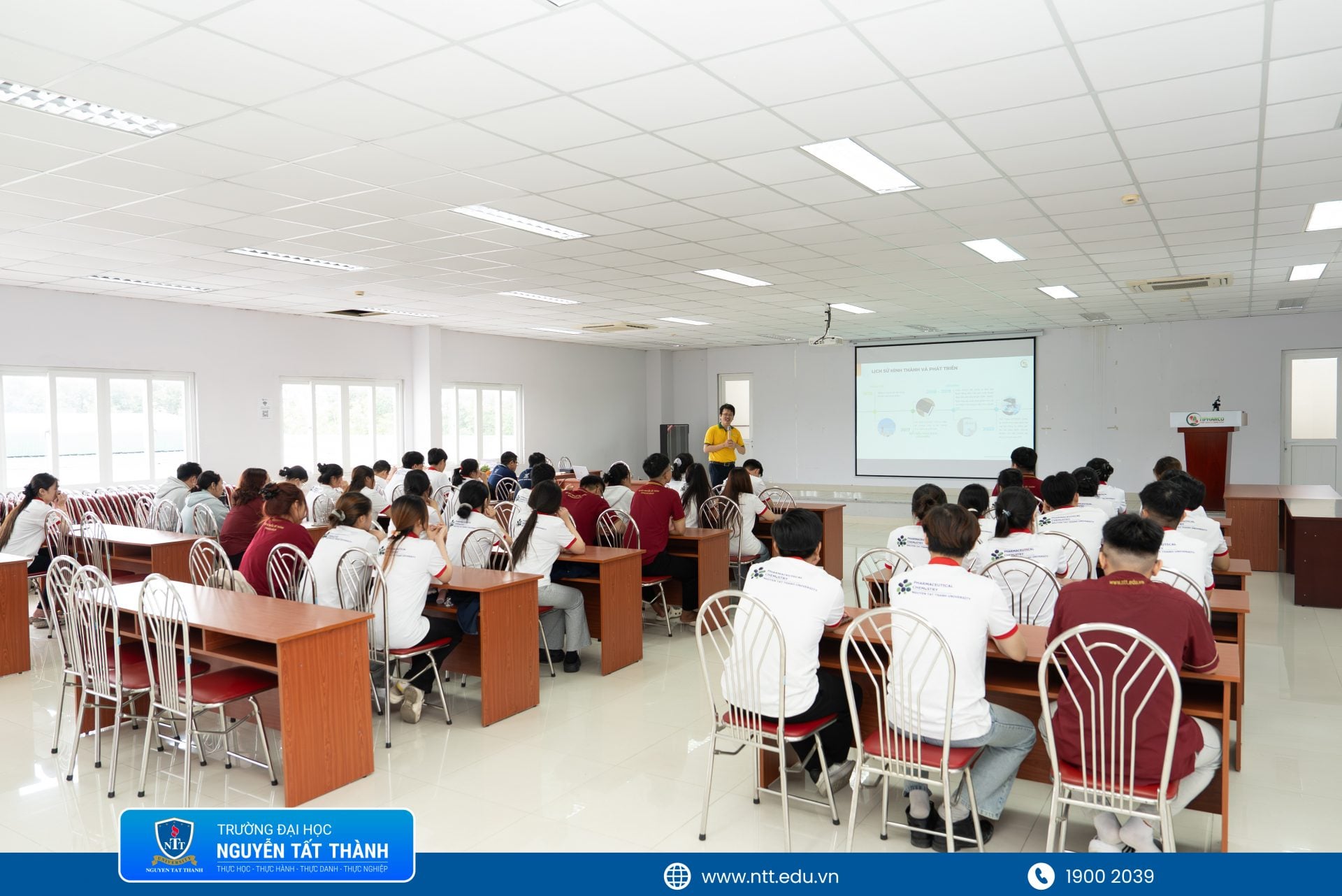
Medicinal Chemistry students along with Dr. Nguyen Quoc Khuong Anh – Head of the Department of Medicinal Chemistry, and Dr. Pham Le Kim Hoang – lecturer at the Faculty of Applied Sciences and Technology, on their experiential visit to Tipharco Pharmaceutical Joint Stock Company. The activity contributed to expanding NTTU’s training environment from lecture halls and laboratories to real-world production settings.
Tracing a pharmaceutical product from raw materials to market distribution
Before touring the functional areas, students were introduced by Tipharco representatives to company operations, plant organizational structure, product lines, and requirements to be followed in the production zone. From that overview, students began exploring the roles and coordination between production, quality control, quality assurance, warehousing, and support units. Each department performs a distinct duty, yet product quality is maintained only when all links in the chain operate synchronously.
The journey of a pharmaceutical product unfolds from input raw materials, manufacturing or formulation, in-process control, and quality testing to packaging, storage, and market distribution. Subjects previously encountered across different course modules were now situated within a continuous chain, where the outcome of an earlier stage directly impacts the next.
Through careful observation, students realized that pharmaceutical quality is not merely checked once the finished product is completed, but must be controlled continuously from raw materials through production to packaging and storage. This demands precision, discipline, and a sense of responsibility at every stage.
This perspective brought classroom requirements and practical lab sessions much closer to real-world work. Rigor in procedures, the ability to monitor workflows, and adherence to regulations were no longer seen merely as steps to complete a class assignment, but as essential foundations for anyone working in the pharmaceutical sector.
Students had been briefed in advance regarding learning objectives, safety requirements, information confidentiality, and professional conduct when working with enterprise partners. They also prepared field-related questions to actively engage during the visit. Consequently, observations at the factory served as practical data for learners to benchmark against existing knowledge and further expand their professional understanding.
During the interactive session, Tipharco representatives discussed plant operations, manufacturing workflows, quality control, and career opportunities in the pharmaceutical field with the students. Starting from how a product is made, students went on to learn about specialized roles behind each stage and expectations for new hires.
Student Nguyen Hoang Nam shared: “What impressed me most was that quality isn’t checked only after the product is finished. Every single stage has its own control requirements. After this trip, I better understand why precision during our practical sessions at school is so vital for our future careers.”
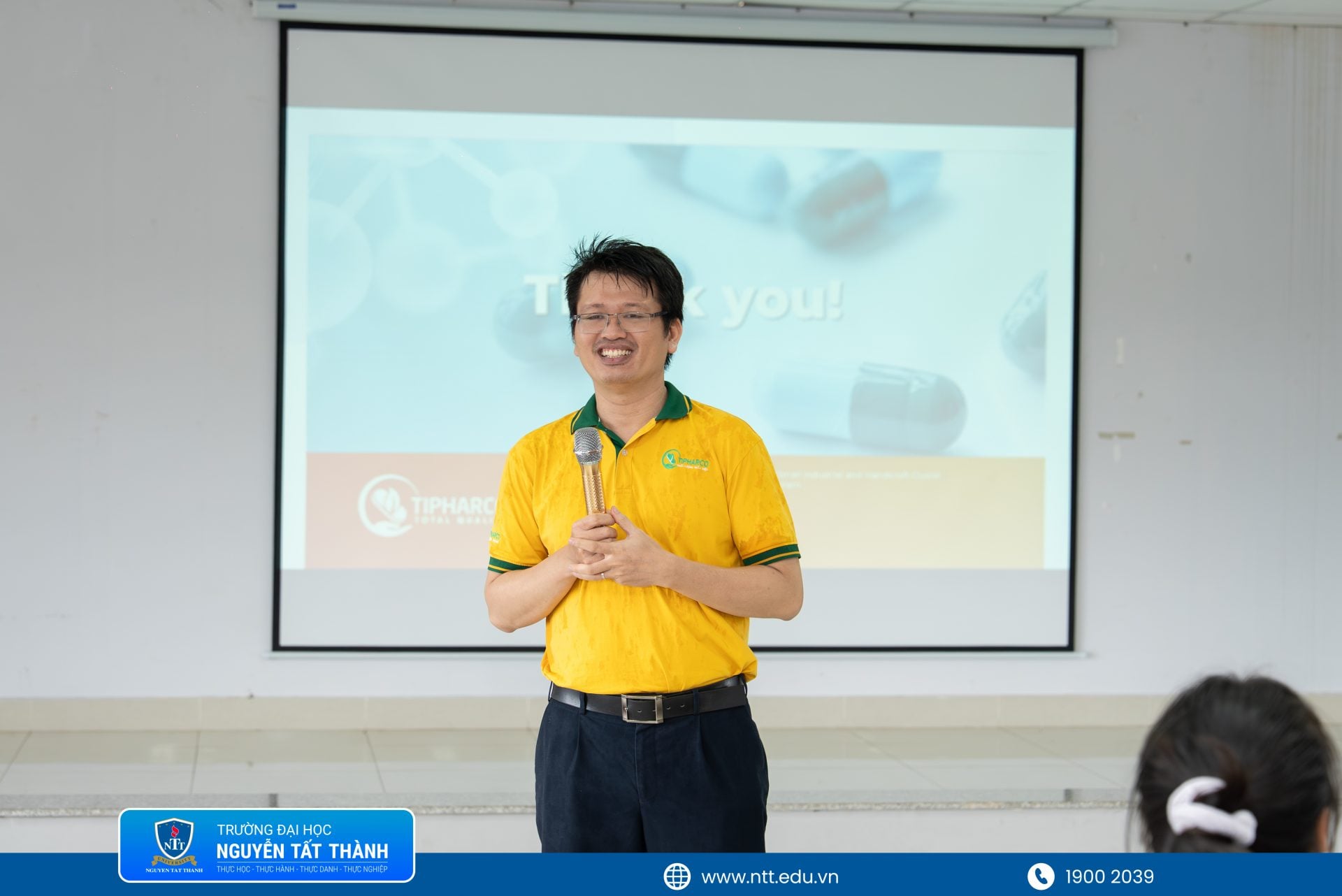
Tipharco representatives introduce NTTU Medicinal Chemistry students to the factory organizational structure, product categories, and compliance requirements in a pharmaceutical manufacturing environment.
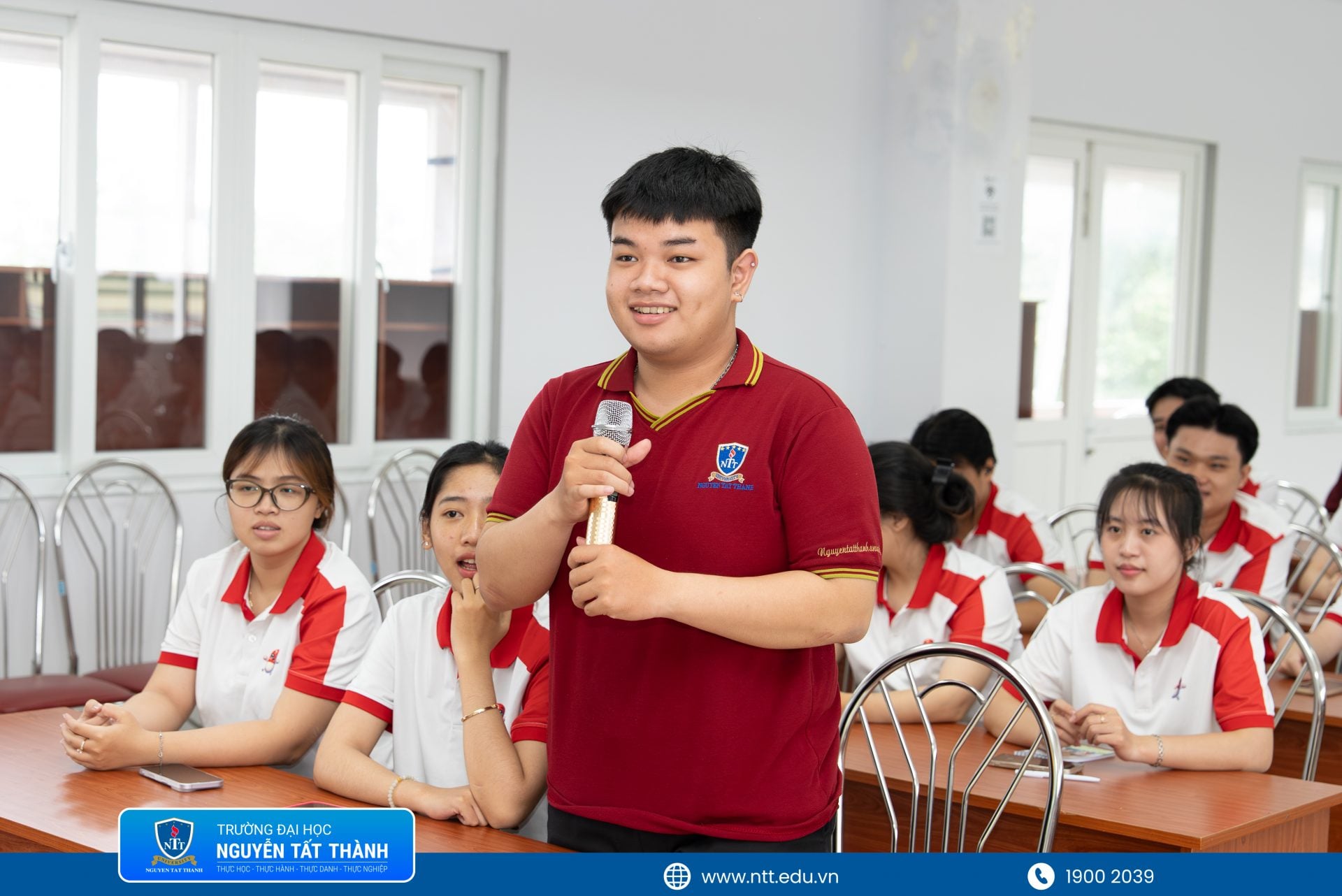
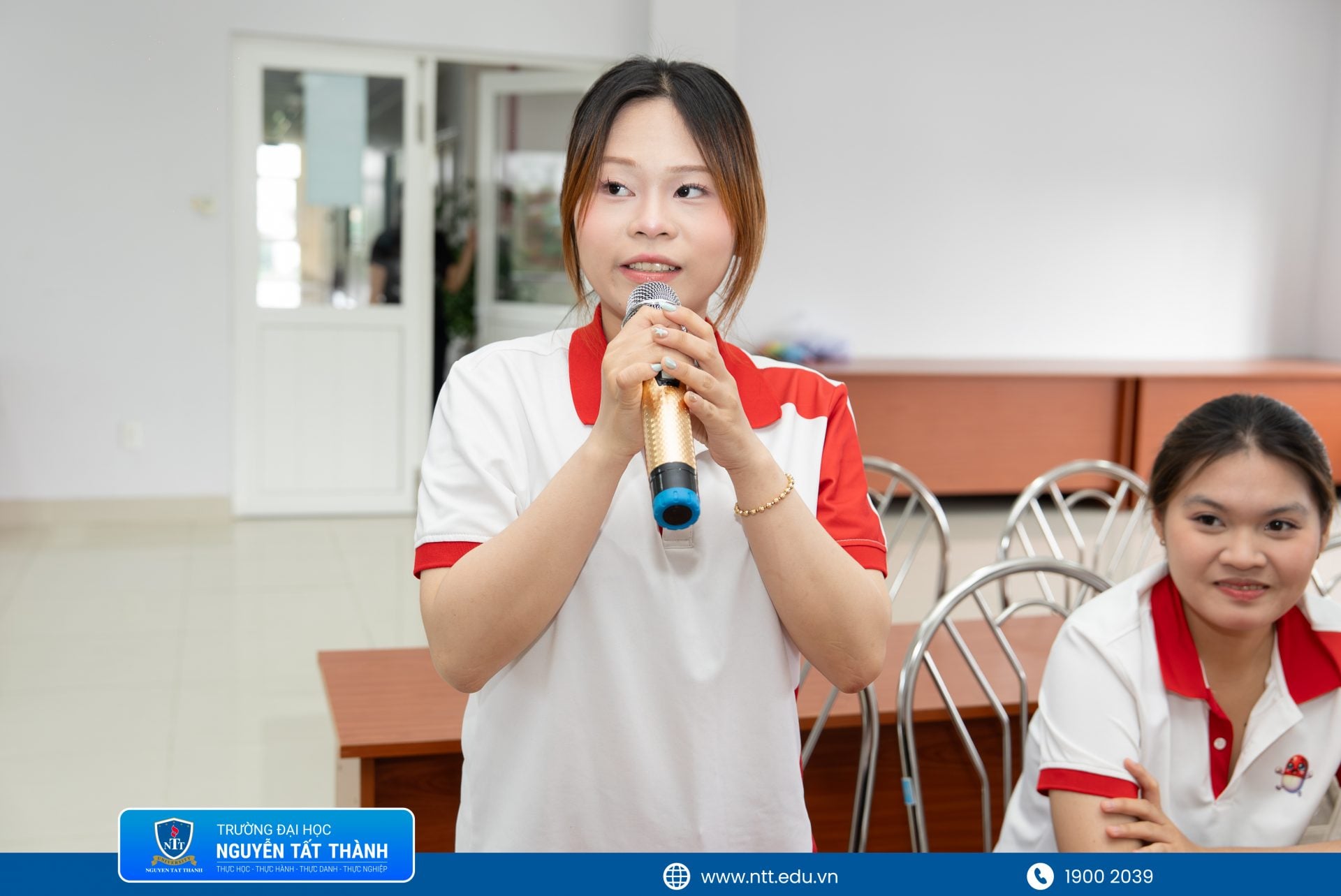
The Q&A session with the business helped NTTU Medicinal Chemistry students broaden their professional knowledge, identify recruitment requirements, and proactively prepare for their post-graduation career path.
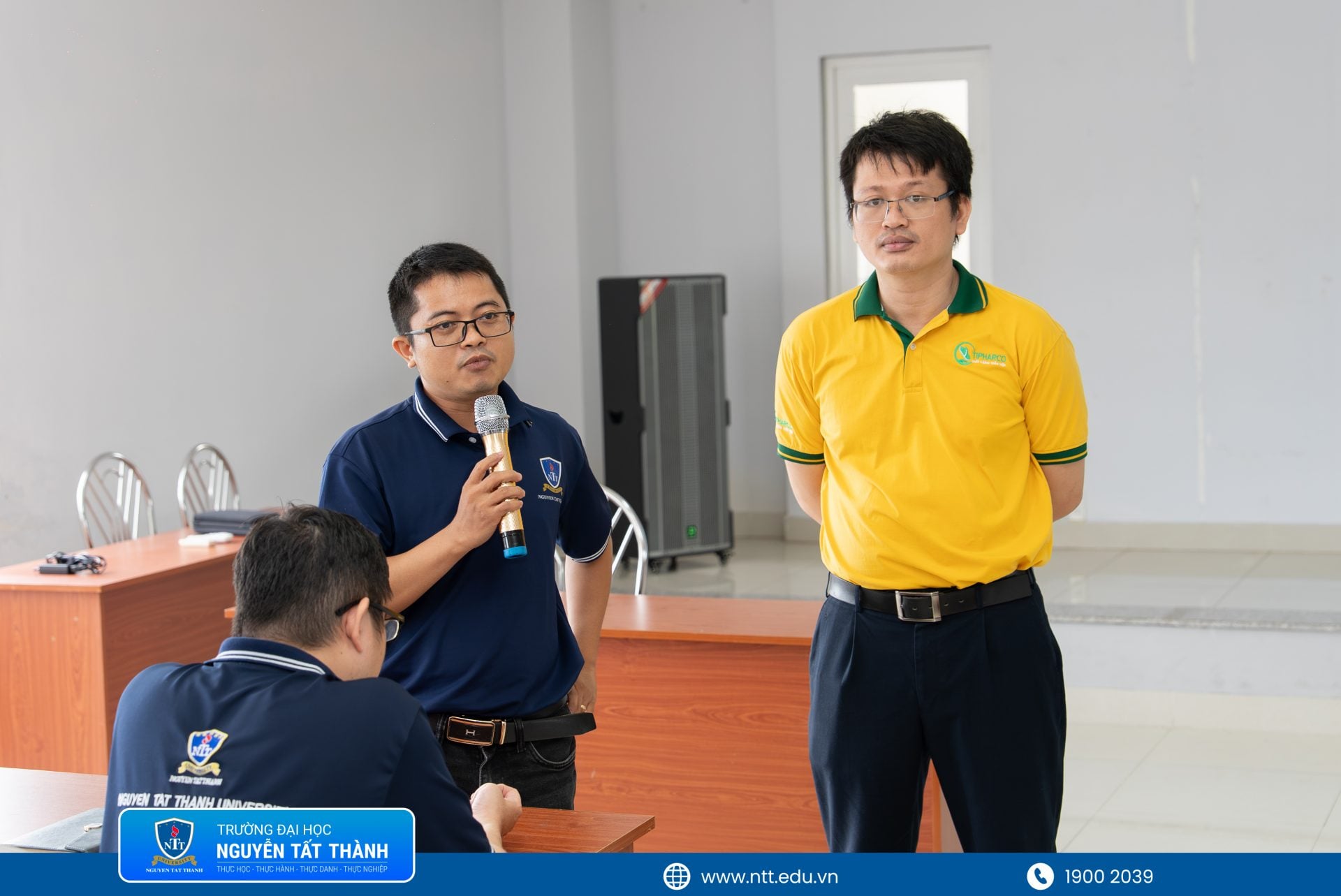
Representatives from the Faculty of Applied Sciences and Technology expressed gratitude to Tipharco Pharmaceutical Joint Stock Company for enabling NTTU Medicinal Chemistry students to access a real-world production environment, while emphasizing the role of corporate connections in helping learners consolidate knowledge, enhance technical competence, and proactively prepare for their professional journeys.
Practical experience – a competitive edge for NTTU Medicinal Chemistry graduates
For Medicinal Chemistry students, advantages when entering the job market stem not only from accumulated knowledge, but also from practical competence, analytical thinking, meticulous work ethics, and the ability to adapt to a production setting. Early exposure to enterprises helps learners clearly picture where their knowledge will be applied, which skills need honing, and what demands are set by real-world jobs.
The visit to Tipharco thus went beyond helping students understand pharmaceutical manufacturing processes. From the stages observed and issues shared by the company, learners gained further grounds to assess their own capabilities, choose development paths, and refine their study plans for the coming years.
Student Tran Thao Nhi shared: “After exploring various specialized positions at the plant, I can picture more clearly which career path suits me. I also realized the need to invest more in practical skills, the ability to follow SOPs, and professional work ethics starting right from my time at university.”
At the Faculty of Applied Sciences and Technology, the Medicinal Chemistry training program connects theoretical knowledge, laboratory practice, and applied industry environments. The guidance of faculty members ensures that processes observed at Tipharco continue to serve as real-world case material for students to discuss, analyze, and relate back to specialized course modules upon returning to campus.
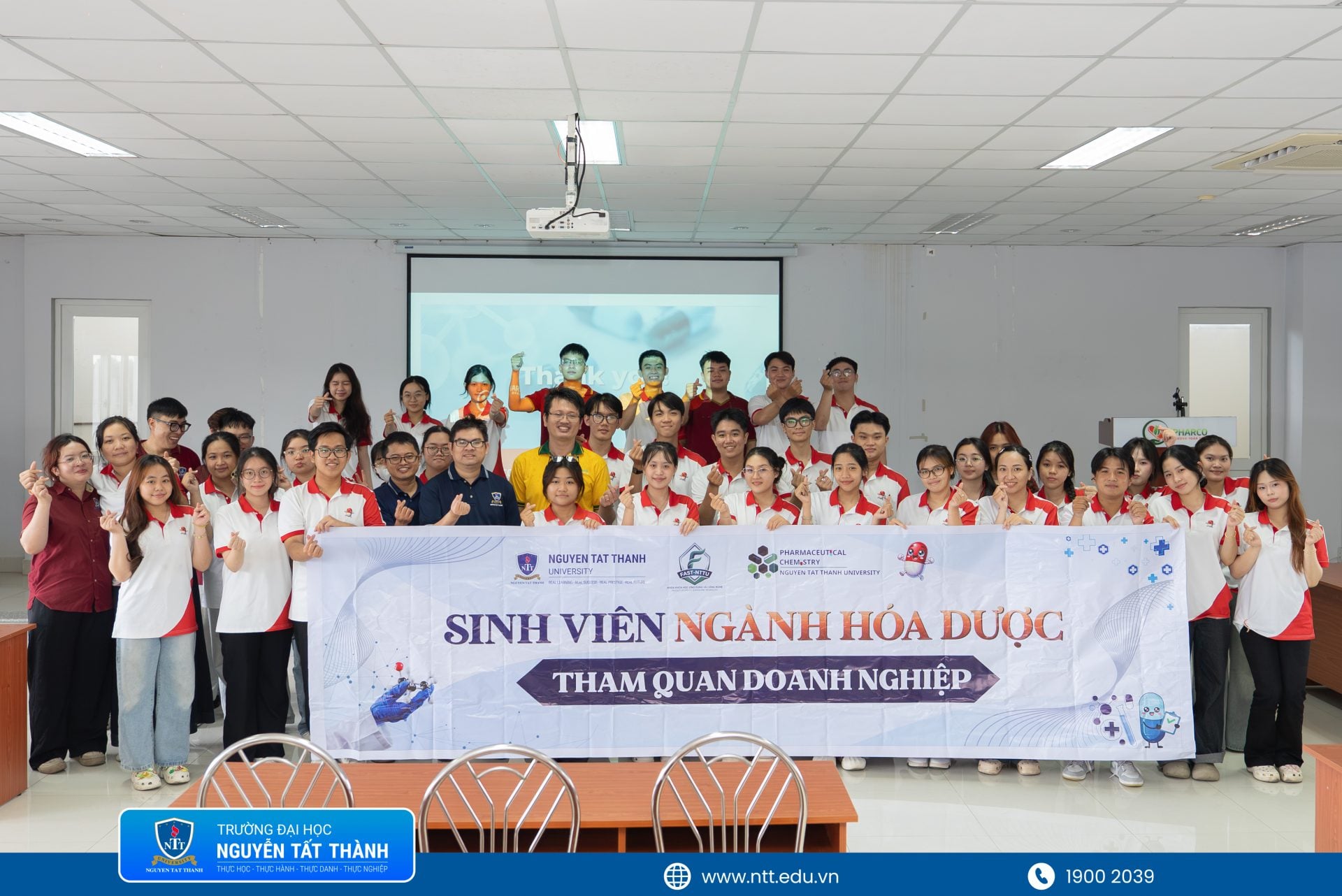
The field experience at Tipharco Pharmaceutical Joint Stock Company enabled Medicinal Chemistry students from the Faculty of Applied Sciences and Technology at Nguyen Tat Thanh University to directly study pharmaceutical production, testing, and quality assurance processes; thereby bridging specialized academic knowledge with the corporate environment, broadening career perspectives, and step-by-step consolidating competence aligned with NTTU’s practice-oriented educational direction.
Through corporate integration activities, learners not only learn the steps involved in bringing a product to life, but also grasp the role of each position, professional conduct requirements, and responsibilities behind every stage. This forms the basis for students to transition from passive learning to proactively building competencies suited to their chosen field.
On a broader scope, involving businesses in the learning process reflects Nguyen Tat Thanh University’s commitment to practice-oriented education aligned with industry demands. Students engage with production environments while still in university, becoming familiar with professional standards and gaining opportunities to define career trajectories before entering the job market.
A day at Tipharco made the journey of creating a pharmaceutical product far more tangible for NTTU Medicinal Chemistry students. Behind every product lies a system of multiple stages, specialized positions, and strict quality requirements. By proactively bringing learners closer to industry partners, the Faculty of Applied Sciences and Technology not only expands professional experiences but also helps students systematically build competence and establish a competitive edge for their post-graduation careers.
By: Cam Thach
Photos: Media Team