
 Tiếng Việt
 Home
Home Introduction
 Announcements
 Student Essential
 Event attendance lists
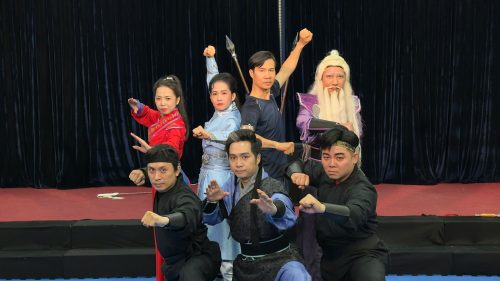
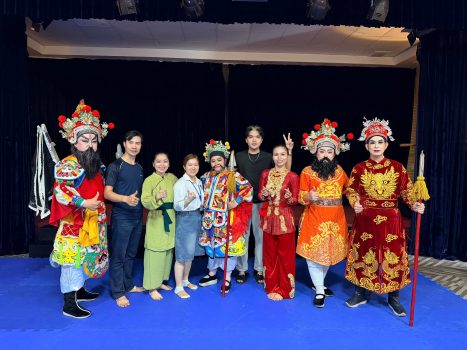
On the morning of September 7, 2026, at 9:00 AM, K25 students from the Faculty of Performing Arts told historical stories through body language during their course final examination. Without needing excessive dialogue, they utilized every gaze, footstep, posture, and physical movement to retell emotional historical stories.
The Physical Expression 3 course was directly taught and guided by MSc. Nguyen Duc Thanh – Course Lecturer. The exam session was attended and observed by Class Advisor MSc. Nguyen Le Thanh Hai – Lecturer at the Faculty of Performing Arts, along with several guest attendees.
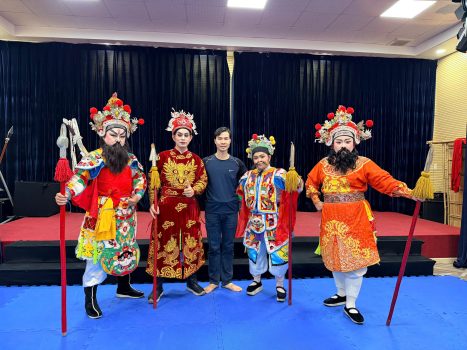
When the body becomes the character’s voice
For stage, film, and television actors, physical expression is not merely movement capability, but an essential artistic language. A posture, step, glance, breathing rhythm, or subtle hand motion can convey a character’s personality, circumstances, and inner world to the audience.
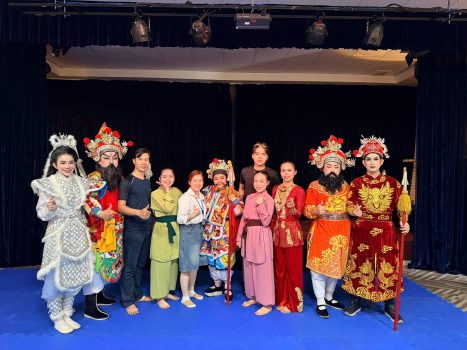
During the Physical Expression 3 exam session, students selected prominent historical figures to build their performances. Each presentation formed a distinct story, shaped through research into the historical context, personality, status, and key milestones of the character’s life.
Without relying entirely on dialogue, students used their bodies as the primary storytelling vehicle. Powerful movements evoked willpower, fighting spirit, and aspiration; whereas a momentary pause, slow step, or prolonged glance conveyed loneliness, internal conflict, and unspoken feelings.
Through each performance, historical figures emerged not only in their external appearance, but were also explored deep within their psychological dimensions. Each student had to discover a unique “physical key” to naturally and convincingly bridge the character’s actions, emotions, and mindsets.
From historical pages to stage stories
To complete the examination, students did not simply memorize background material or replicate familiar poses. They had to place themselves directly into the characters’ shoes, imagining the choices, losses, aspirations, and pain those figures experienced.
From there, students structured a series of physical actions with clear situations, emotional arcs, and distinct transformations throughout the performance. Some acts focused on showcasing heroism and unyielding spirit in the face of historical upheavals; others explored very mundane moments when characters confronted loneliness, loss, or difficult choices.
Each performance brought its own color, highlighting the unique perceptions and creative capabilities of individual students. At times, the stage felt intense and fast-paced; at others, it settled into thoughtful, silent pauses. This very diversity created a compelling atmosphere for the examination.
Learning to master body and emotion
Under the guidance of MSc. Nguyen Duc Thanh, students trained in body control, spatial management, and coordinating movements with emotions. They learned to recognize the expressive potential of each body part, while taking greater initiative in building stage action.
During their evaluations, students applied multiple skills including balance, center of gravity control, tempo transitions, body shaping, spatial responsiveness, and maintaining character immersion throughout their routines.
Crucially, every movement needed to be not only visually aesthetic, but also purposeful and born from the character’s genuine emotions. A movement truly touches the audience only when backed by a clear objective, context, and internal life.
Thus, the examination evaluated not merely movement skills, but also demonstrated students’ depth of character comprehension, action organization, and stage presence.
The unique shades of K25 students
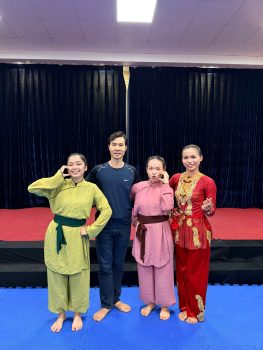
The session saw participation from regular full-time undergraduate K25 students alongside articulated/transfer undergraduate K25 students majoring in Stage, Film, and Television Acting.
The presence of both student groups brought intriguing approaches. Regular students demonstrated youthful energy, boldly experimenting with fresh movement forms and poses. Meanwhile, articulated students leveraged real-world experience to deliver mature, deeper character portrayals.
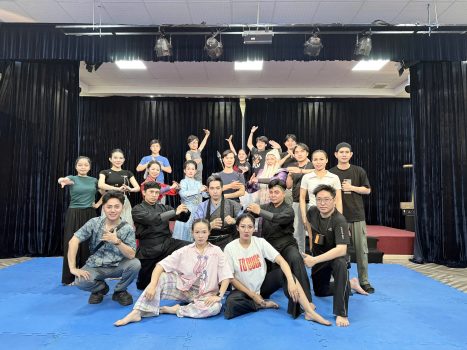
Despite differing backgrounds and learning journeys, all students demonstrated immense dedication during preparation. From character selection and concept development to rehearsal and spatial layout, each performance reflected strong effort and a drive for continuous self-improvement.
The exam was also an opportunity for students to observe, learn from one another, and realize that the same character or story can be told in many different ways.
Physicality – a crucial foundation for actors
The attendance of MSc. Nguyen Le Thanh Hai, department faculty members, and guests fostered a professional environment while offering practical expert feedback for students.
Following each performance, students had the opportunity to review their strengths and areas for growth, particularly regarding rhythm control, emotional state maintenance, and building continuity between physical actions.
Before a character speaks, the audience can already sense their demeanor and mood through posture, stride, breathing, and presence on stage. Thus, physical training remains an indispensable core of actor training, helping learners enhance character embodiment, master their roles, and convey feelings that words sometimes cannot fully articulate.
The Physical Expression 3 final examination marked not only an academic evaluation, but also a milestone in the professional growth of K25 students. Through historical narratives told via movement, they progressively discovered the power of body language and gained a deeper understanding of an actor’s responsibility when bringing a persona to the public.
Every pose, transition, and pause on stage formed a narrative element. There, history was not merely recounted in words, but awakened through the bodies, emotions, and creativity of young performers.
“`