
 Tiếng Việt
 Home
Home Introduction
 Announcements
 Student Essential
 Event attendance lists
From an online classroom, students can “travel” across multiple countries, listen to diverse cultural stories, and use foreign languages in authentic real-world dialogues. Through “ASEAN Voices 2026: One Country, One Day”, students from the Faculty of Foreign Languages at Nguyen Tat Thanh University gained additional opportunities to broaden their regional awareness, hone intercultural communication skills, and progressively cultivate the mindset of active young citizens within the ASEAN community.
In August 2026, an online language and cultural exchange series organized by Iloilo State University of Fisheries Science and Technology (ISUFST), Philippines, created a vibrant connecting space for learners, faculty members, and international partner delegates.
Held on the occasion of the 59th ASEAN Founding Anniversary under the theme “Navigating Our Future, Together”, each exchange session unveiled stories about a specific country—spanning language, culture, education, and contemporary life. Throughout the 2026 journey, participants sequentially explored Indonesia, Singapore, Cambodia, Malaysia, Vietnam, and Thailand, gaining a deeper appreciation for a diverse Southeast Asia that shares numerous points of intersection and connection.
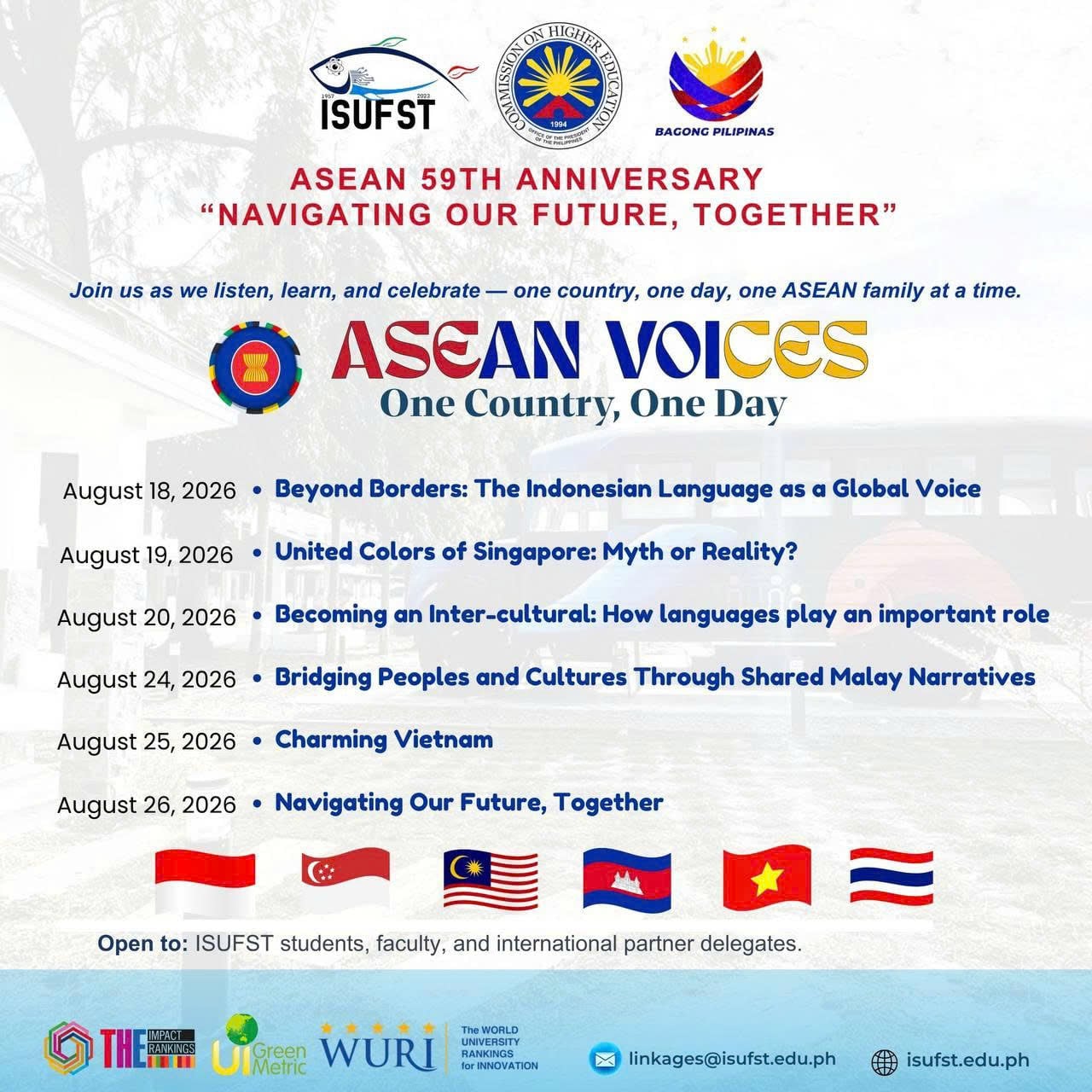
ASEAN Voices 2026 was implemented under the “One Country, One Day” model, taking participants on a step-by-step exploration of language and cultural stories across regional nations
When Foreign Languages Become the “Passports” Connecting ASEAN
For students of NTTU’s Faculty of Foreign Languages, ASEAN Voices 2026 served as more than just an occasion to learn about a new country or culture. More importantly, it provided an avenue where foreign languages functioned as authentic instruments of communication in an international environment.
Through virtual exchange sessions, students engaged with a variety of accents, expressions, and communication styles, while actively practicing listening comprehension, questioning, responding, and presenting viewpoints in English.
These experiences also enabled learners to realize that effective communication depends on more than vocabulary or grammatical rules. When conversing with individuals from different cultural backgrounds, learners must also comprehend context, respect differences, adapt their expressions, and view issues through multiple perspectives.
Sharing her reflection on the experience, Le Ngoc Hoai An, a student from class 24DTA1A, Faculty of Foreign Languages at NTTU, stated: “Through ASEAN Voices 2026, I felt much more clearly that learning a foreign language can bring us closer to diverse cultures. I not only listened to English spoken with various accents and idioms, but also gained deeper insights into the lifestyle, people, and unique traits of ASEAN nations. What I enjoyed most was the feeling that English was no longer confined to textbook exercises, but had truly become a real tool for listening, sharing, and connecting with others.”
From such experiences, foreign language learning is no longer restricted within traditional syllabi or familiar practice drills. For students, it represents a meaningful shift from learning a language to utilizing language as a bridge for connection—gradually becoming accustomed to dialogues that extend far beyond classroom boundaries.
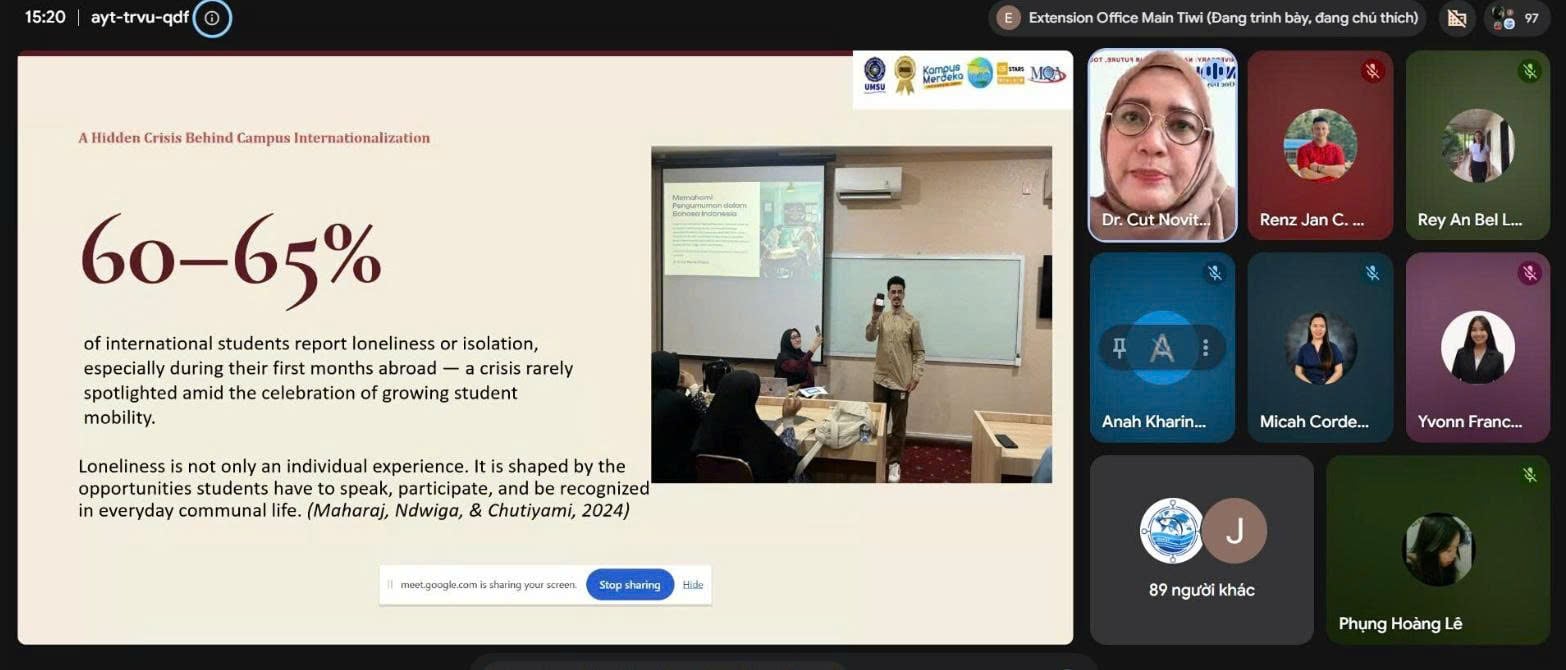
The online exchange environment of ASEAN Voices 2026 connected learners, lecturers, and international partner delegates in engaging discussions on language and culture
“Charming Vietnam”: Telling the Vietnamese Story in the Language of Integration
Within the framework of ASEAN Voices 2026, Vietnam was featured on August 25, 2026, through the thematic session titled “Charming Vietnam”.
Leading the session was Assoc. Prof. Dr. Tran Quoc Thao, Vice Dean of the Faculty of Foreign Languages at Nguyen Tat Thanh University. The presentation brought participants closer to Vietnam not only through familiar tourism imagery but also through nuanced perspectives on its people, culture, education, and modern lifestyle.
While previous exchange sessions allowed learners to discover stories from neighboring countries, “Charming Vietnam” transformed Vietnam into a story proudly shared with international friends.
This highlight underscored another vital role of foreign language proficiency: it empowers learners not only to reach out to the world, but also to present their homeland, share their cultural heritage, and tell the story of Vietnam to the global community.
The participation of NTTU Faculty of Foreign Languages representatives in this session helped bring the image of Vietnam and Nguyen Tat Thanh University closer to regional academic communities. For students, it served as a clear, real-world example of how foreign language mastery can bridge cultural identity with international environments.
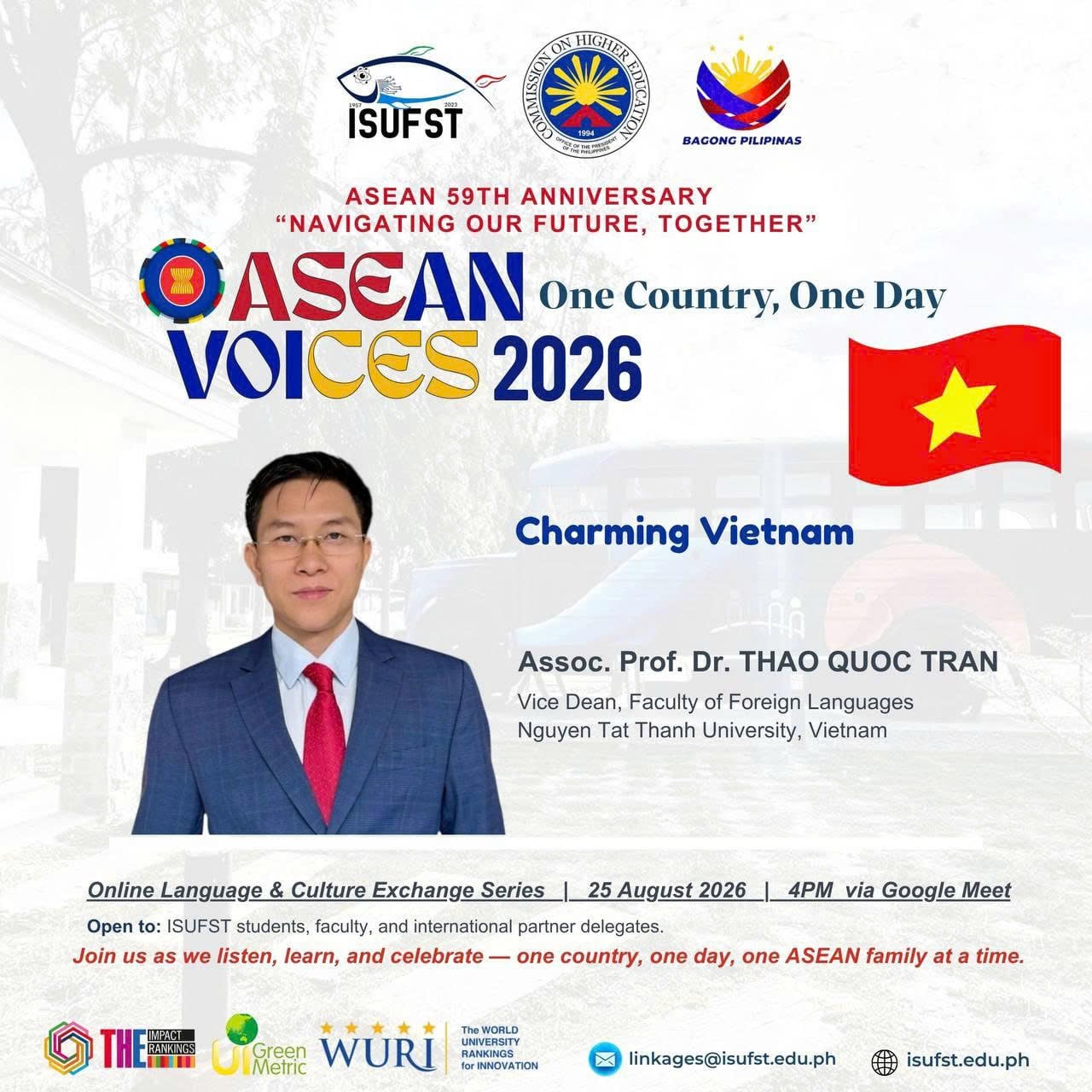
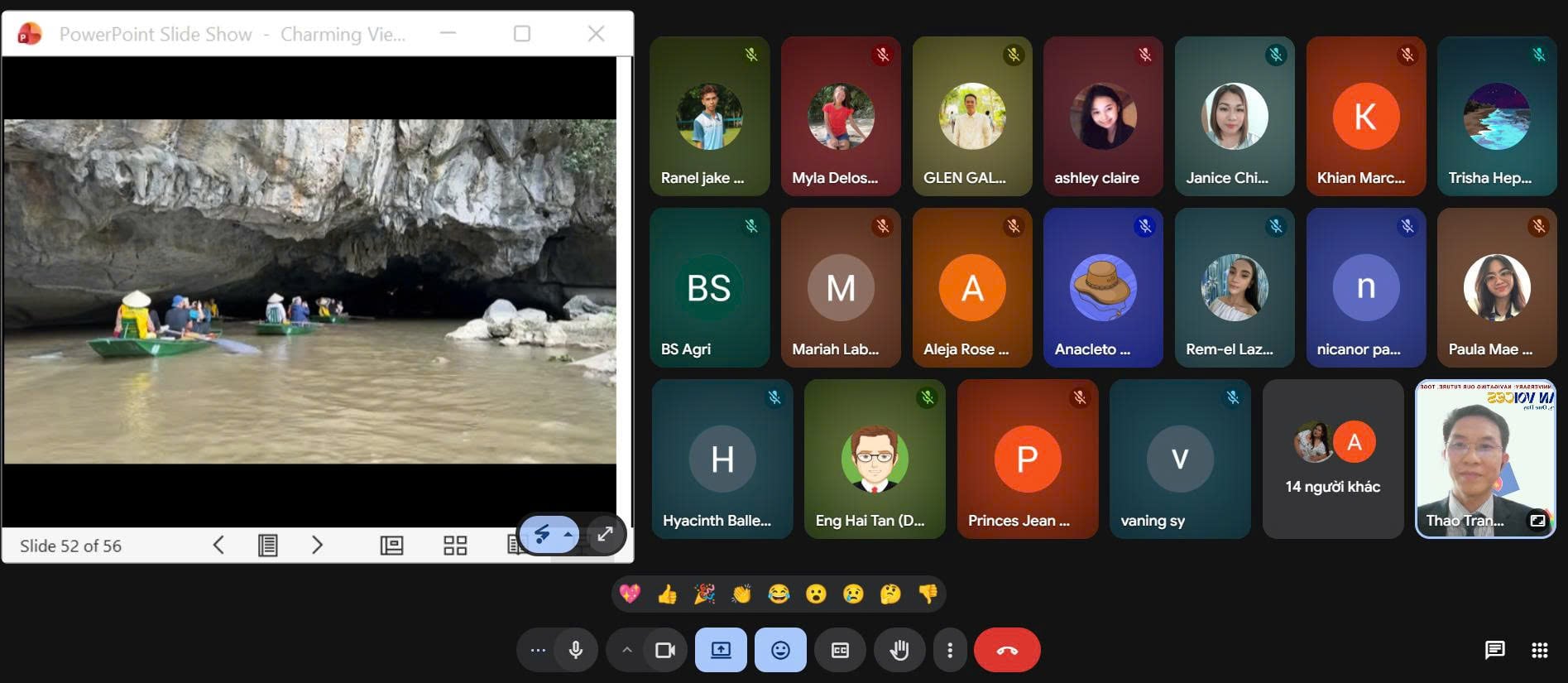
Assoc. Prof. Dr. Tran Quoc Thao, Vice Dean of the Faculty of Foreign Languages at NTTU, sharing insights about Vietnam during the “Charming Vietnam” session at ASEAN Voices 2026
Looking Regional to Better Understand Vietnam
Another notable value of the program was enabling learners to examine Vietnam in relation to its neighboring nations. By exploring Indonesia, Singapore, Cambodia, Malaysia, and Thailand, students recognized cultural, linguistic, and societal nuances while reflecting on Vietnam’s unique characteristics from a comparative perspective.
Consequently, Vietnamese identity was situated within the broader context of the ASEAN community. This process helped learners realize that global integration does not mean diluting core cultural identity; rather, it entails understanding one’s values and knowing how to share them within a diverse arena.
For students of the Faculty of Foreign Languages, this marked an essential transition from learning *about* culture to practicing *intercultural communication*. Through ASEAN Voices 2026, students simultaneously developed multiple competencies: utilizing English in international communicative contexts, listening and responding effectively, articulating personal views, expanding knowledge of ASEAN nations, adapting to multicultural environments, and engaging in digital cross-border exchanges.
Expanding an “Internationalization at Home” Space at NTTU
Through virtual exchange activities, students can connect with international peers, experience diverse cultures, participate in cross-border discussions, and build new networks directly within their home academic environment.
For the Faculty of Foreign Languages at NTTU, initiatives like ASEAN Voices 2026 contribute to expanding an “internationalization at home” framework—where foreign language knowledge is directly connected with practical experience, intercultural communication, and global integration capabilities.
In this environment, every conversation represents more than a listening or speaking drill; it serves as an opportunity for students to learn to listen to others, express their own perspectives, discover new viewpoints, and build confidence as they step into linguistically and culturally diverse academic and professional environments.
From regional country spotlights to the “Charming Vietnam” session, ASEAN Voices 2026 demonstrated that foreign languages offer far more than professional skills. They serve as essential media for youth to understand the world, better understand themselves, and foster connections that transcend geographic borders.
For students of the Faculty of Foreign Languages at NTTU, every language mastered, every culture discovered, and every dialogue opened represents a step closer to global academic and professional opportunities.
Article by: Assoc. Prof. Dr. Tran Quoc Thao – Vice Dean, Faculty of Foreign Languages, Nguyen Tat Thanh University