
 Tiếng Việt
 Home
Home Introduction
 Announcements
 Student Essential
 Event attendance lists
The Faculty of Architecture – Interior – Applied Arts at Nguyen Tat Thanh University recently collaborated with DUBA Vietnam and Vu Thoai Academy to organize a thematic seminar–workshop titled “THE SECTIONS – MAKE IT SELL”. The program provided students with practical experiences in design thinking, market research, product development, and the application of artificial intelligence (AI) in bringing ideas from technical drawings to market-ready products.
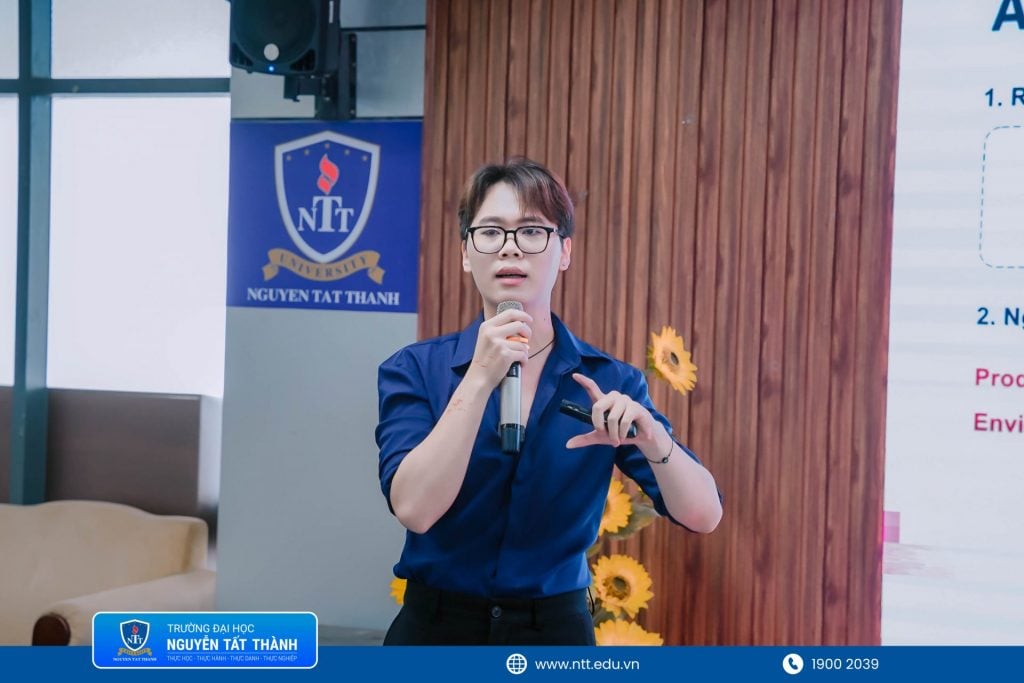
With expert insights shared by M.S. Van Vu Thoai – CEO of DUBA Vietnam and Founder of Vu Thoai Academy, the program did not merely introduce design support tools, but rather focused on a real-world enterprise problem: what steps a design idea must undergo to become a physical product that meets user needs and holds commercial value.
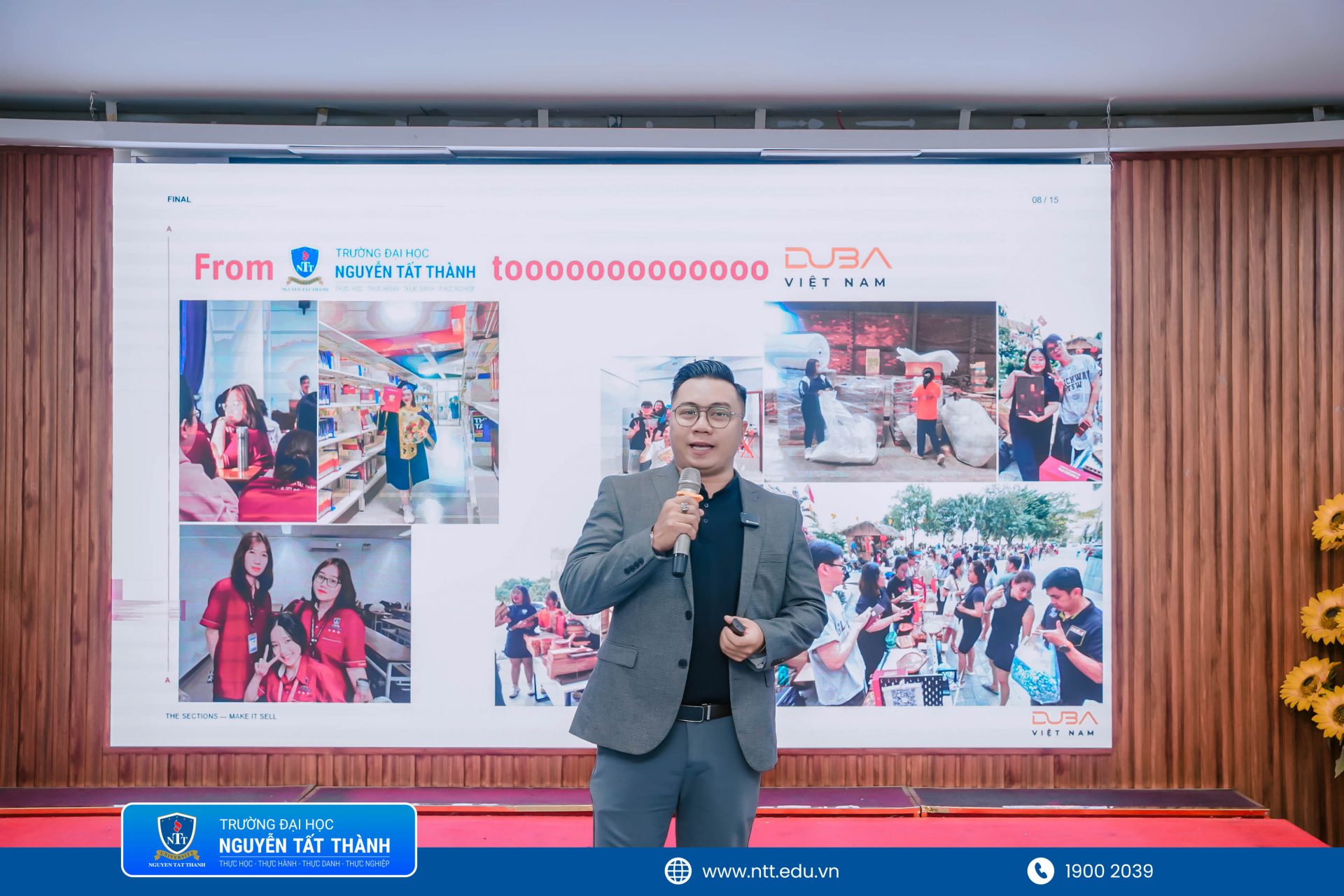
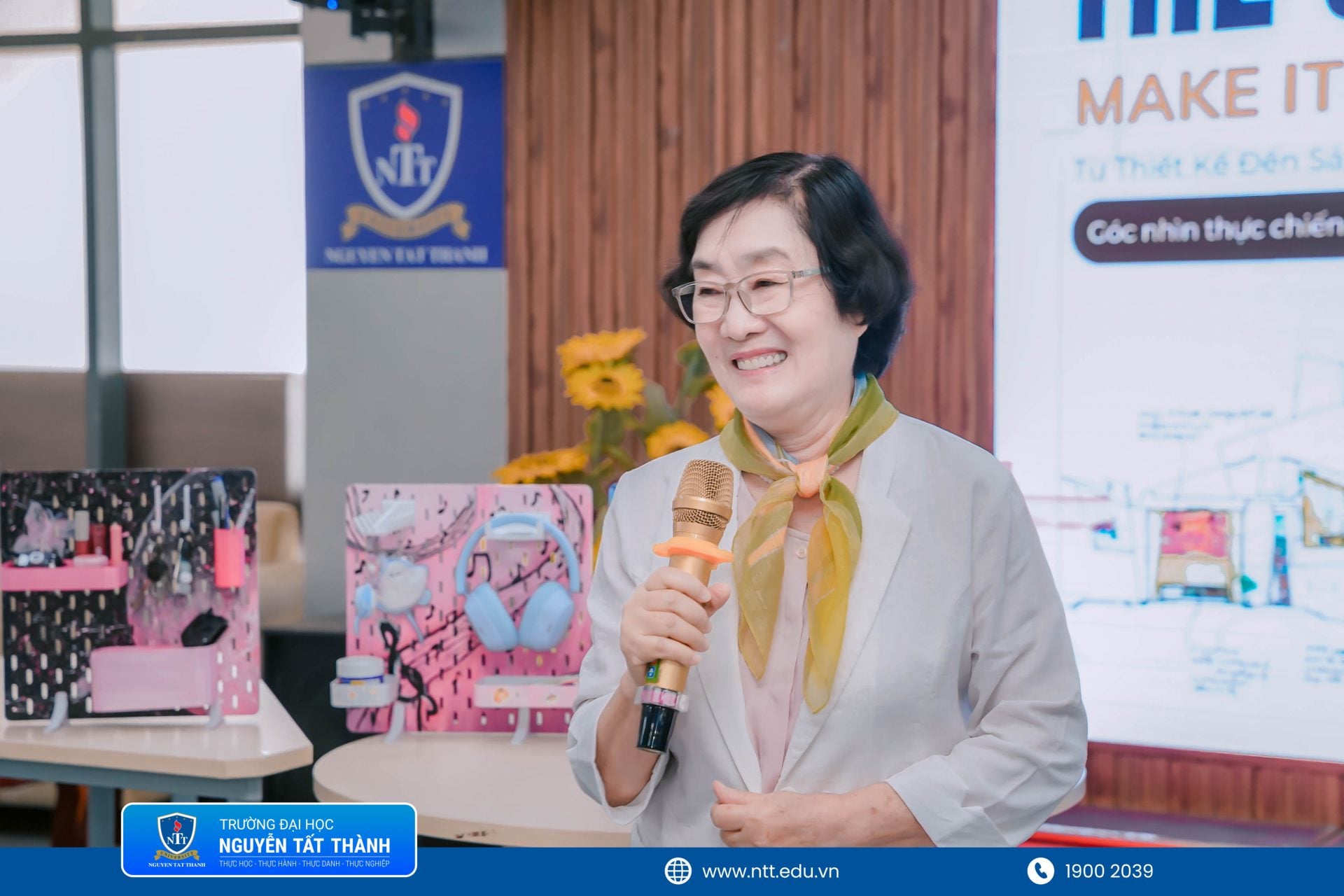
M.S. Van Vu Thoai – CEO of DUBA Vietnam, Founder of Vu Thoai Academy
From “Cross-Section” Design to Product Development Thinking
Using the concept of “Cross-Section – The Sections” as the core philosophy, the workshop encouraged students to look deeper into a designed product. Instead of focusing solely on external aesthetics, designers must simultaneously analyze user needs, context of use, functionality, dimensions, color palettes, accessory systems, manufacturability, and how the product is introduced to the market.
Through real-world case studies drawn from DUBA Vietnam’s manufacturing, business, and product development operations, students approached problem-solving from a corporate perspective. A product must not only answer whether it “can be produced,” but must also clearly identify which version best suits specific user groups and target markets. Consequently, the design process expands from mere form-giving into an interconnected chain: market research – identifying insights – building concepts – developing prototypes – visualization – reaching customers.
AI as a Supporting Tool, Design Mindset Remains Central
One of the highlighted topics at “THE SECTIONS – MAKE IT SELL” was the practical application of AI in product research and development. Rather than treating AI solely as an image generation tool, the workshop demonstrated technology’s supportive capabilities across various stages, such as synthesizing information, conducting market research, generating ideas, proposing options, and visualizing products.
The central message throughout the workshop was that AI does not replace a designer’s professional foundation and critical mindset. While technology can generate multiple alternatives and accelerate testing cycles, the designer must remain the one who understands the core problem, identifies user needs, and makes final decisions.
This approach helps students view AI as an empowering asset within the design pipeline rather than depending on technology to generate end products. Thereby, analytical skills, evaluation, and quality control become essential components of a designer’s professional skill set in the modern era.
Hands-On Product Development via the Pegboard Decor Competition
Moving beyond theoretical presentations and live demos, the event featured a hands-on workshop focused on decorating and developing Pegboard products—an actual product line within DUBA Vietnam’s portfolio.
Starting from identical white Pegboard base units measuring 350 x 350 mm, students worked in teams to execute a miniature product development cycle. Each team conducted persona research, identified user pain points, crafted concepts, selected color schemes, and chose accessory systems before physically assembling their final prototypes.
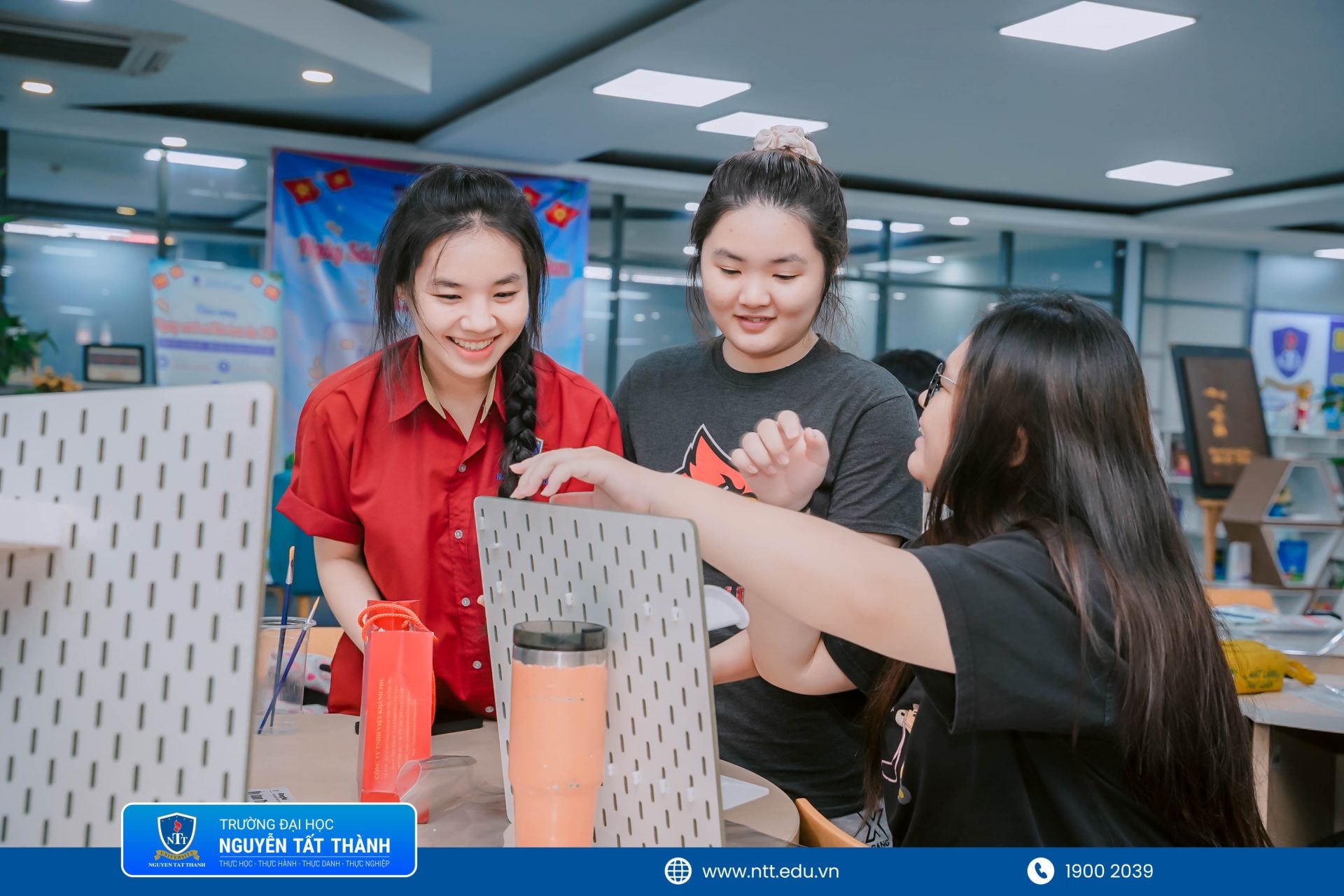
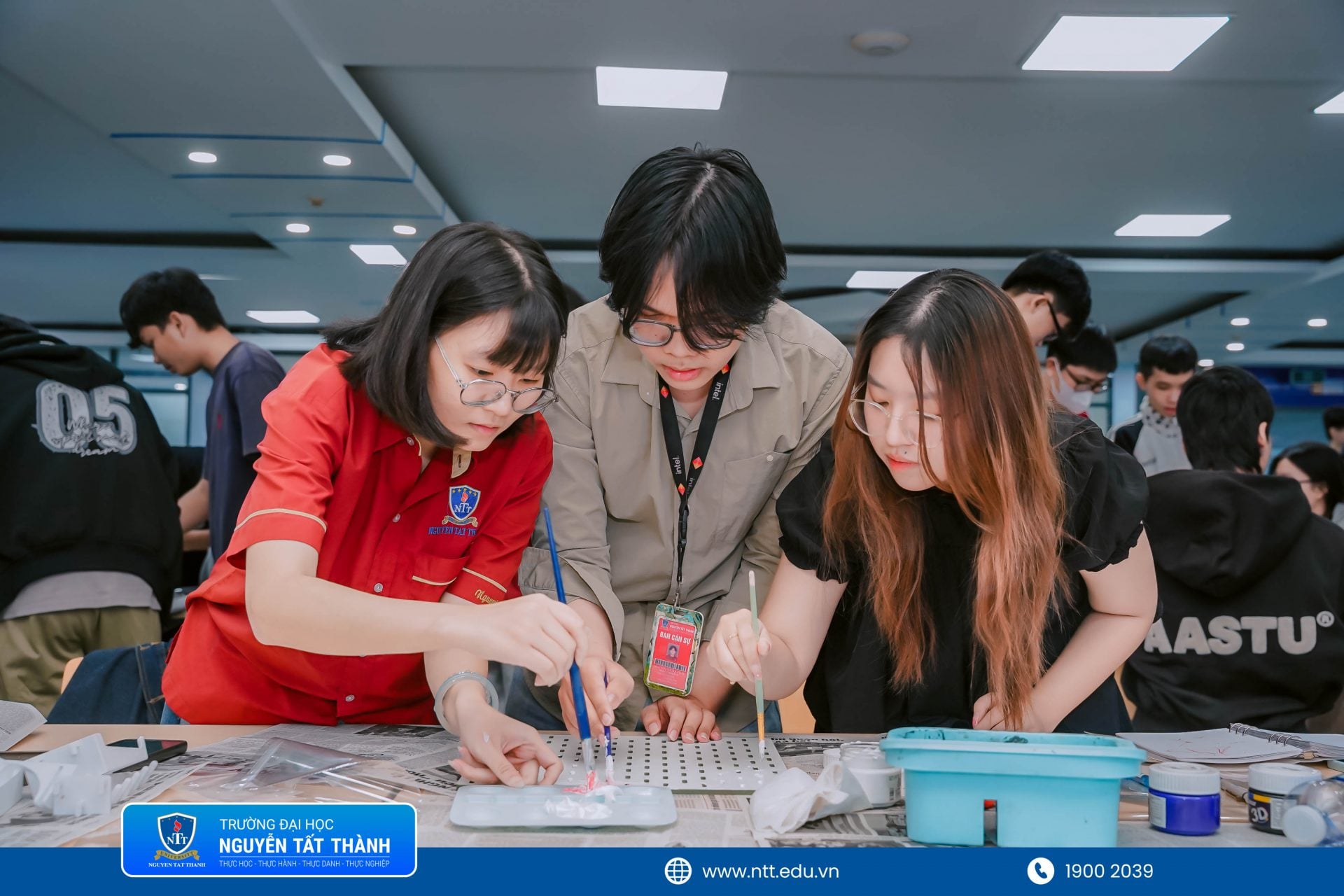
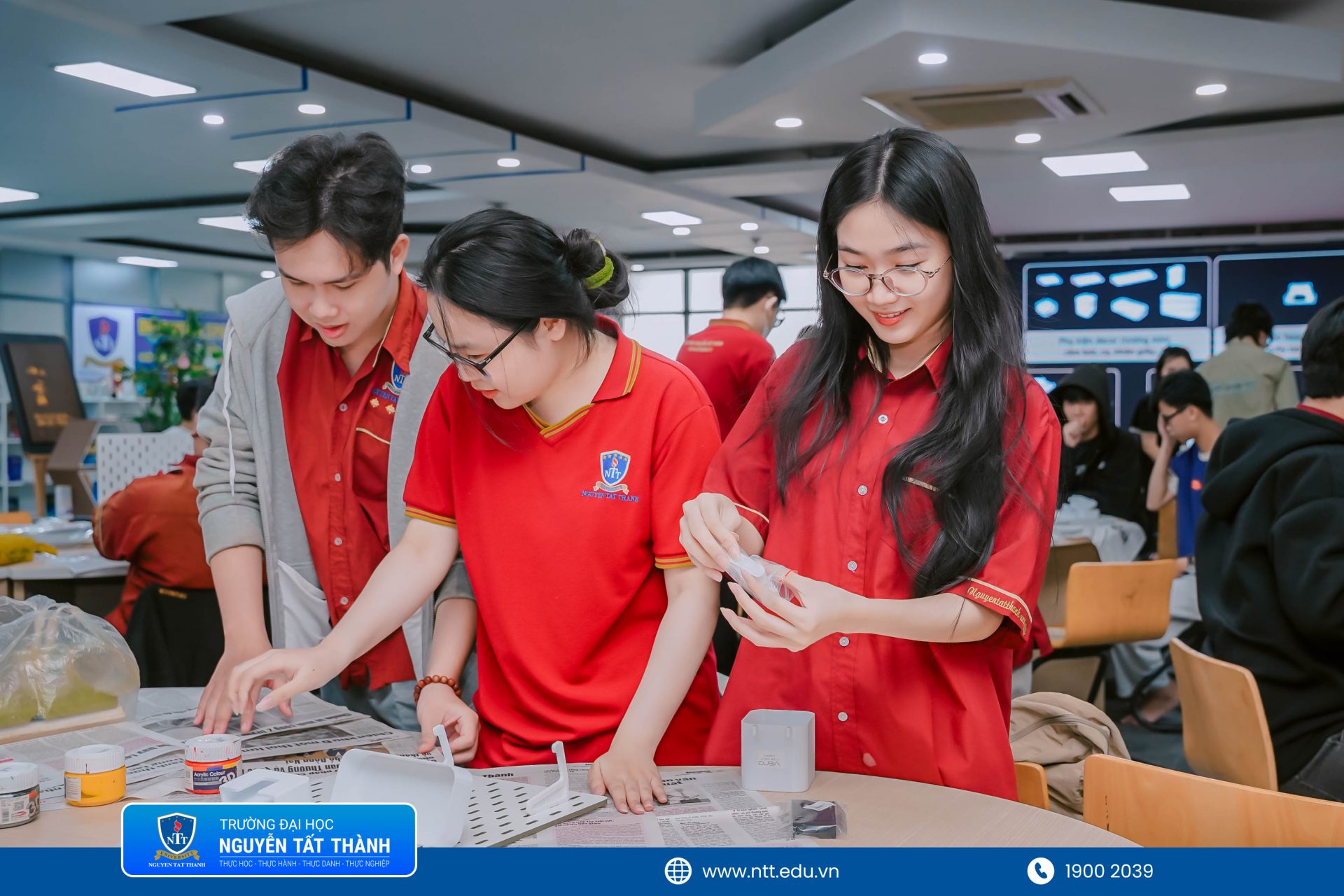
Students from the Faculty of Architecture – Interior – Applied Arts participating in Pegboard decoration and product development activities
An interesting aspect of the exercise was that from the exact same base product, each team presented a unique design direction. By arranging accessories, organizing functions, and refining aesthetics, students demonstrated not only creativity but also evaluated their products through the end-user’s eyes.
Once physical prototypes were finalized, they served as direct input for AI-driven visualization. The designs were rendered into specific contextual environments—such as study nooks, home offices, or modern living spaces—helping viewers clearly imagine how the product fits into real life.
Notably, AI was not used to “redesign” the Pegboards. Students maintained the exact design logic, proportions, colors, and features of their physical prototypes, applying AI strictly for product visualization to effectively present their concepts to customers.
From Creative Ideas to Practical Market Value
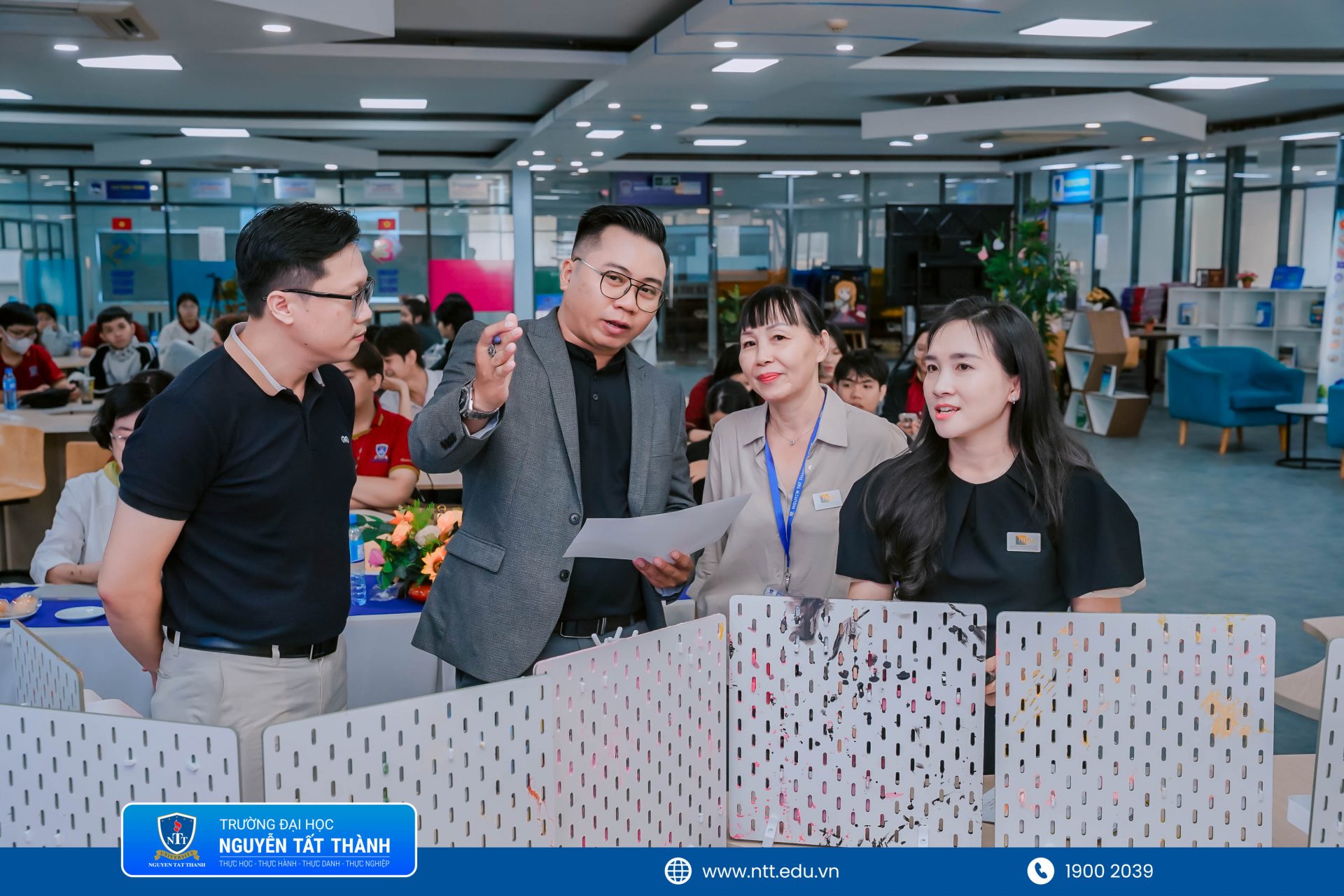
The completed projects were showcased directly at the workshop venue, creating an interactive exhibition space for teams to exchange ideas. Practical outcomes demonstrated diverse problem-solving approaches derived from a single product baseline. Top-performing entries were evaluated not only on aesthetic appeal, but also on the logical connection between user insights, design choices, physical prototypes, and AI-assisted visualizations.
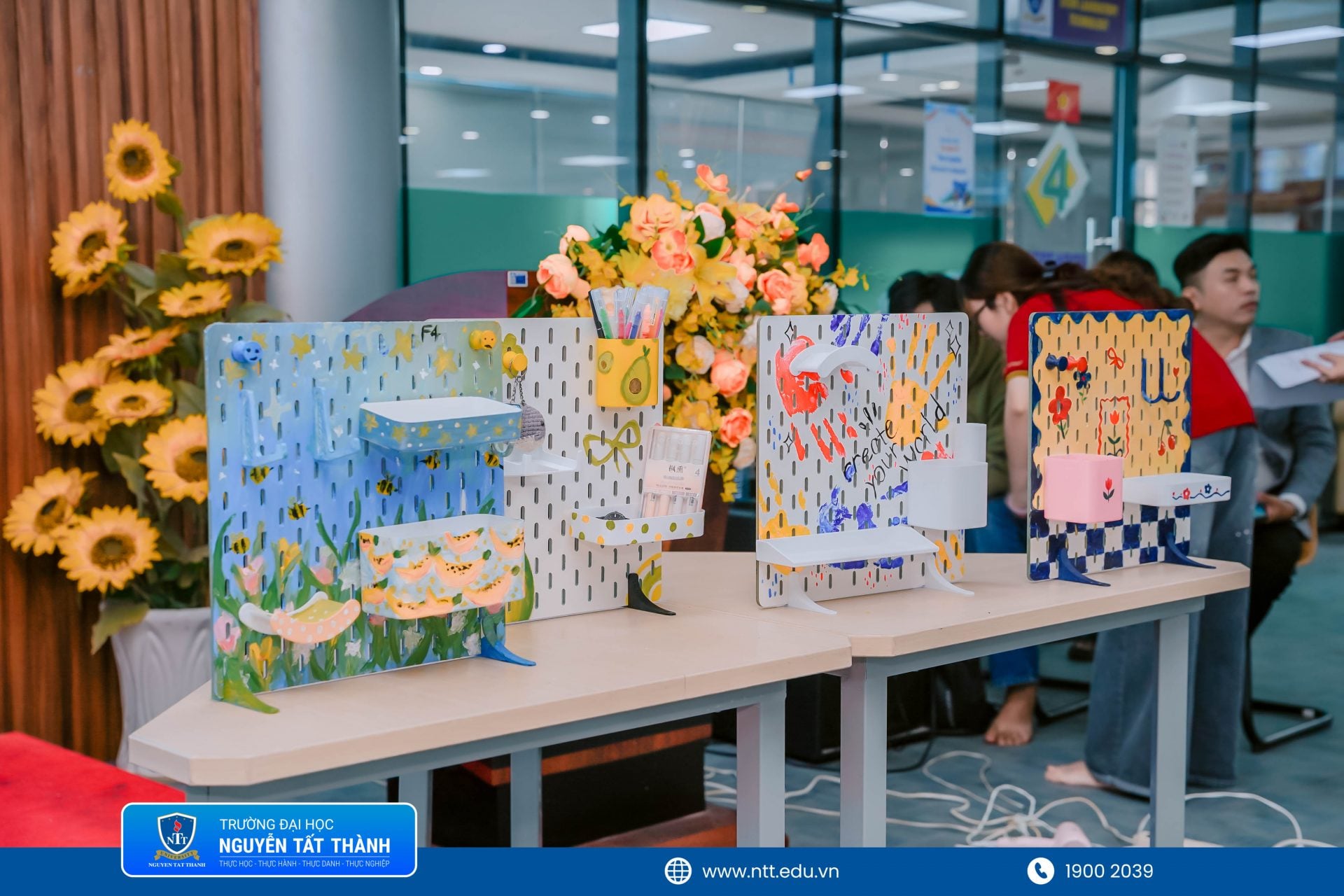
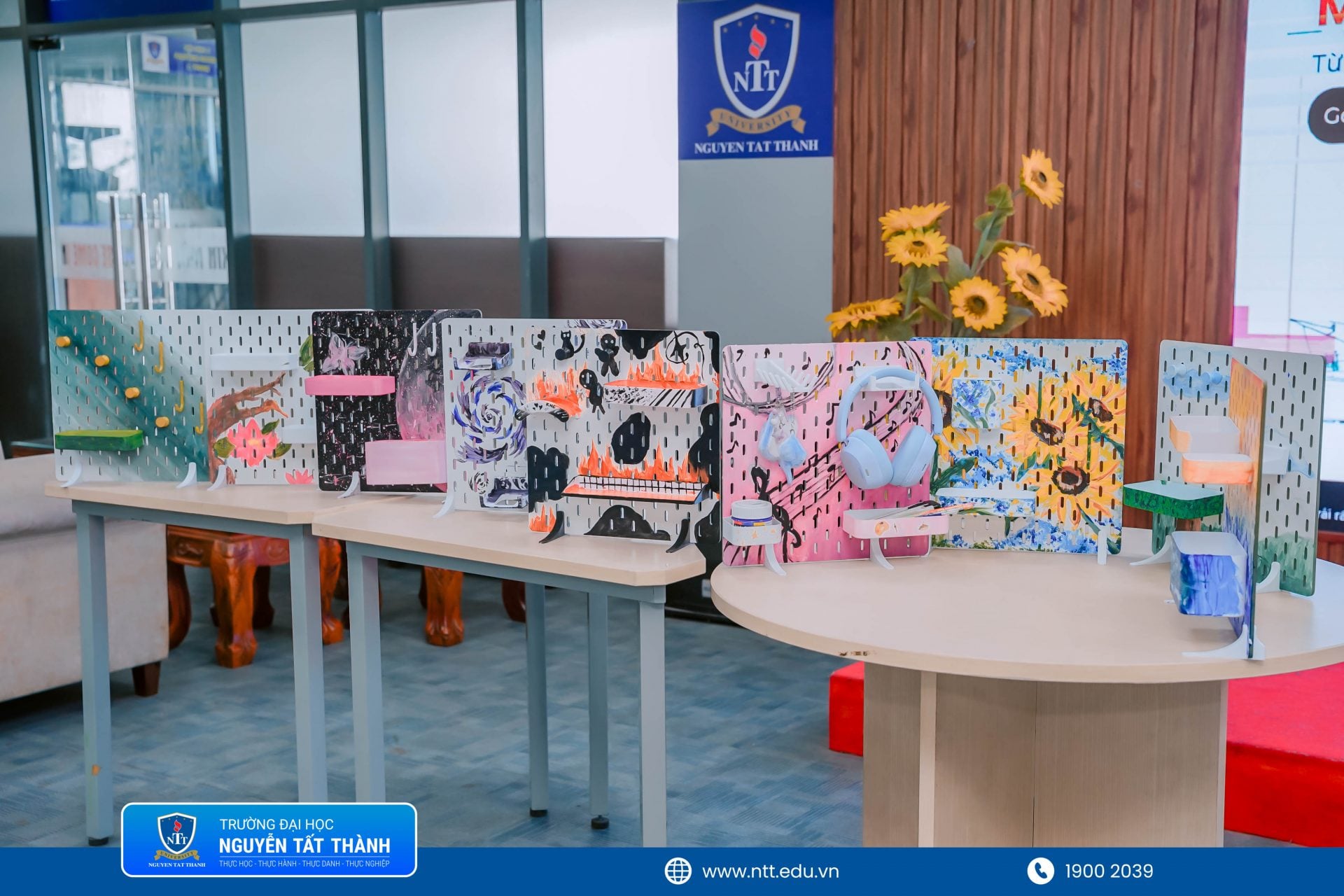
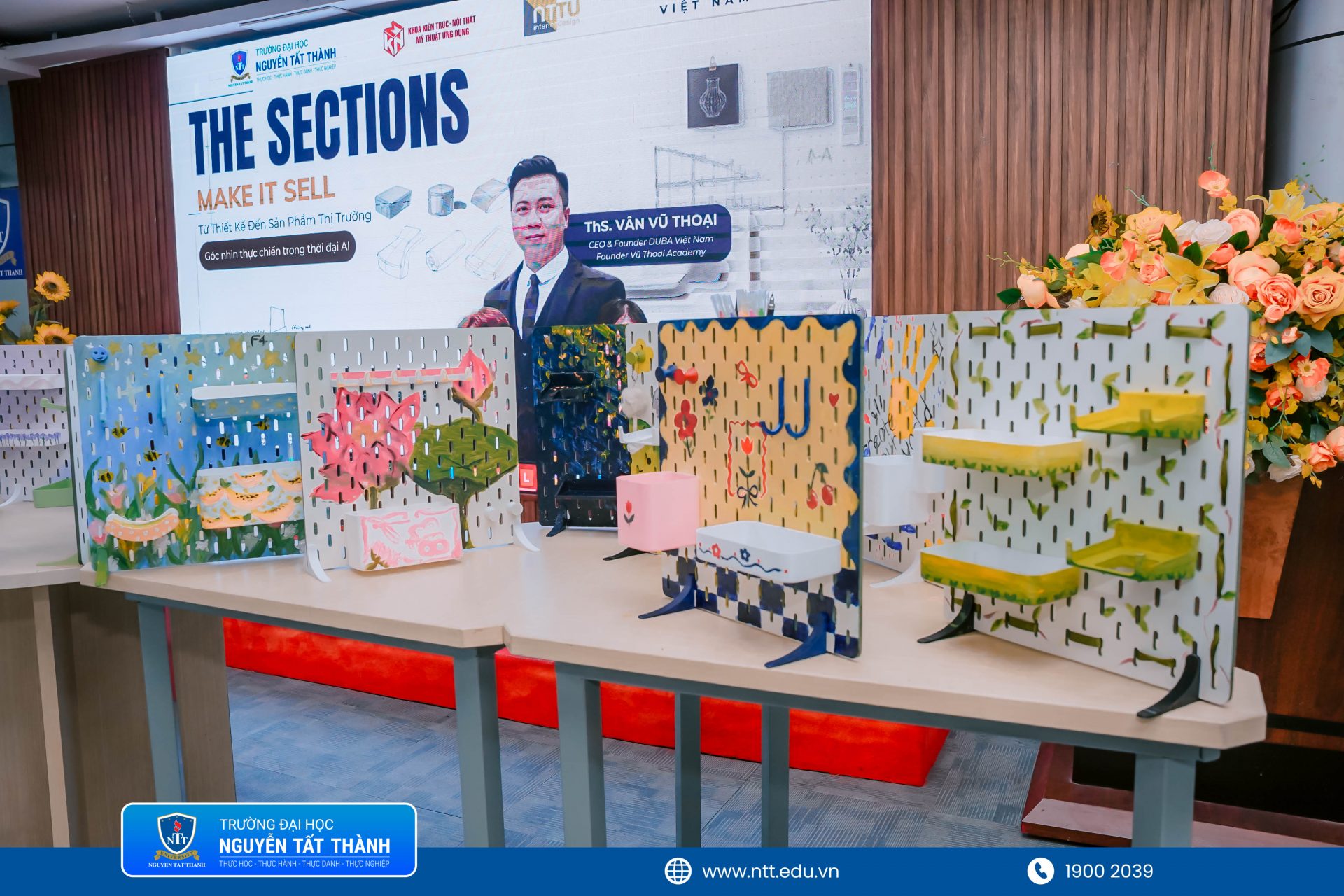
Selected student projects displayed at the event
Through this exercise, learners experienced a comprehensive development pipeline: from problem definition and concept creation to physical prototyping and environmental visualization.
The top three teams were awarded First, Second, and Third Prizes respectively. The close score gaps among leading groups highlighted the students’ dedication and ability to apply theoretical knowledge to practical execution throughout the workshop.
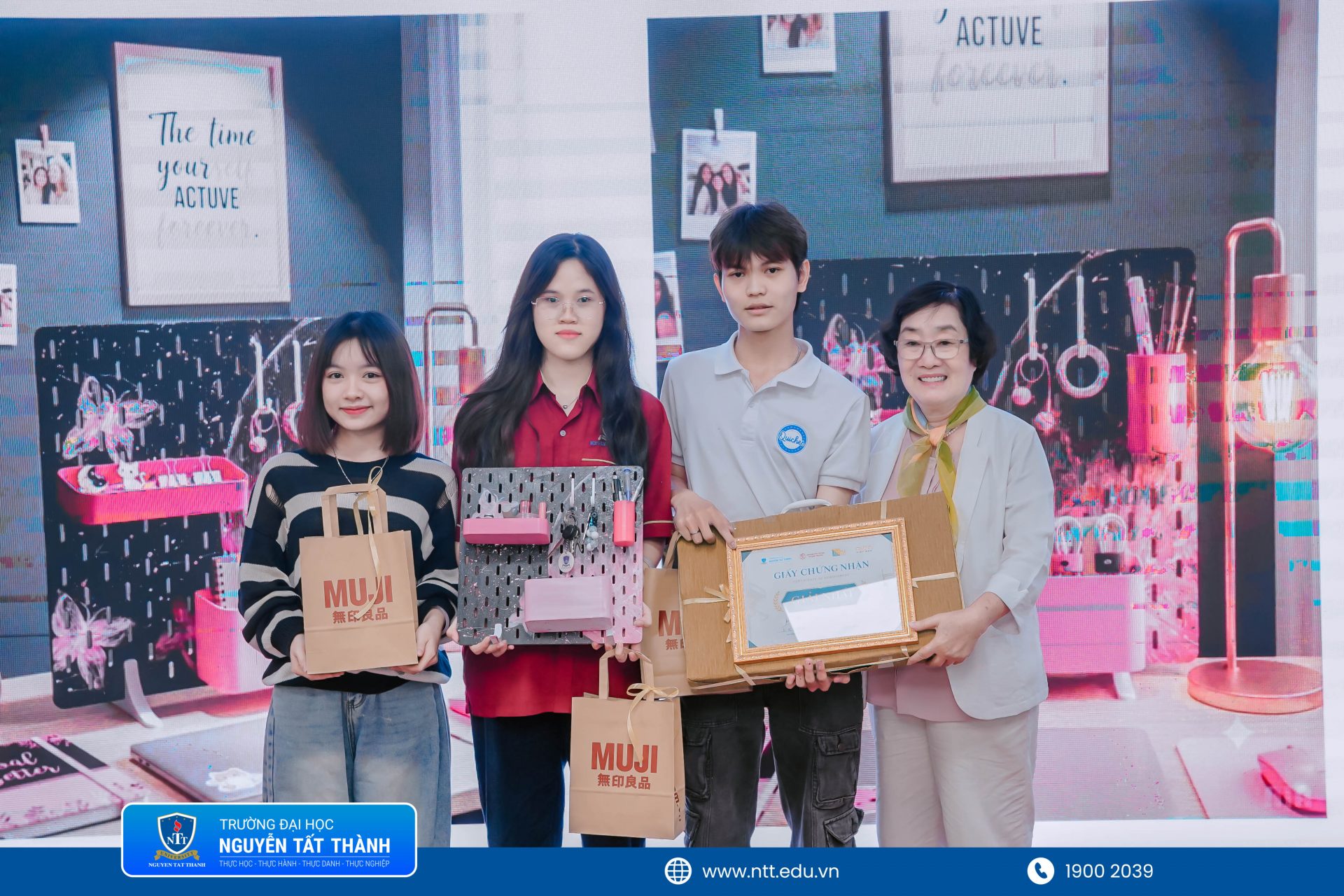

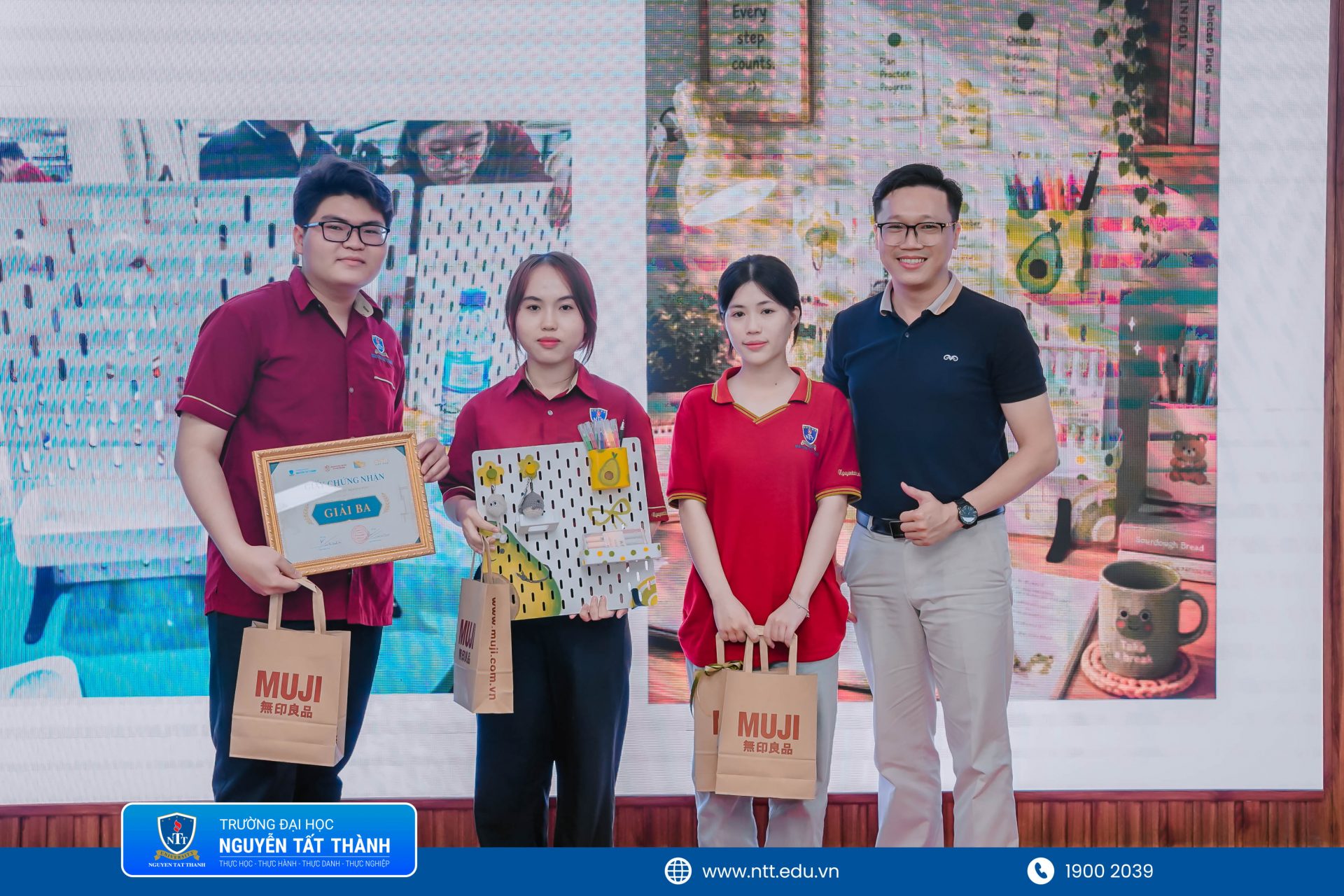
The organizing committee awarding prizes to winning student teams
Strengthening the Connection Between Education and Professional Practice
“THE SECTIONS – MAKE IT SELL” was more than an expert sharing session; it introduced a design perspective closely aligned with market realities and user demands. The program left students with a clear message on modern design thinking: “A good product must not only be visually appealing, but also user-centric, functionally suited, manufacturable, and commercially viable.”
This event also served as an opportunity for the Faculty of Architecture – Interior – Applied Arts at Nguyen Tat Thanh University to continually update educational methodologies, enhance hands-on experiential learning, and systematically integrate AI tools into teaching curricula.
Additional Photos from the Program
Article by: Pham Do Hoang An (Faculty of Architecture – Interior – Applied Arts)
Photos: Media Team