
 Tiếng Việt
 Home
Home Introduction
 Announcements
 Student Essential
 Event attendance lists
From short videos impacting Gen Z’s travel behavior, artificial intelligence in hotel operations, to digital detox tourism, indigenous culture, and smart eco-tourism, students from the Faculty of Tourism at Nguyen Tat Thanh University have demonstrated how young people approach their field of study—not just through theory, but through research mindset—at the Student Scientific Research Conference for the 2025-2026 academic year.
Recently, at the An Phu Dong campus, the Faculty of Tourism at Nguyen Tat Thanh University organized the Student Scientific Research Conference for the 2025-2026 academic year. This is an annual academic activity aimed at encouraging students to apply specialized knowledge to research, analyze practical issues, and propose solutions serving the development of the tourism and hospitality industry in the new context.
In the 2025-2026 academic year, the conference recorded 30 registered research projects, 11 of which were selected for thematic presentation. The research works reflect students’ interest in emerging industry issues such as digital transformation, artificial intelligence, digital media, tourist behavior, sustainable tourism, cultural conservation, and destination development.
Attending the conference were Dr. Phan Thi Ngan – Dean of the Faculty of Tourism; Assoc. Prof. Dr. Nguyen Van Hoang – Vice Dean; Dr. Nguyen Duong Giang – Vice Dean; along with faculty members and students of the Faculty of Tourism.
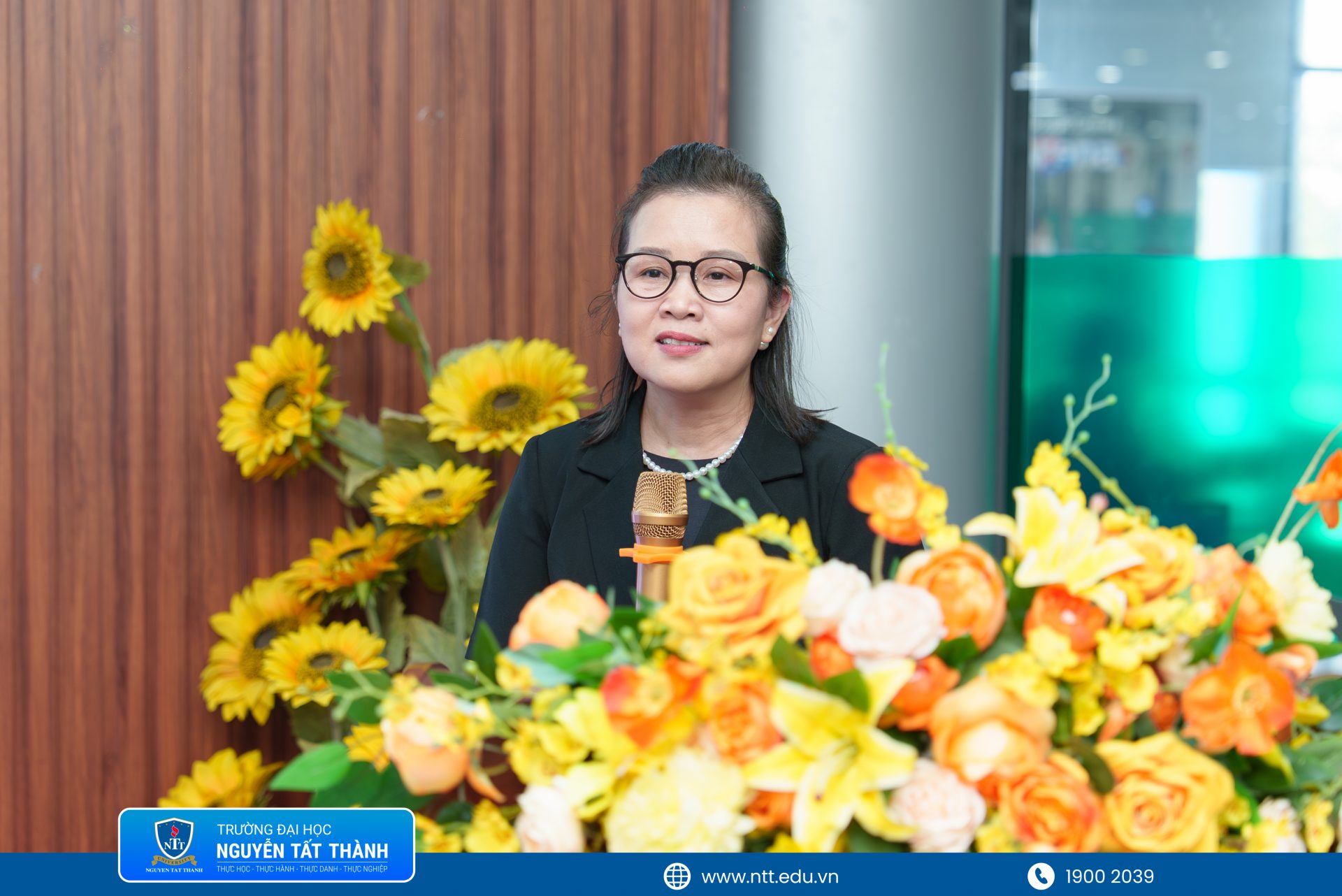
Dr. Phan Thi Ngan – Dean of the Faculty of Tourism delivers the opening speech, encouraging students to develop research thinking and bridge academic knowledge with professional practice.
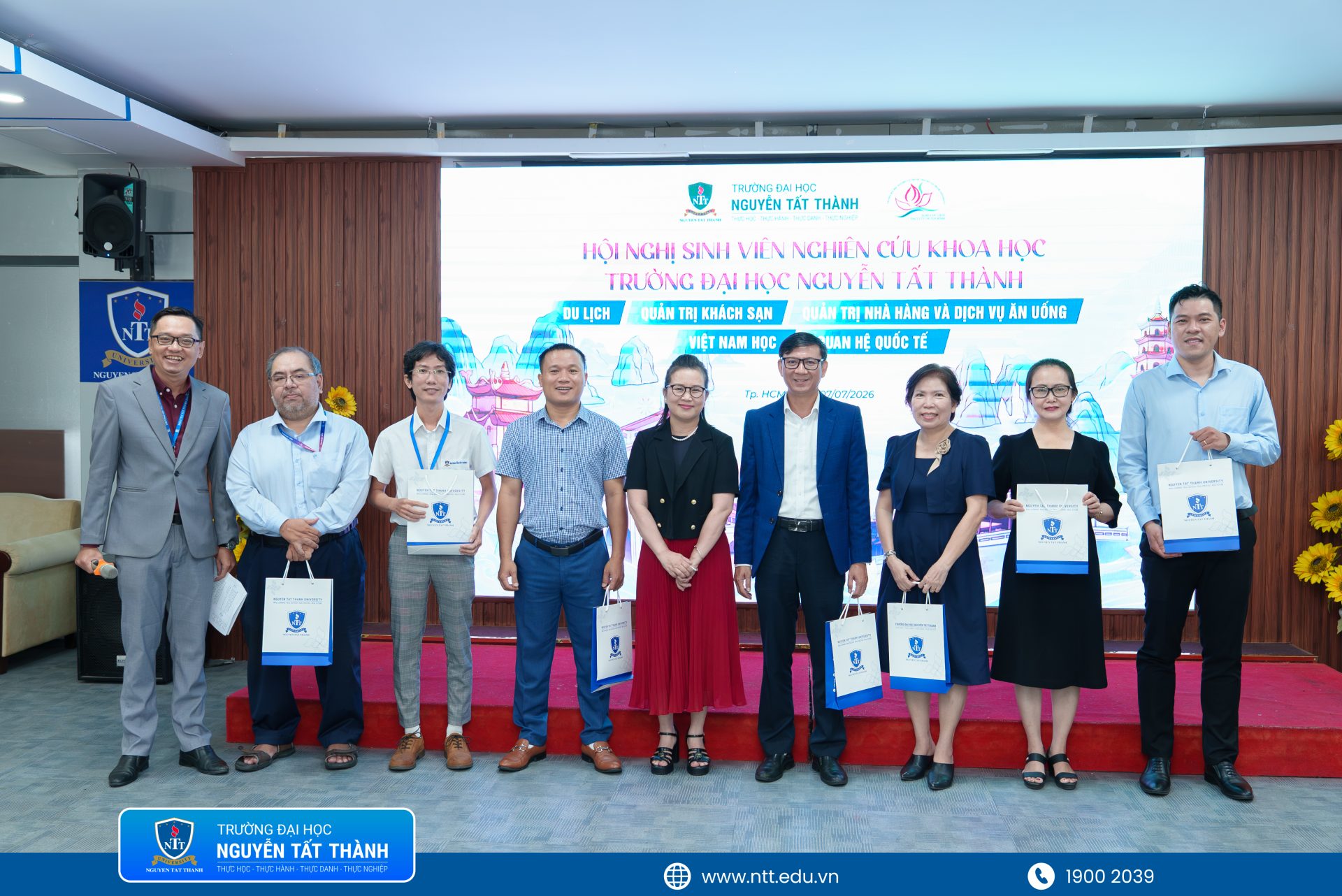
The organizing committee expresses gratitude to the jury for their companionship, professional sharing, and guidance to students in completing their research projects.
Scientific research does not stop at a report
In her opening speech, Dr. Phan Thi Ngan recognized the proactive, serious, and creative spirit of students in scientific research activities. She emphasized that scientific research does not stop at completing a project or reporting before a board, but more importantly, it helps students form critical thinking, problem-solving capacity, the ability to collect and process data, as well as knowing how to transform knowledge into practical solutions.
According to Dr. Phan Thi Ngan, in the context of the tourism industry changing rapidly due to digital transformation, artificial intelligence, the requirements for sustainable development, and new tourist experience demands, students need to view scientific research as an important part of the learning process, career training, and preparation for future professional capacity.
With that spirit, the conference is not only a place for students to report research results but also a forum for learners to exchange academic views, listen to feedback, improve approaches, and develop ideas with application value.
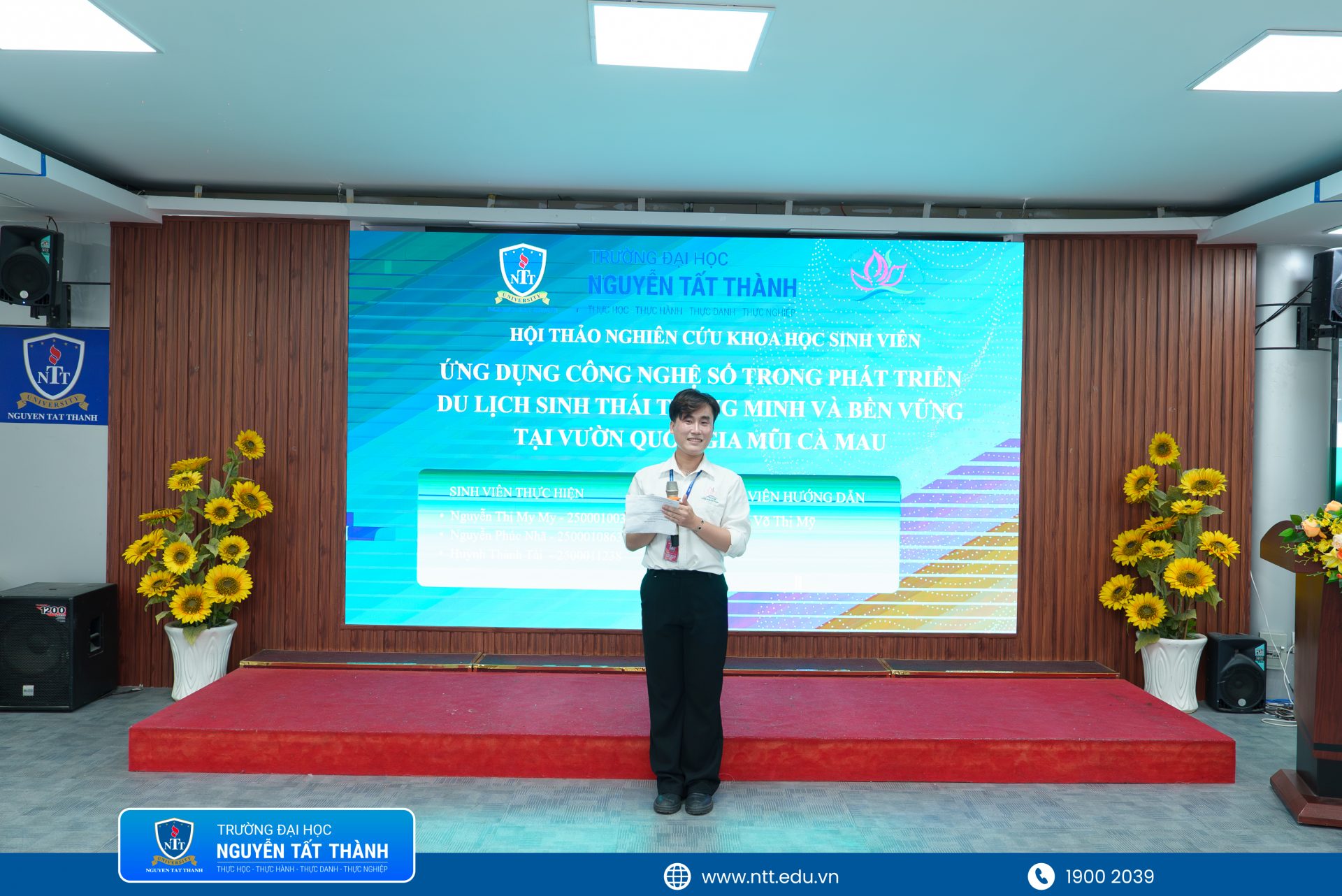
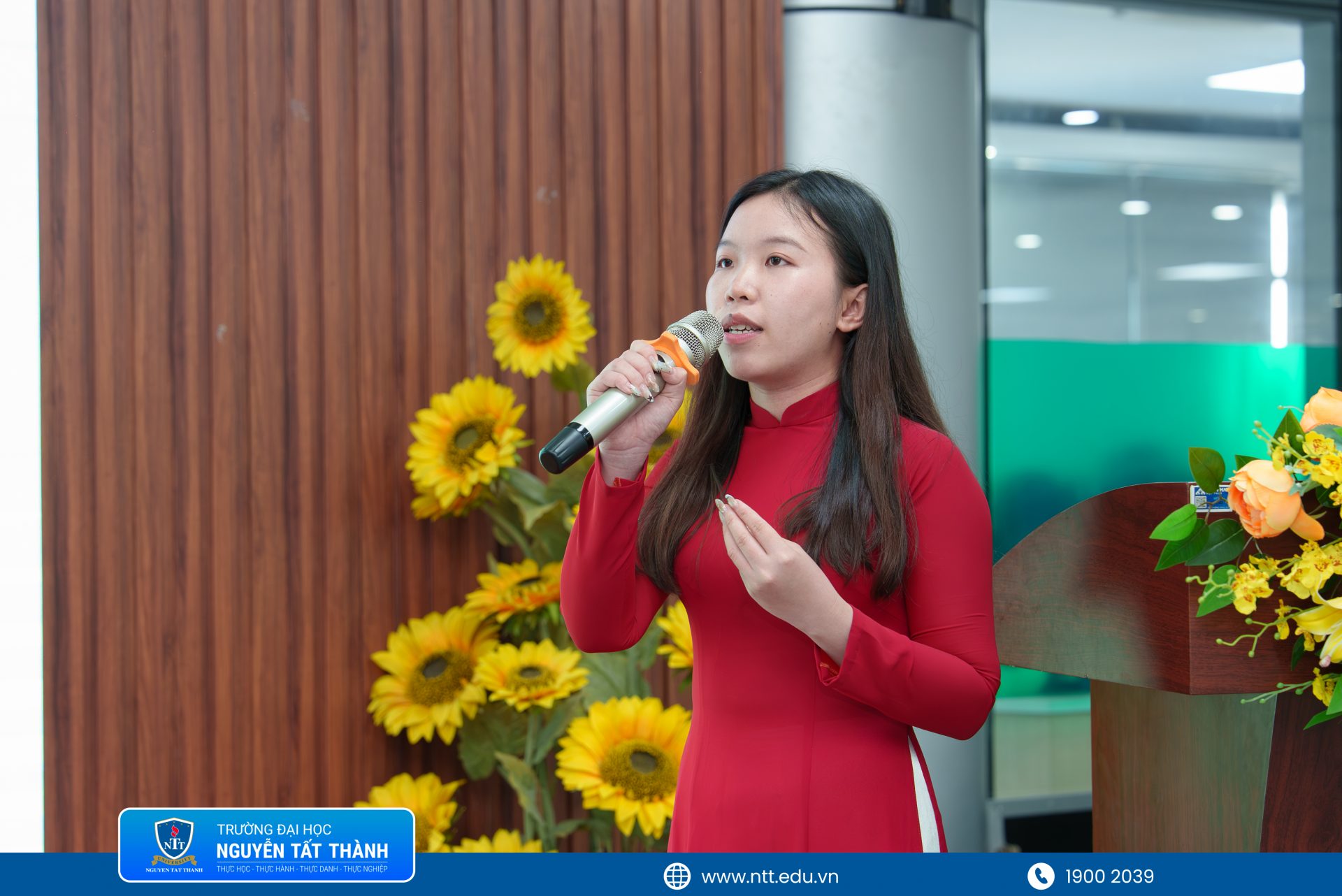
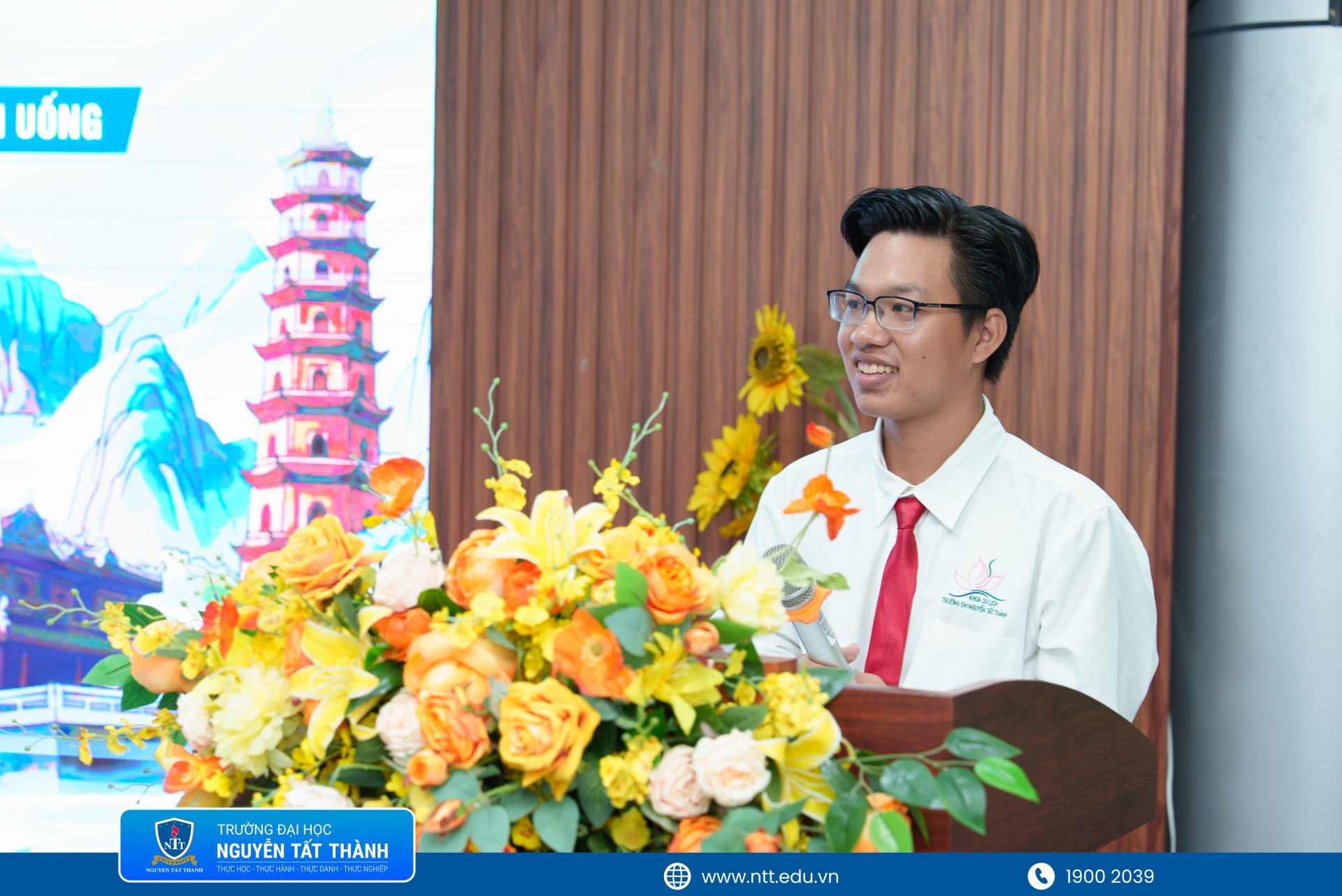
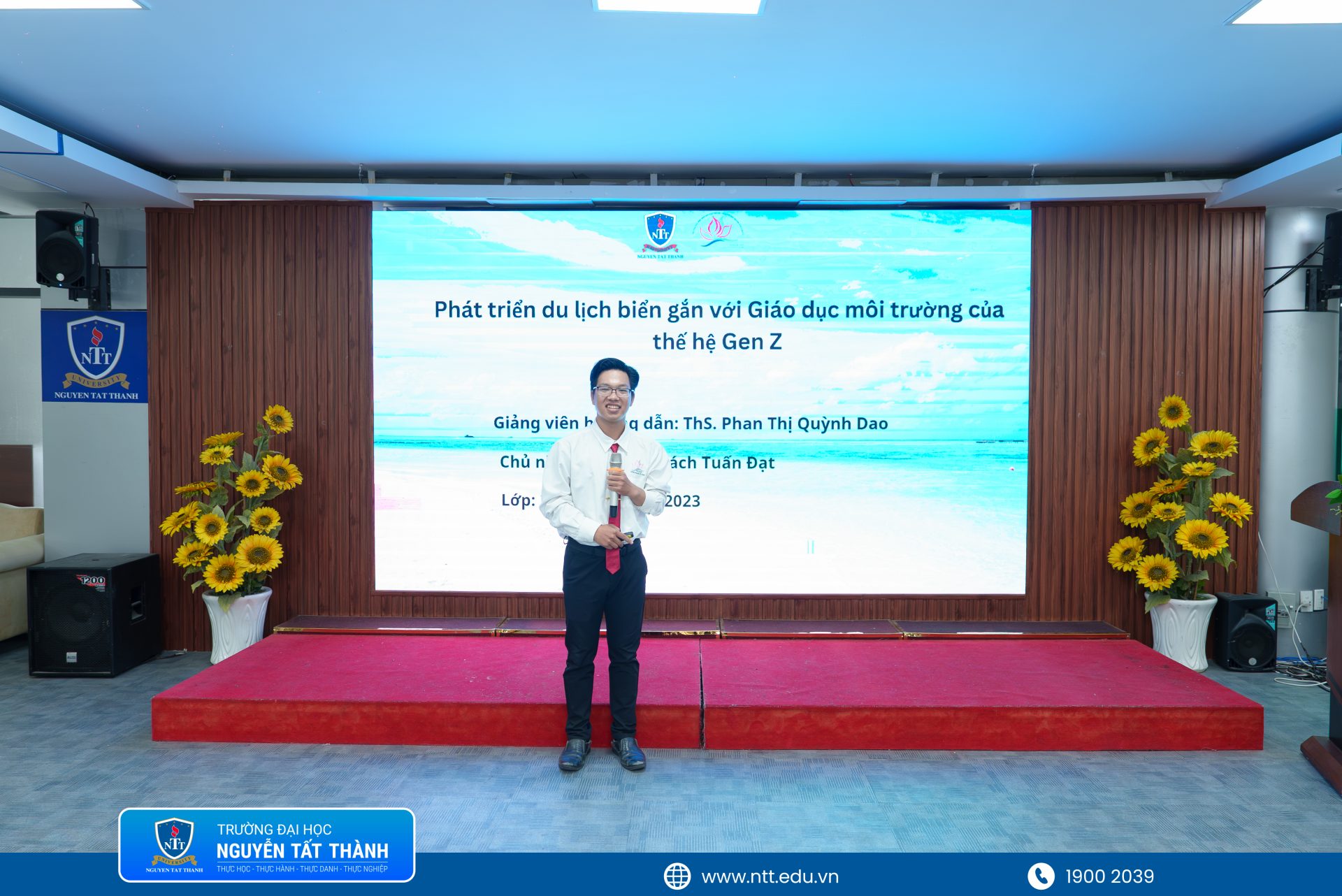
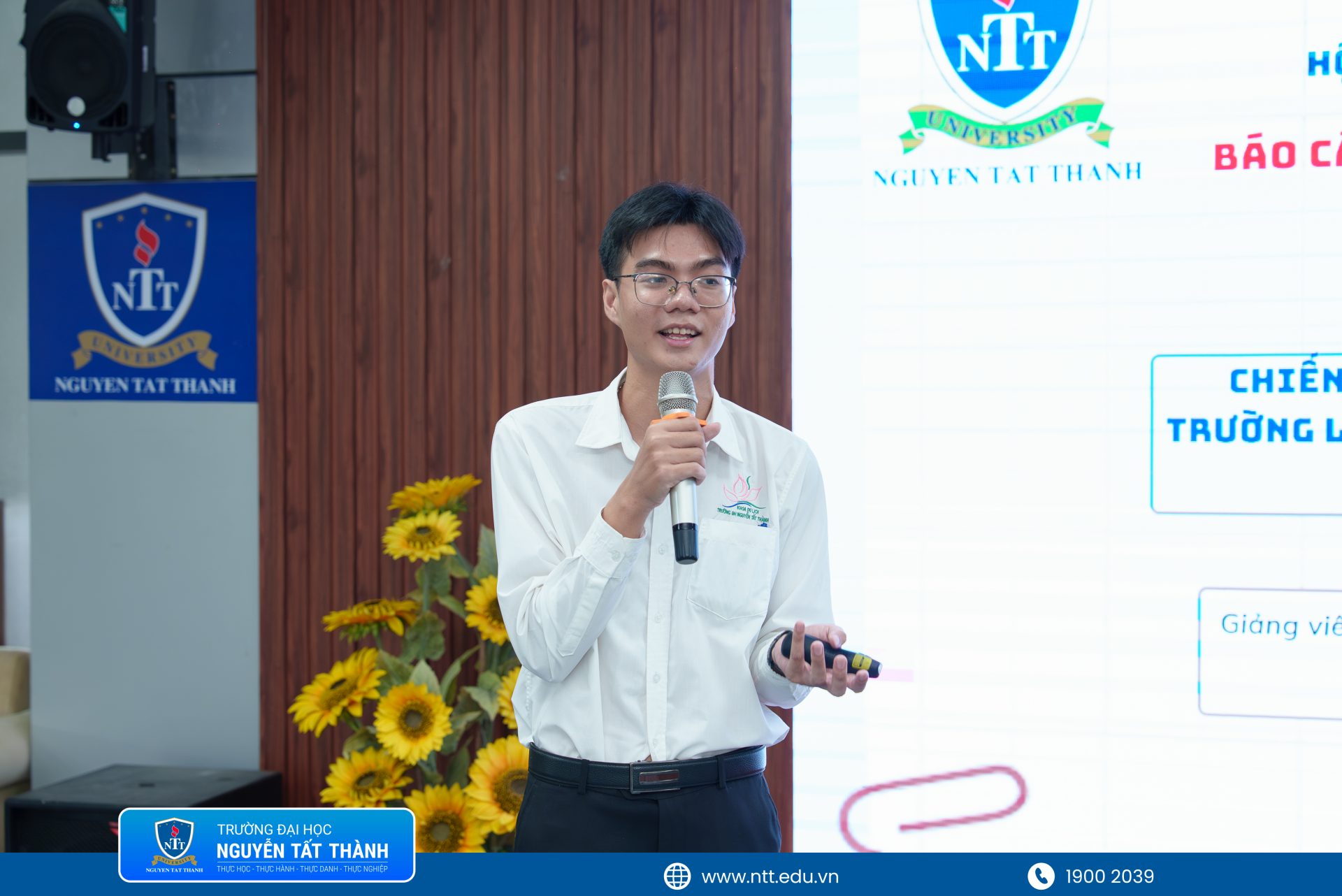
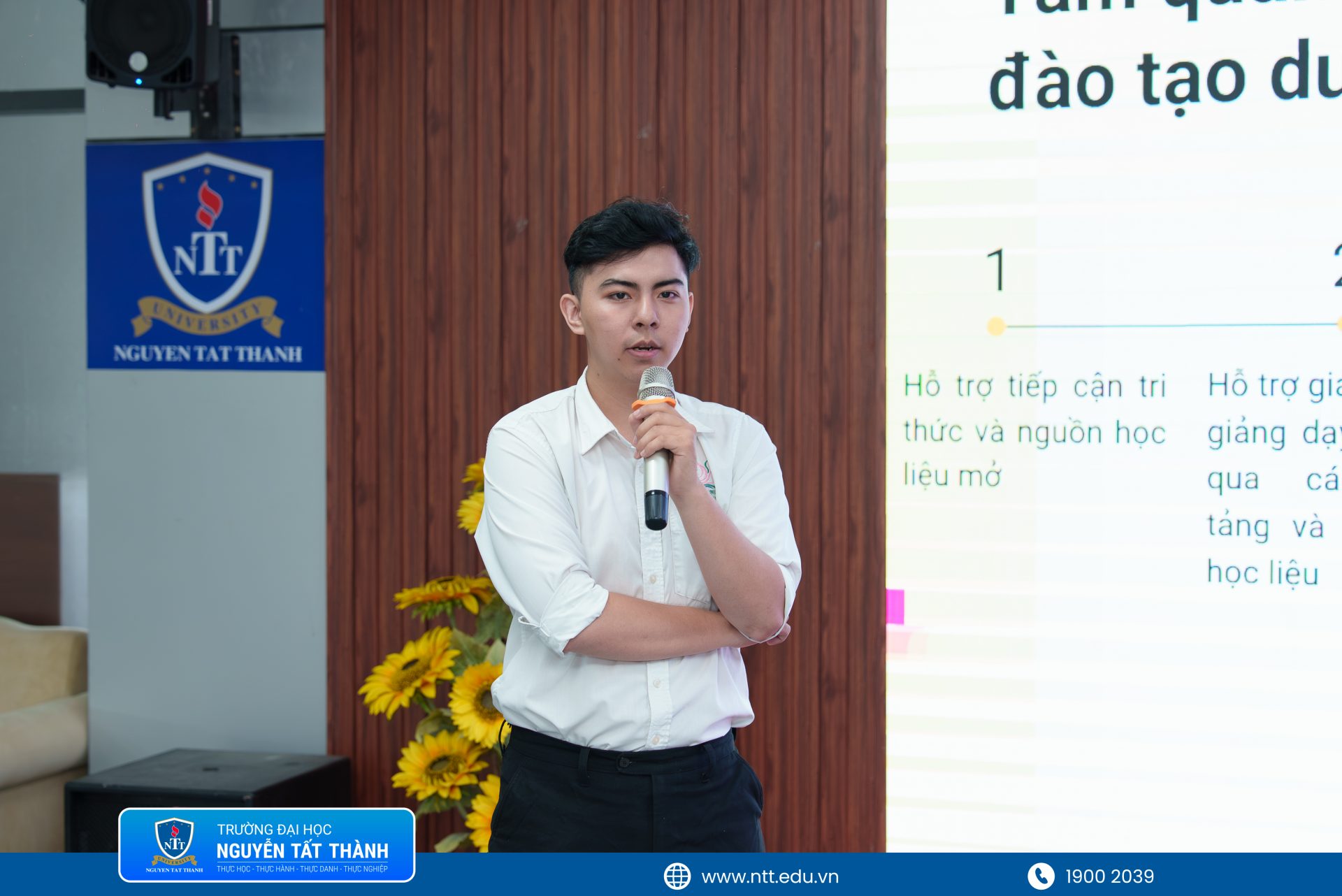
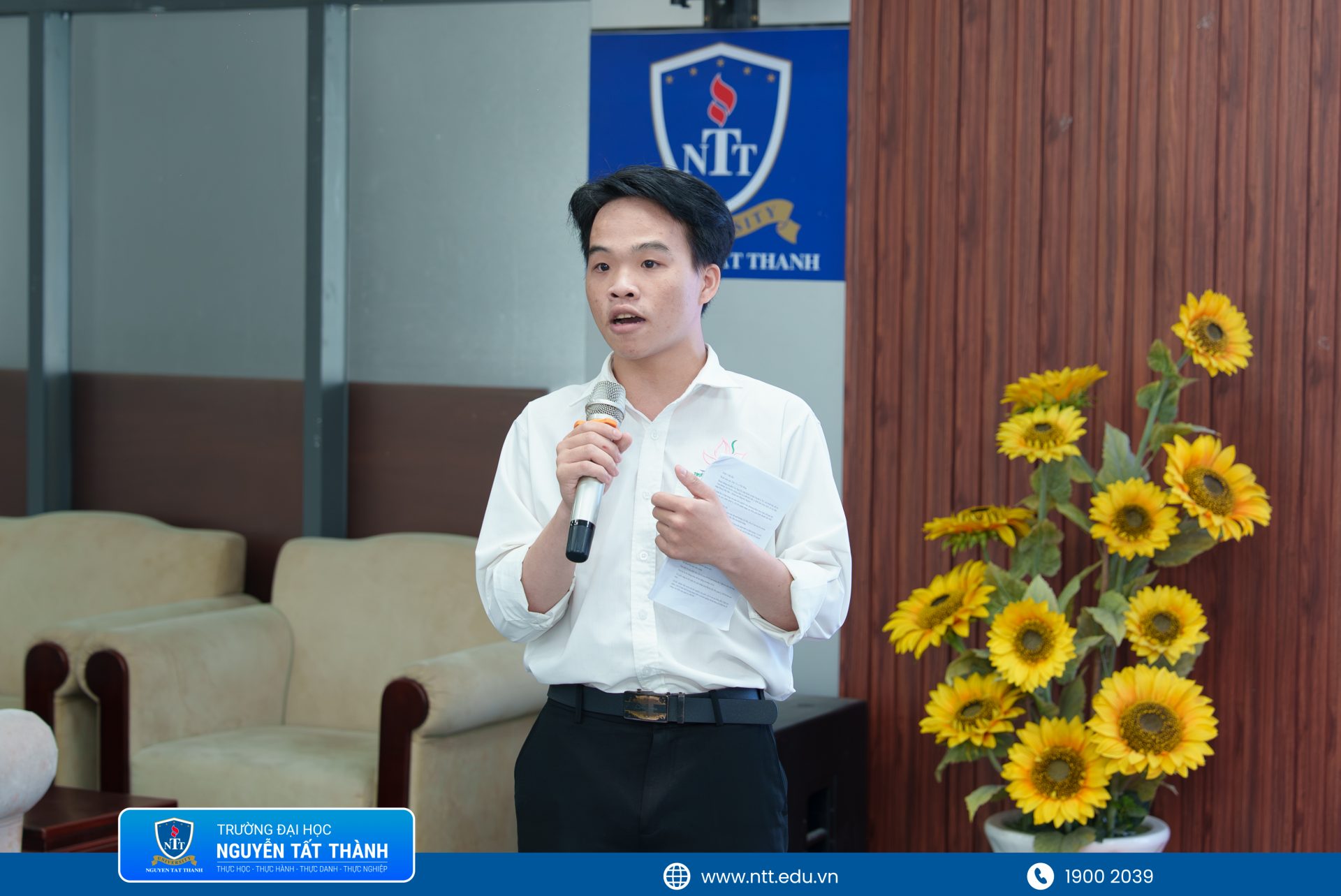
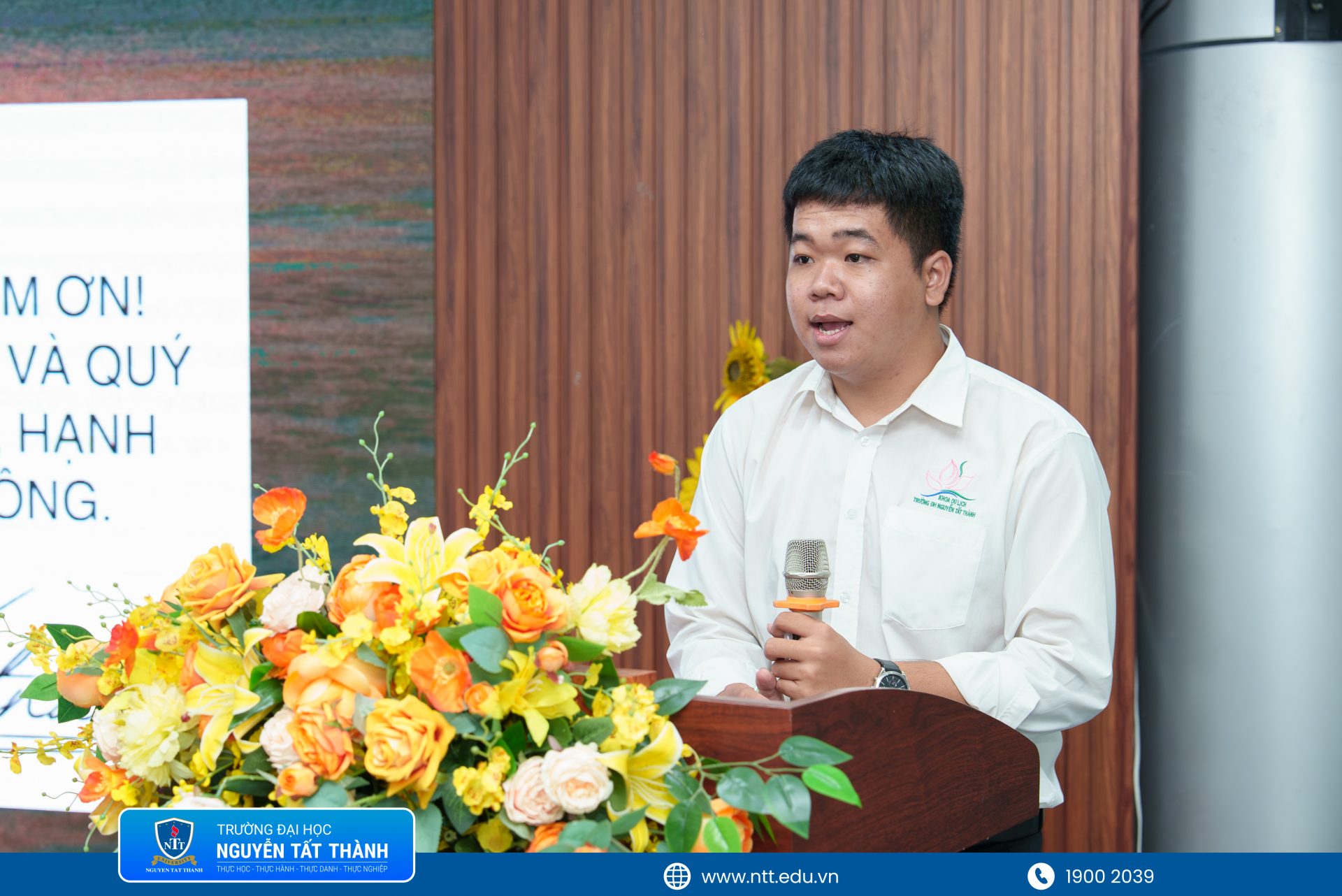
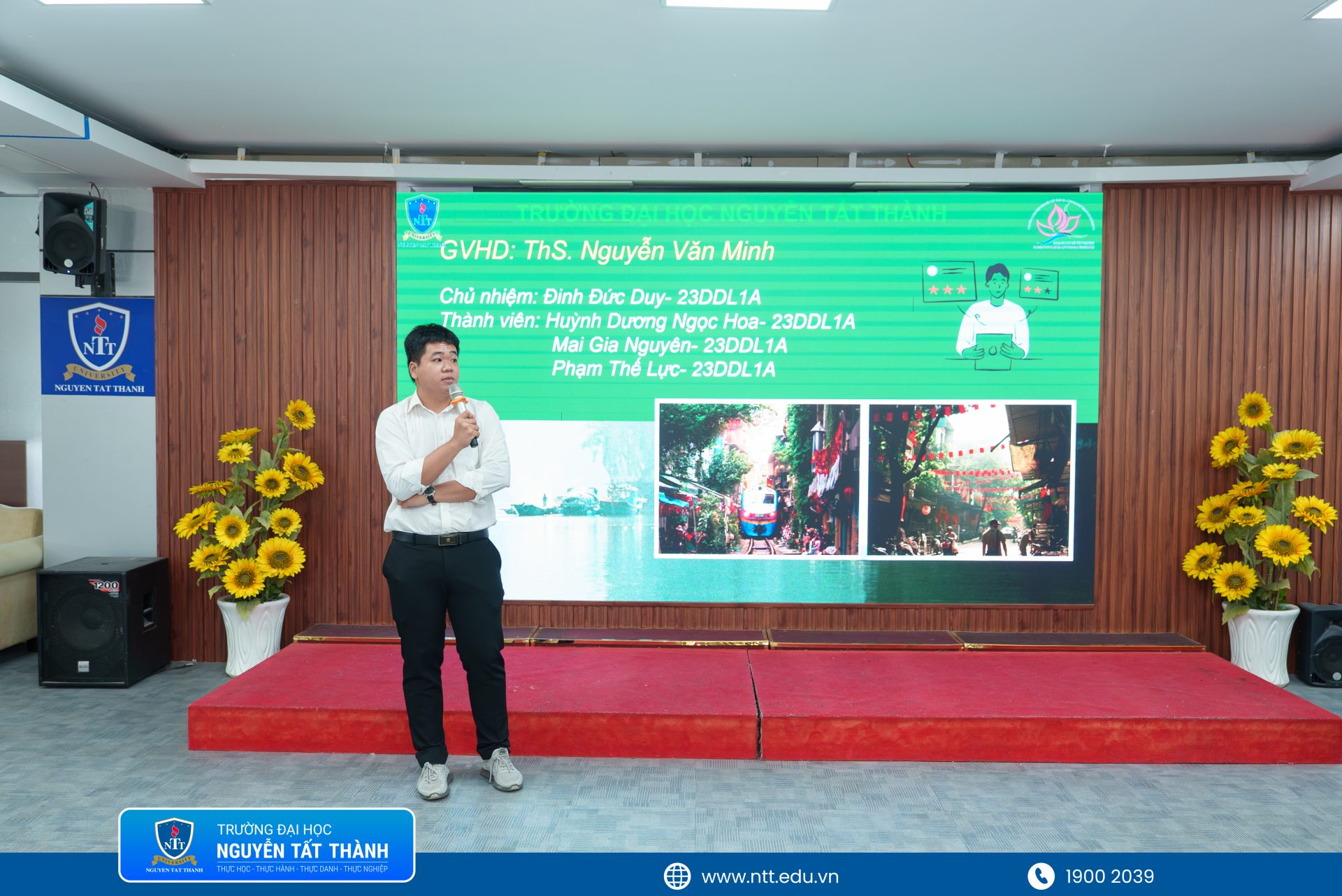
Students of the Faculty of Tourism confidently present their research projects in both oral and poster formats, directly defending their viewpoints, explaining ideas, and receiving feedback from the professional council.
From TikTok, AI to new questions in the tourism industry
The highlight of this year’s conference is that many topics stem from movements very close to life and profession. In the technology and AI in tourism group, students approached issues such as the impact of short videos on spontaneous travel behavior, the application of artificial intelligence in hotel operations, and the application of digital technology in eco-tourism development.
These topics show that NTTU Faculty of Tourism students do not stand outside the new industry trends. From how a short video can suggest an itinerary for Gen Z, to AI participating in hotel operations, student groups have raised research questions from the very changes taking place in tourist behavior, service management, and destination communication.
In the hotel management and customer experience group, students approached issues close to business practice such as the work motivation of housekeeping staff, the influence of electronic word-of-mouth on service selection, and the level of student interest in digital communication in tourism training.
Besides that, topics on sustainable tourism and destination development also received attention, such as developing marine tourism associated with environmental education, promoting spiritual tourism at Ba Den Mountain, and applying digital technology to eco-tourism development at Mui Ca Mau National Park.
The group of topics on culture and heritage approached content with value for conservation and development of tourism products such as the brocade weaving craft of the S’tieng people, the cultural space of ceramic villages, folk beliefs, and the cultural adaptation strategies of Vietnamese enterprises in the international market.
Overall, the 30 projects registered for the conference created a diverse picture of how NTTU Faculty of Tourism students approach their field of study: from technology to people, from services to destinations, from indigenous culture to sustainable development.
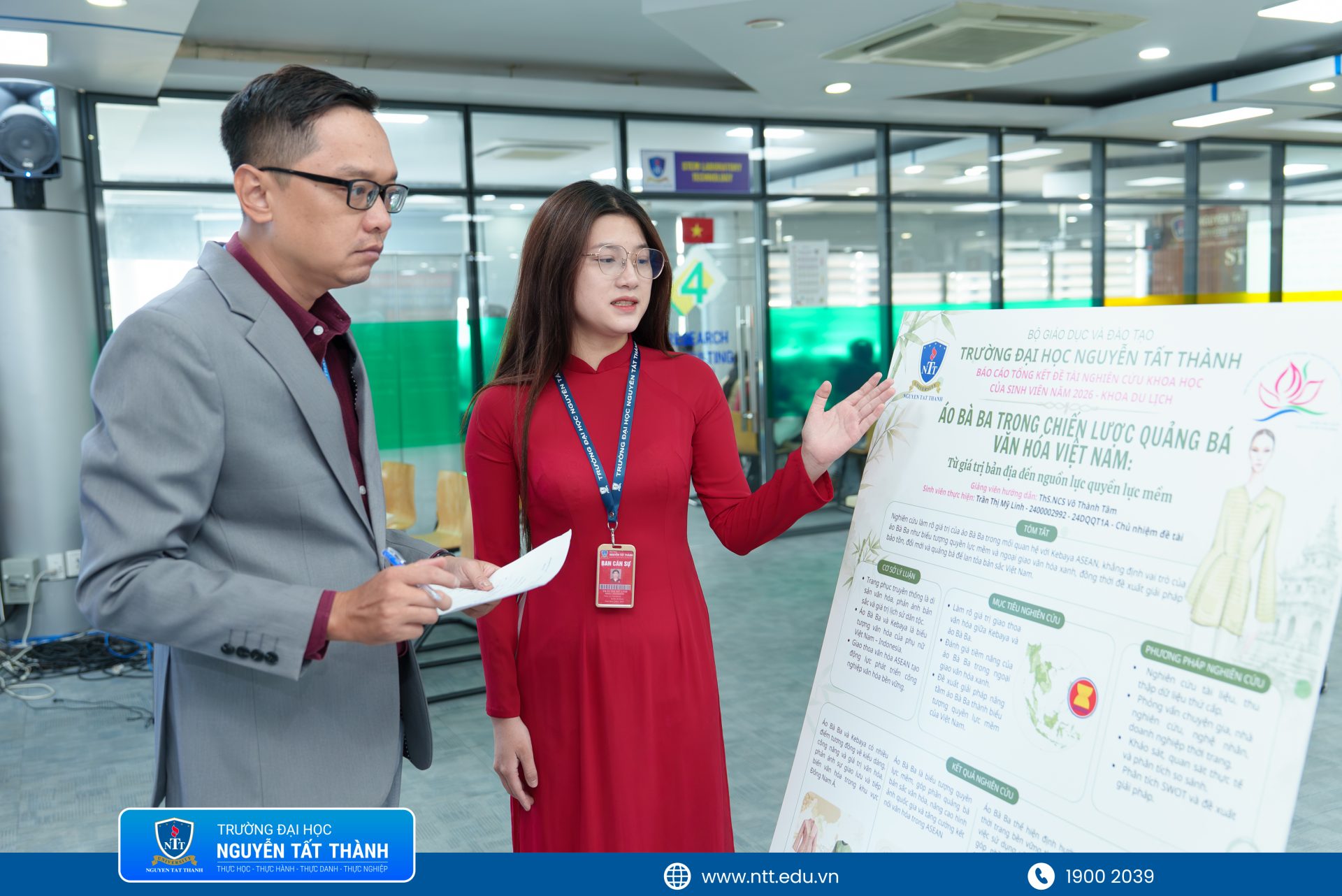
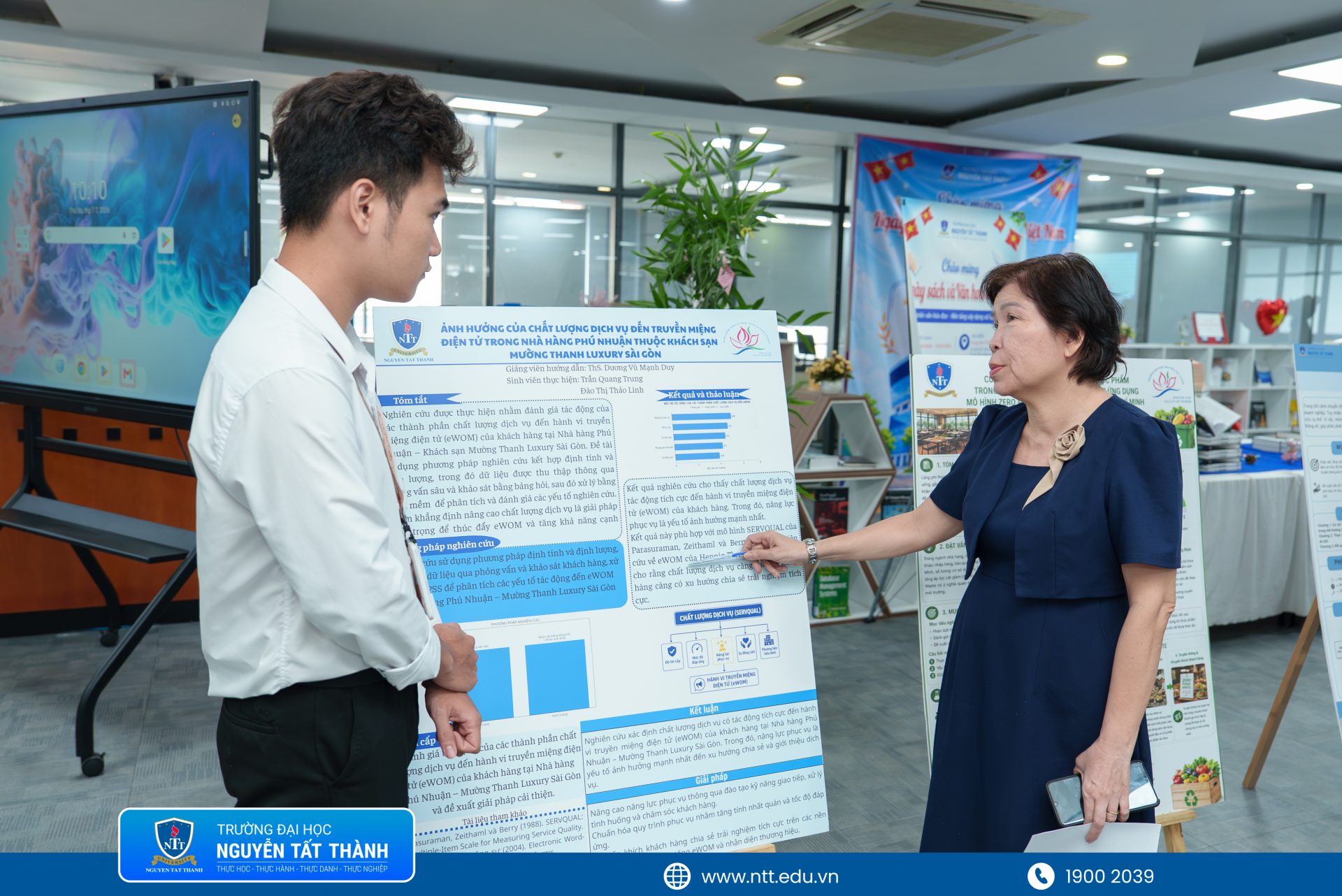
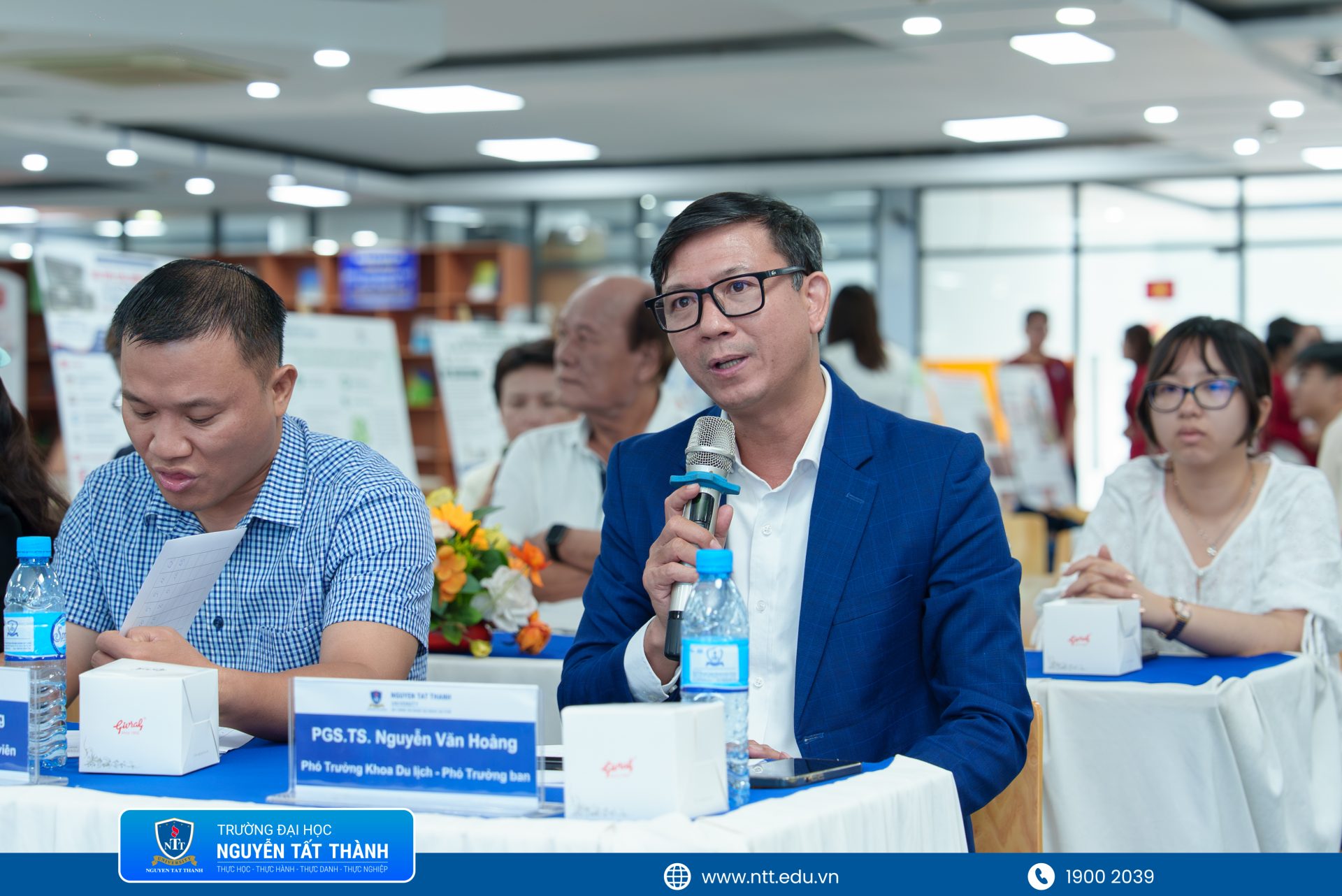
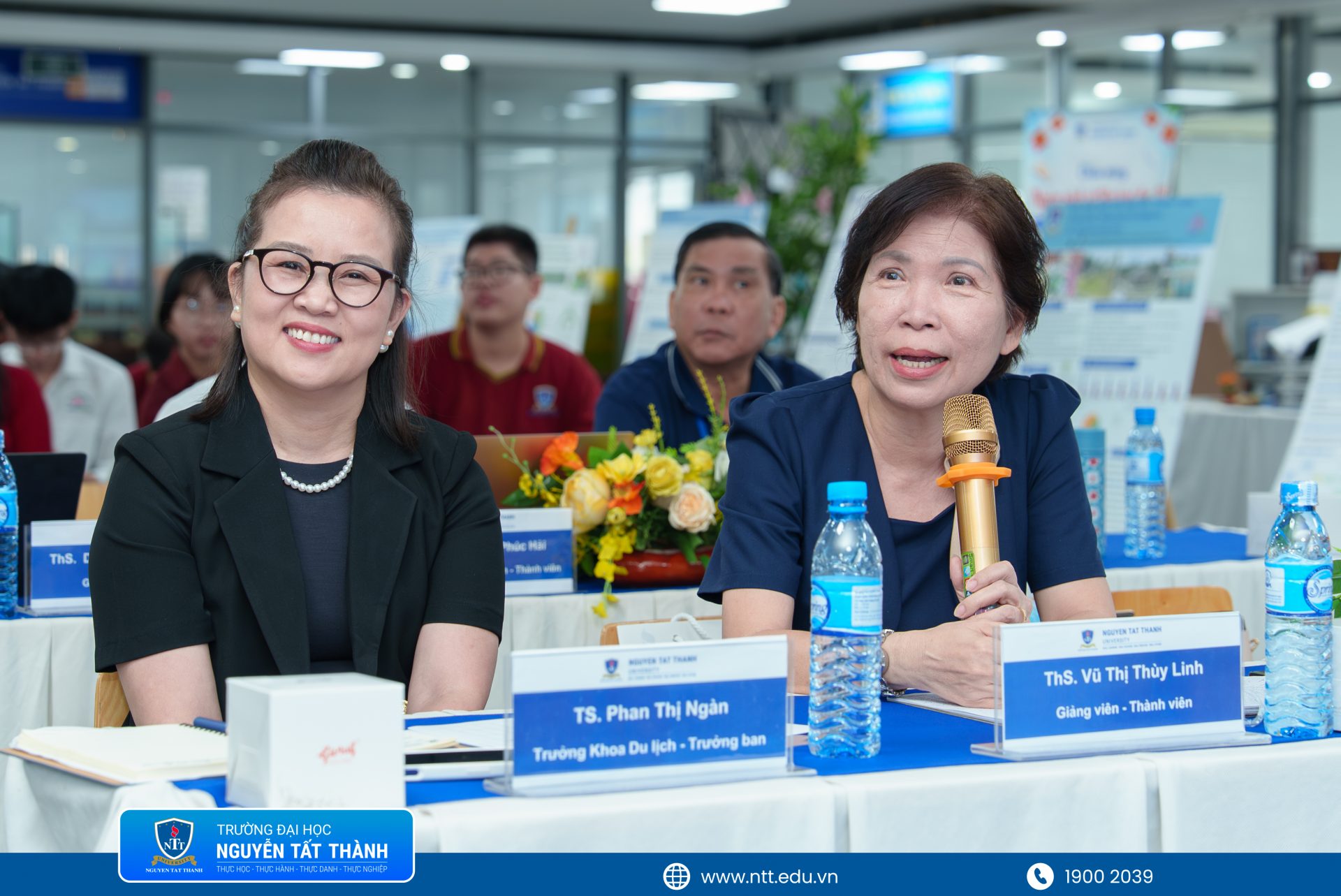
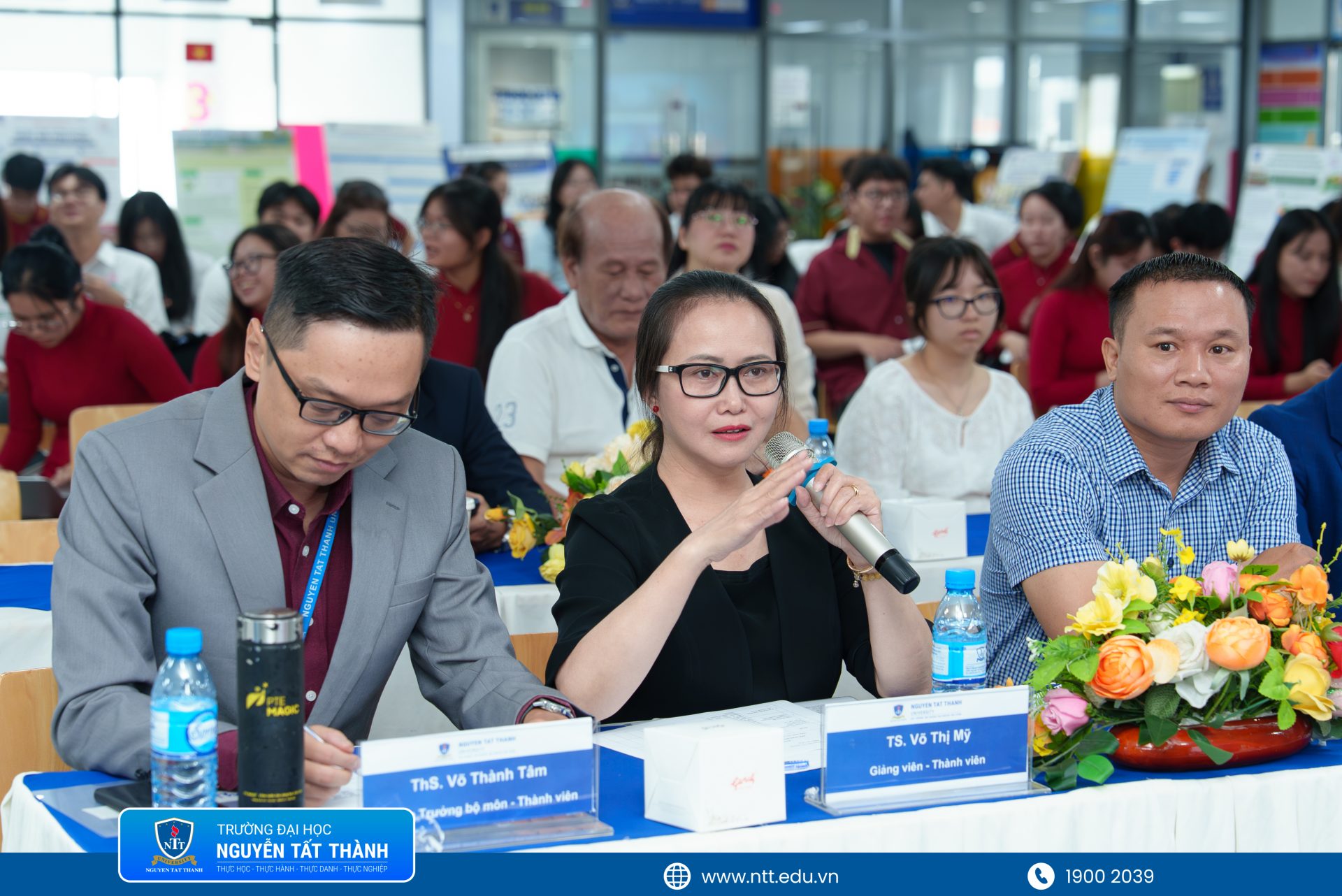
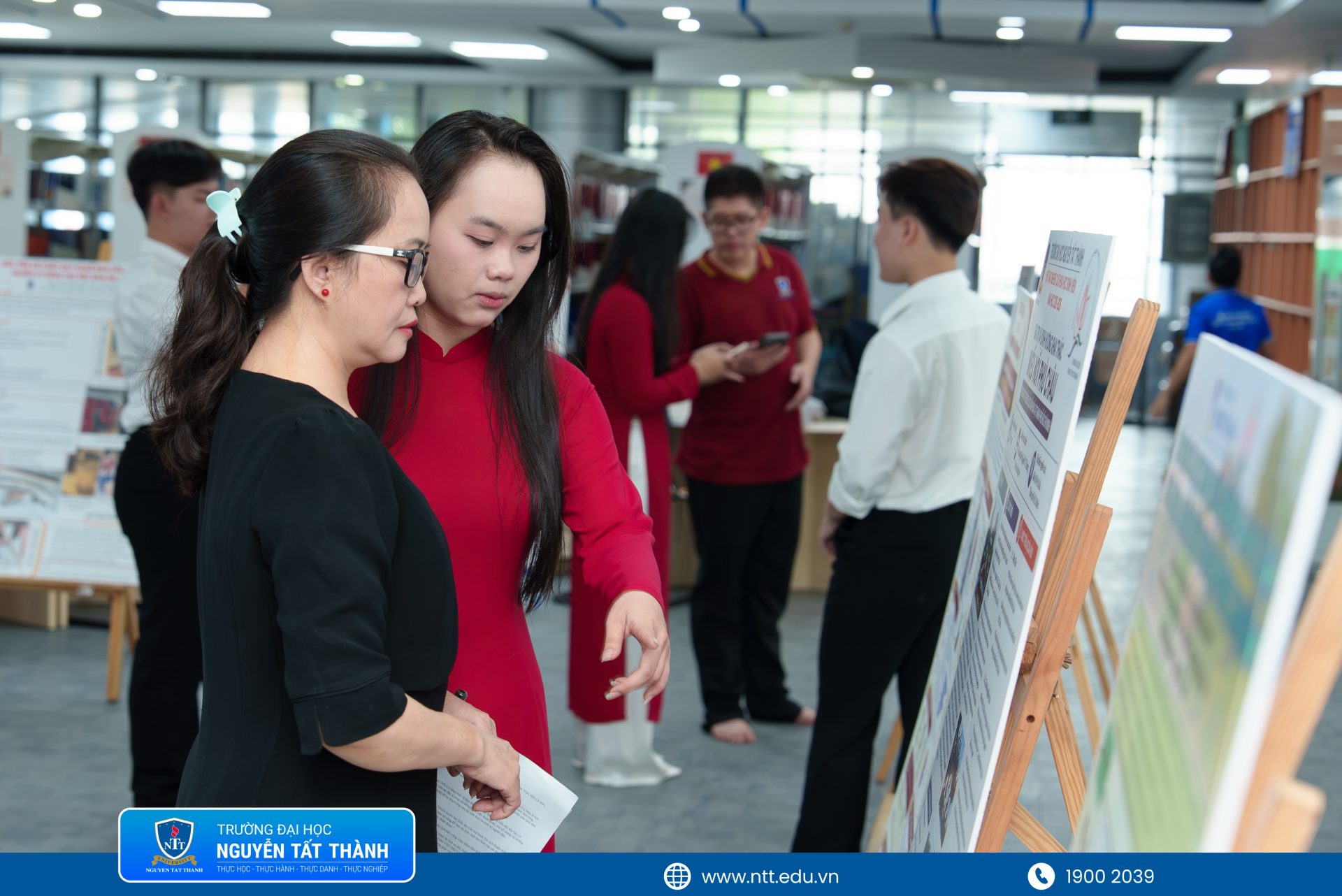
The jury provides feedback, exchanges professional knowledge, and offers guidance for project completion, helping students of the Faculty of Tourism improve research quality after their presentation.
First prize in oral presentation goes to the digital detox tourism project
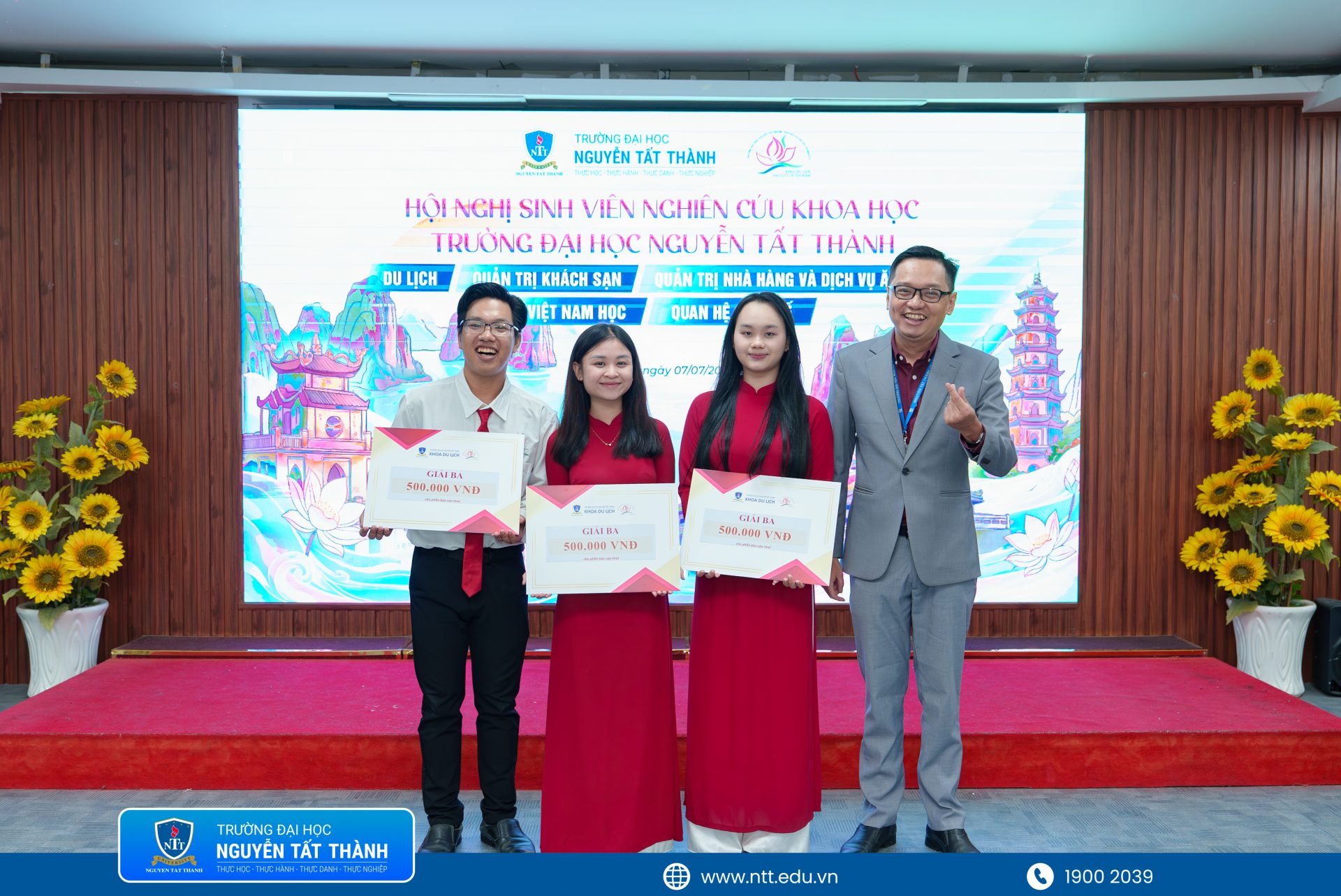
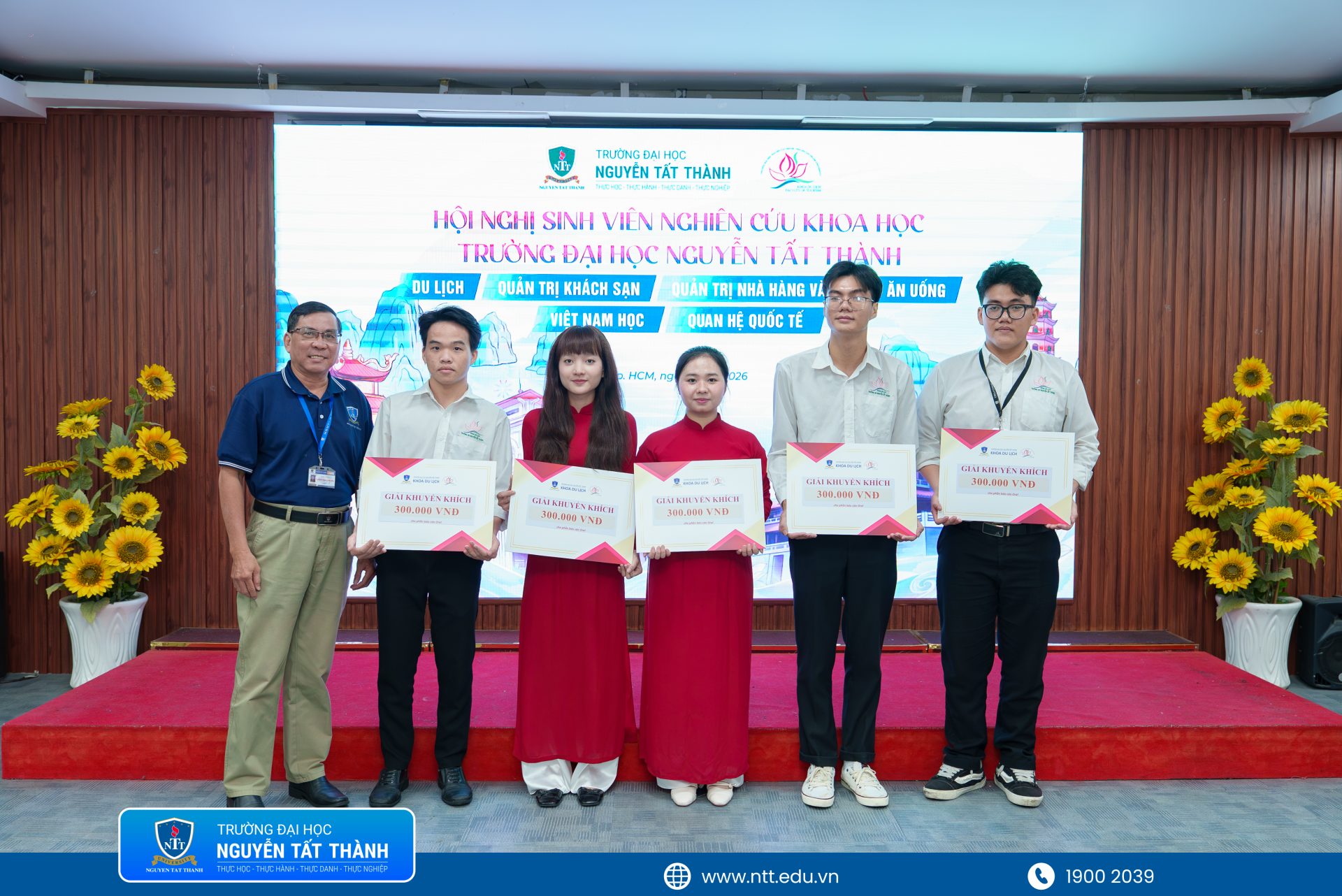
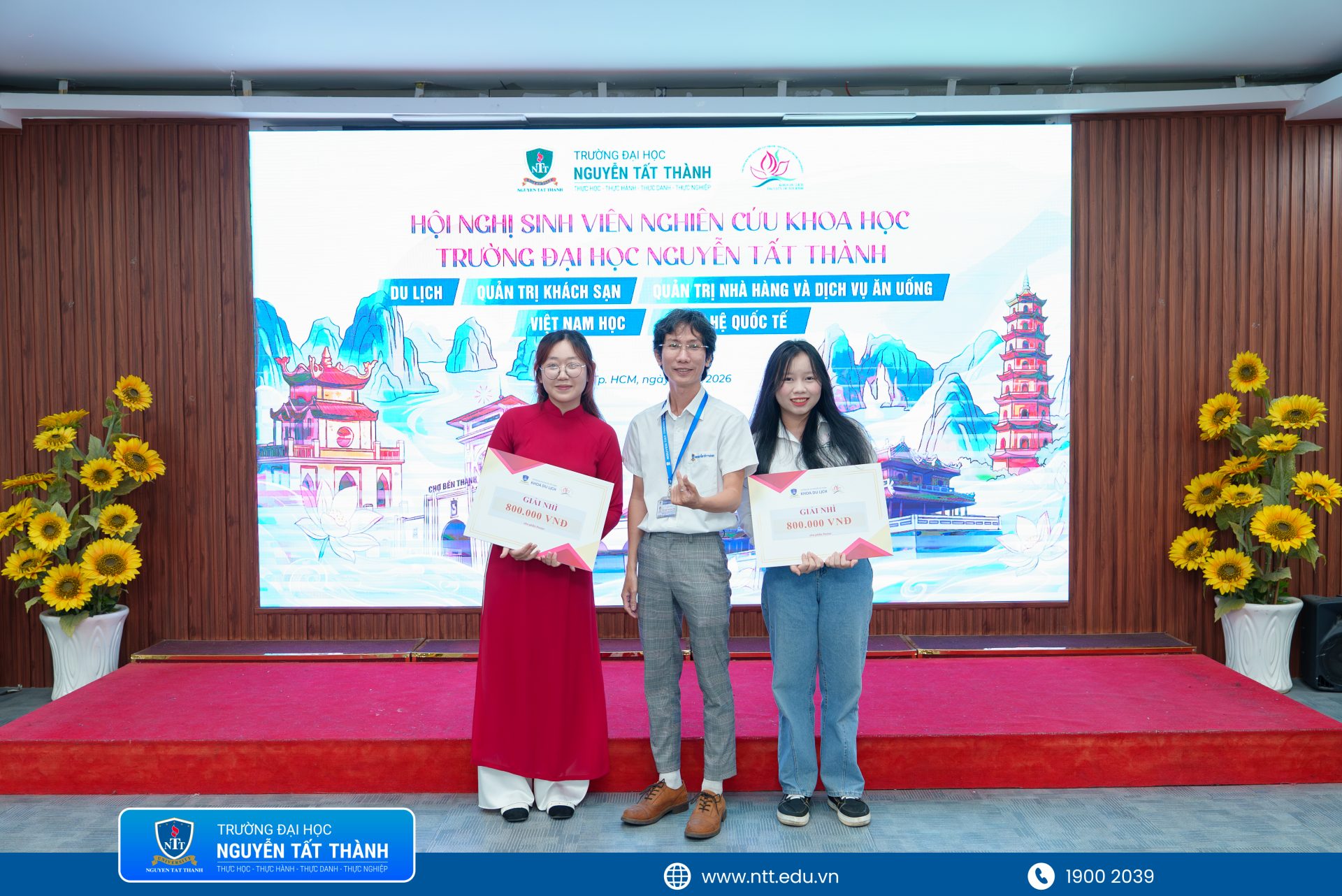
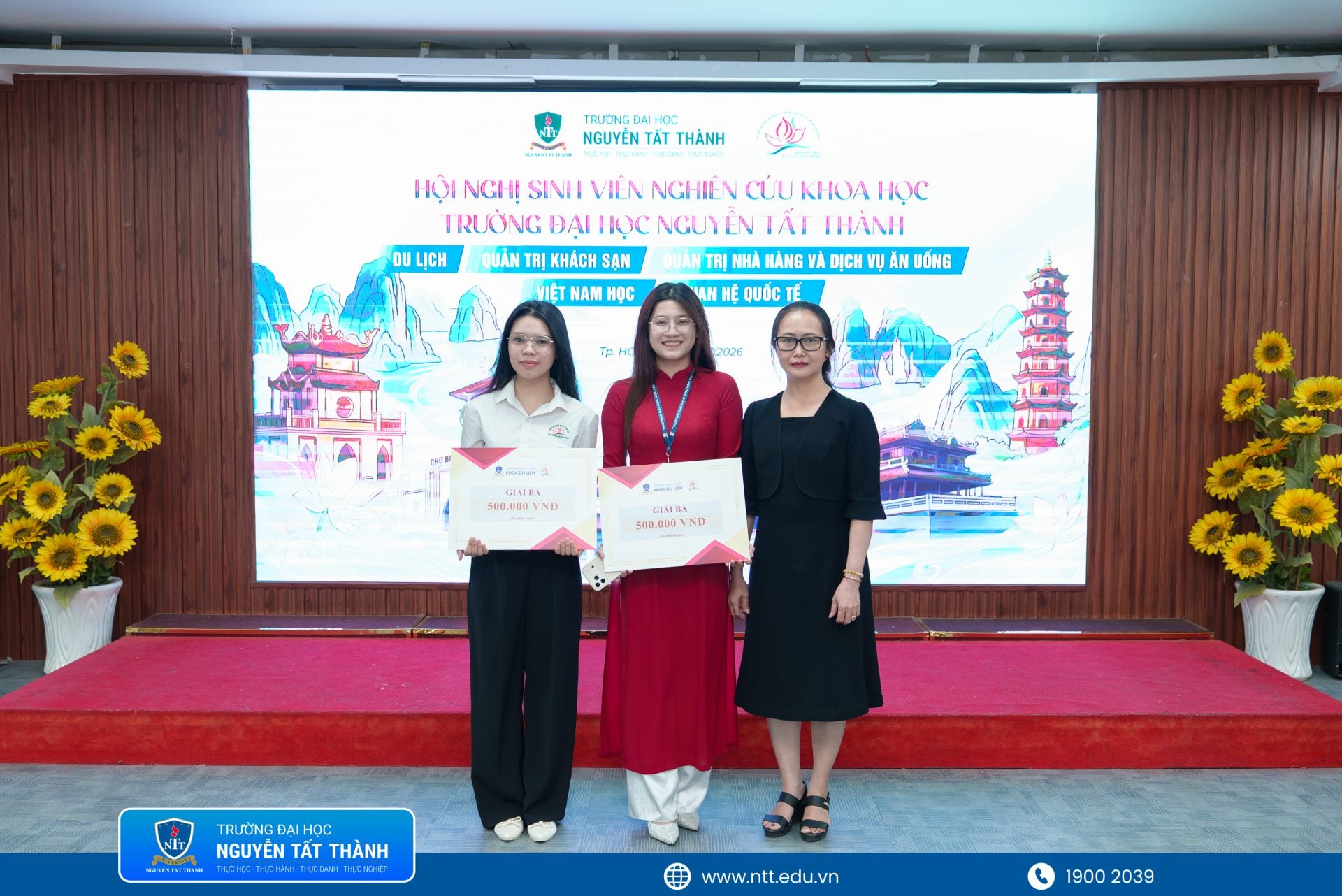
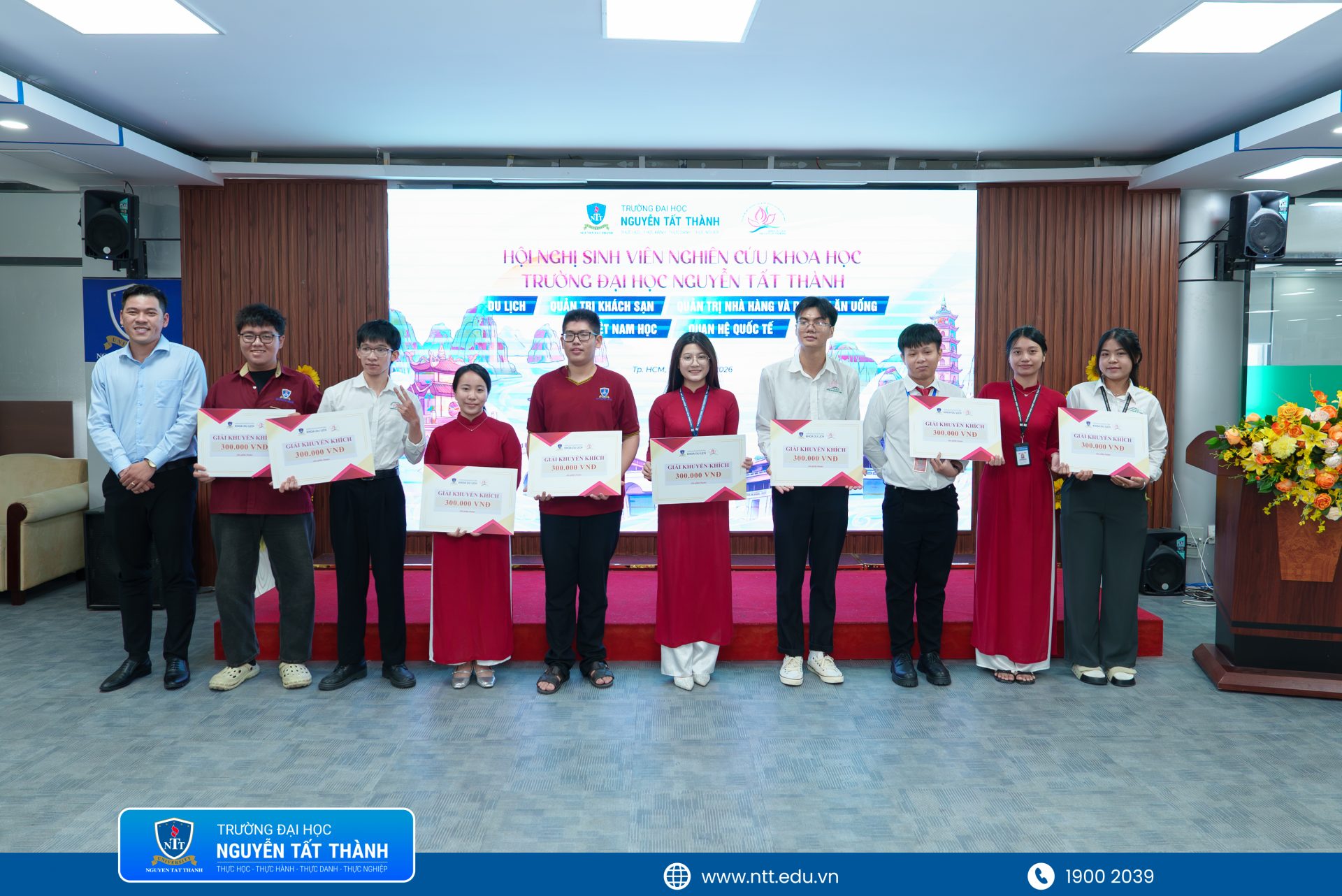
At the conference, the oral presentation competition awarded 1 first prize, 2 second prizes, 3 third prizes, and 5 consolation prizes. The first prize went to the project “Technological resistance of tourists and intention to participate in digital detox tourism: Implications for developing specific tourism products on Ly Son Island, Quang Ngai Province” by the student group: Phan Thi Hoa Cuc, Phan Thi Phuong Nghi, Tra My, and Cao Thi Hoai Phuong.
The project was highly appreciated for choosing a new topic, associated with the trend of mental health care tourism, reducing technology dependency, and developing specific tourism products at island destinations. This is also one of the examples showing that students of the NTTU Faculty of Tourism have begun to observe changes in the experience needs of modern tourists to form research directions.
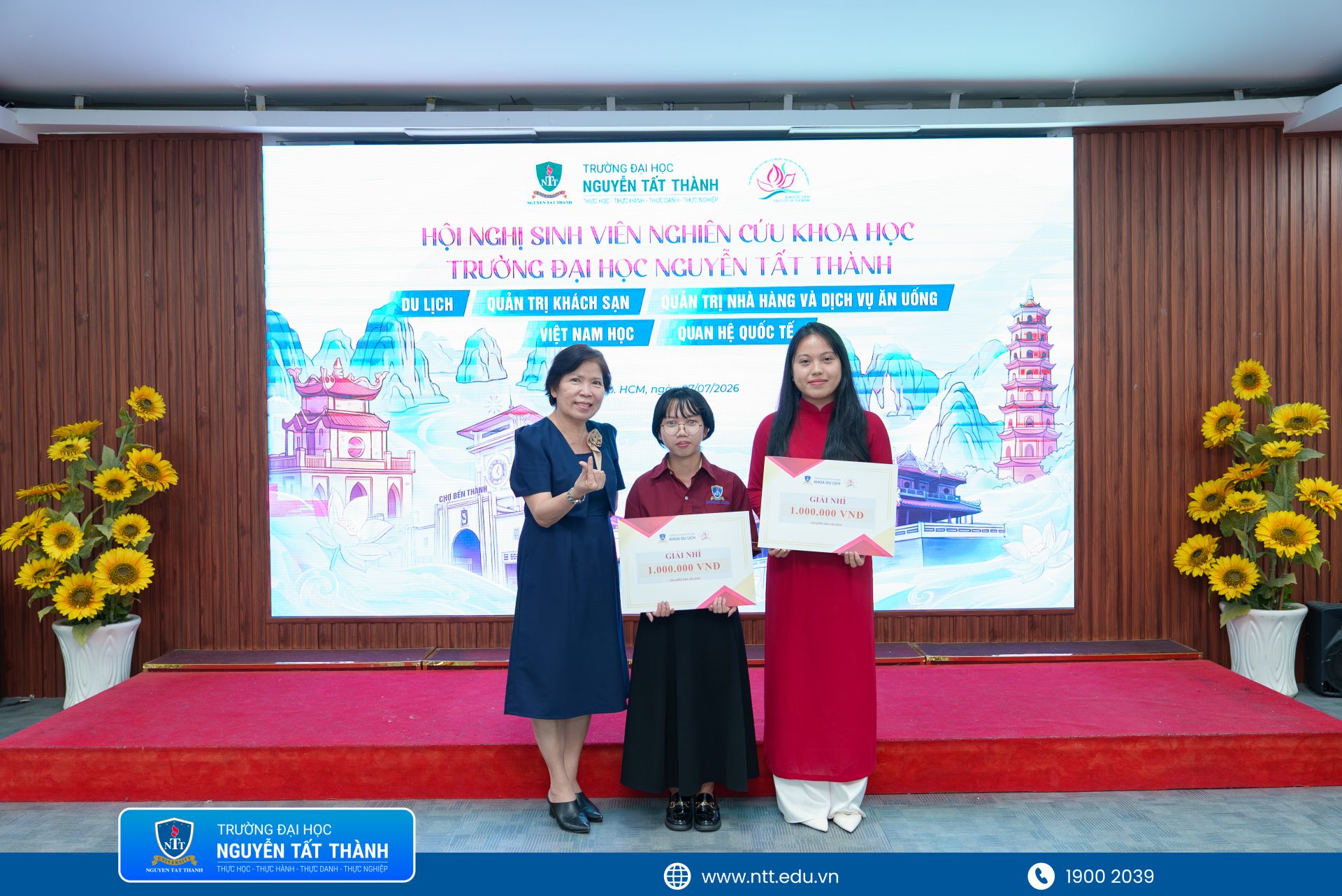
Besides direct tourism topics, the poster session also recorded interdisciplinary research directions associated with economy, trade, and the context of integration. In the poster design competition, the conference awarded 1 first prize, 2 second prizes, 3 third prizes, and 10 consolation prizes. The first prize for poster design belonged to the project “Impact of CPTPP on cross-border e-commerce in Vietnam: Case study of e-commerce platform Shopee from 2019 to present” by student Le Thi My Trinh.
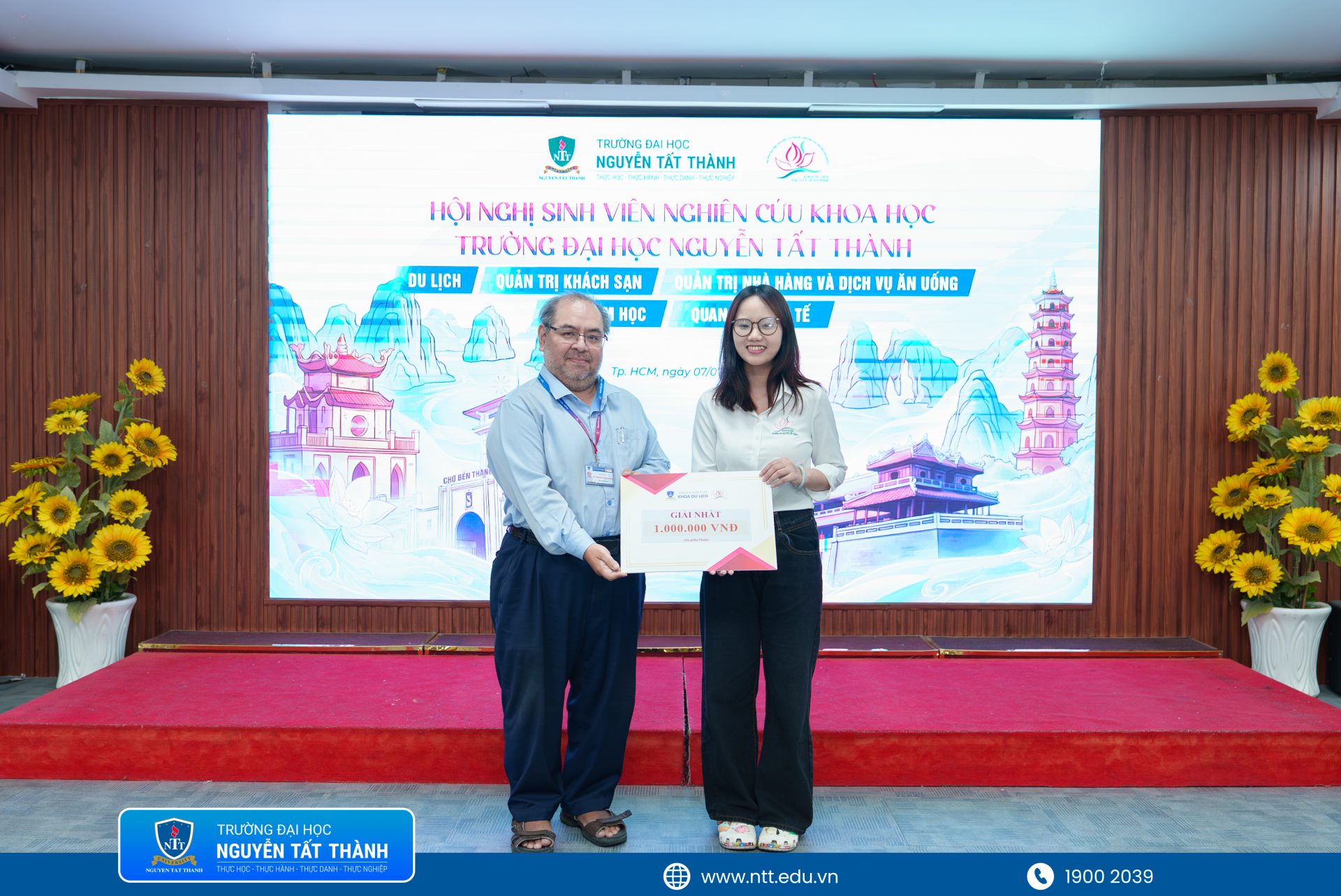
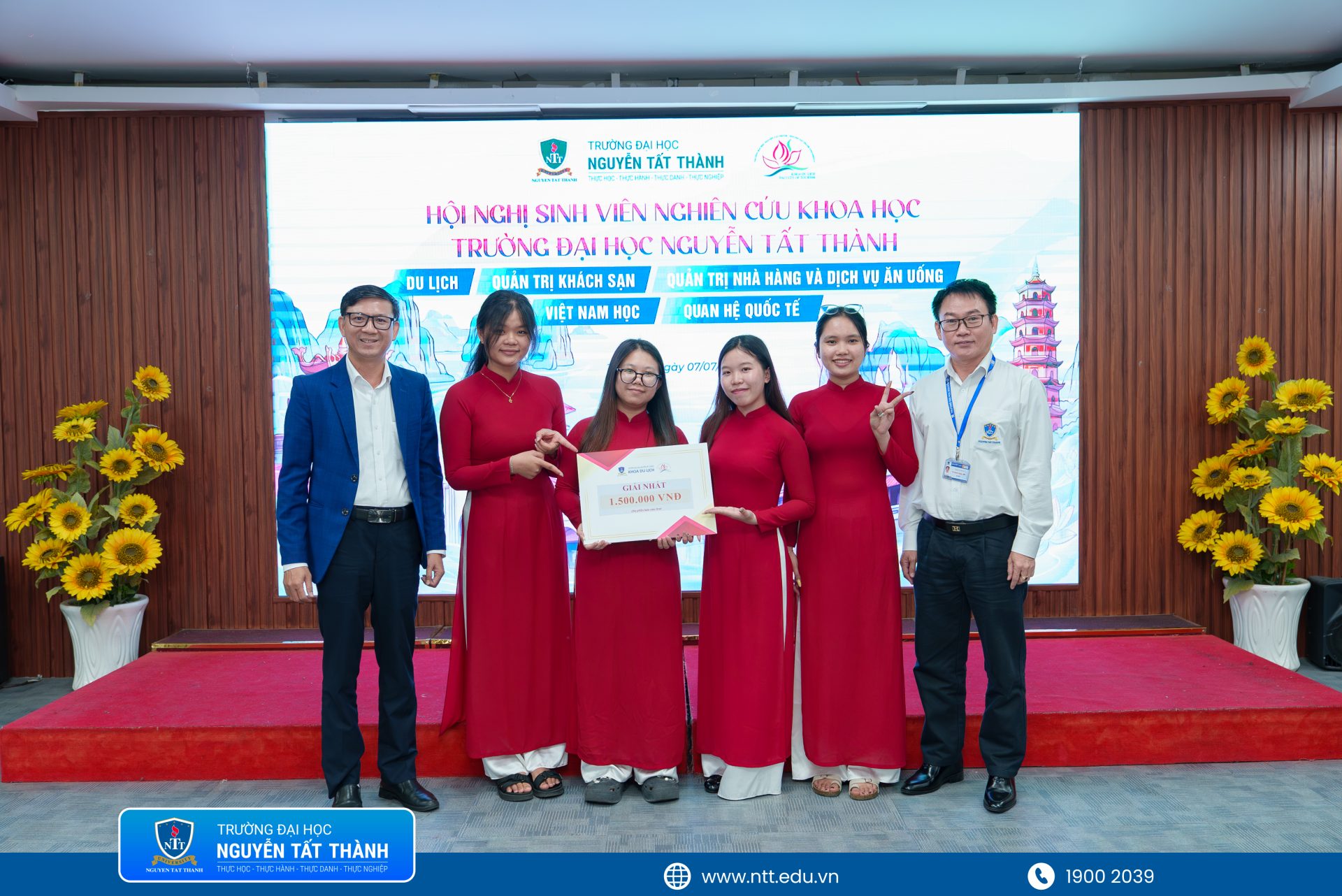
The organizing committee awards prizes to student groups with excellent research projects and posters, recognizing creative ideas with high application value for the tourism and hospitality sector.
NTTU Faculty of Tourism promotes research associated with the profession
Through the conference, students of the Faculty of Tourism have the opportunity to develop critical thinking, apply specialized knowledge, practice teamwork skills, data analysis, and academic presentation. With two main forms, oral reporting and poster presentation, students not only present research results before the jury but also directly answer questions, receive feedback, explain ideas, and defend their research viewpoints.
This method of organization helps students step by step practice their ability to systematize issues, critical thinking, academic expression skills, and the capacity to complete projects after feedback. These are necessary skills for learners to mature in the university environment, while also better preparing for graduation theses, postgraduate studies, scientific publications, and future careers.
A notable point of the projects is that most of them stem from the practical problems of businesses, communities, and destinations. From there, students propose solutions serving management, marketing, product development, environmental education, and conservation of tourism resources. This approach is consistent with the orientation of training that bridges theory with practice, helping students practice research capacity in an academic environment but still sticking to the needs of the industry.
The Student Scientific Research Conference for the 2025-2026 academic year continues to affirm the role of the Faculty of Tourism, Nguyen Tat Thanh University in building a dynamic academic environment, encouraging students to be creative and research from practice. From the first projects, students not only learn how to do research but also learn how to look at the tourism industry with the mindset of a professional: knowing how to observe, how to ask questions, how to analyze data, and how to propose solutions for businesses, communities, and destinations.
This is also the value that the Faculty of Tourism and Nguyen Tat Thanh University are aiming for in training high-quality tourism human resources: personnel who not only know how to work, but also know how to research, adapt, and create solutions for the sustainable development of Vietnam’s tourism industry.
Faculty of Tourism