
 Tiếng Việt
 Home
Home Introduction
 Announcements
 Student Essential
 Event attendance lists
What role do seaports play in the logistics journey from Vietnam to global markets? How do technology systems, equipment, and human resources at a deep-water container port coordinate to keep cargo moving seamlessly? Theoretical concepts from textbooks became vivid and intuitive during a field trip to Tan Cang – Cai Mep International Terminal (TCIT) by Logistics and Supply Chain Management students from NTT Institute of International Education (NIIE) – Nguyen Tat Thanh University.
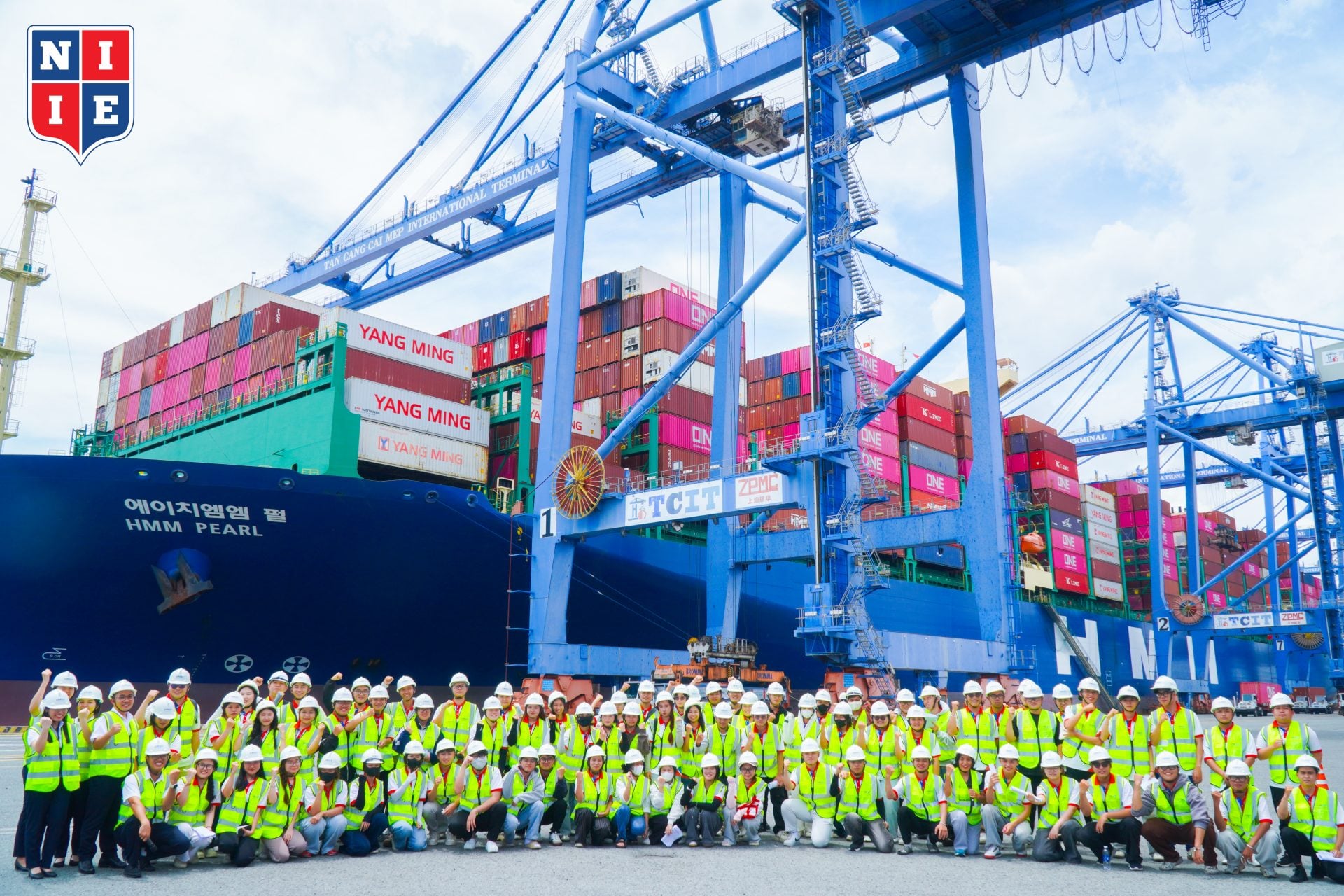
Accompanying the students on this journey was Dr. Ngo To Giao alongside faculty members and administrative staff. Organized in alignment with the courses “Introduction to Logistics and Supply Chain Management” and “Logistics Information Systems”, this practical learning trip allowed NIIE students to observe firsthand how classroom knowledge is applied in a real-world port operation environment.
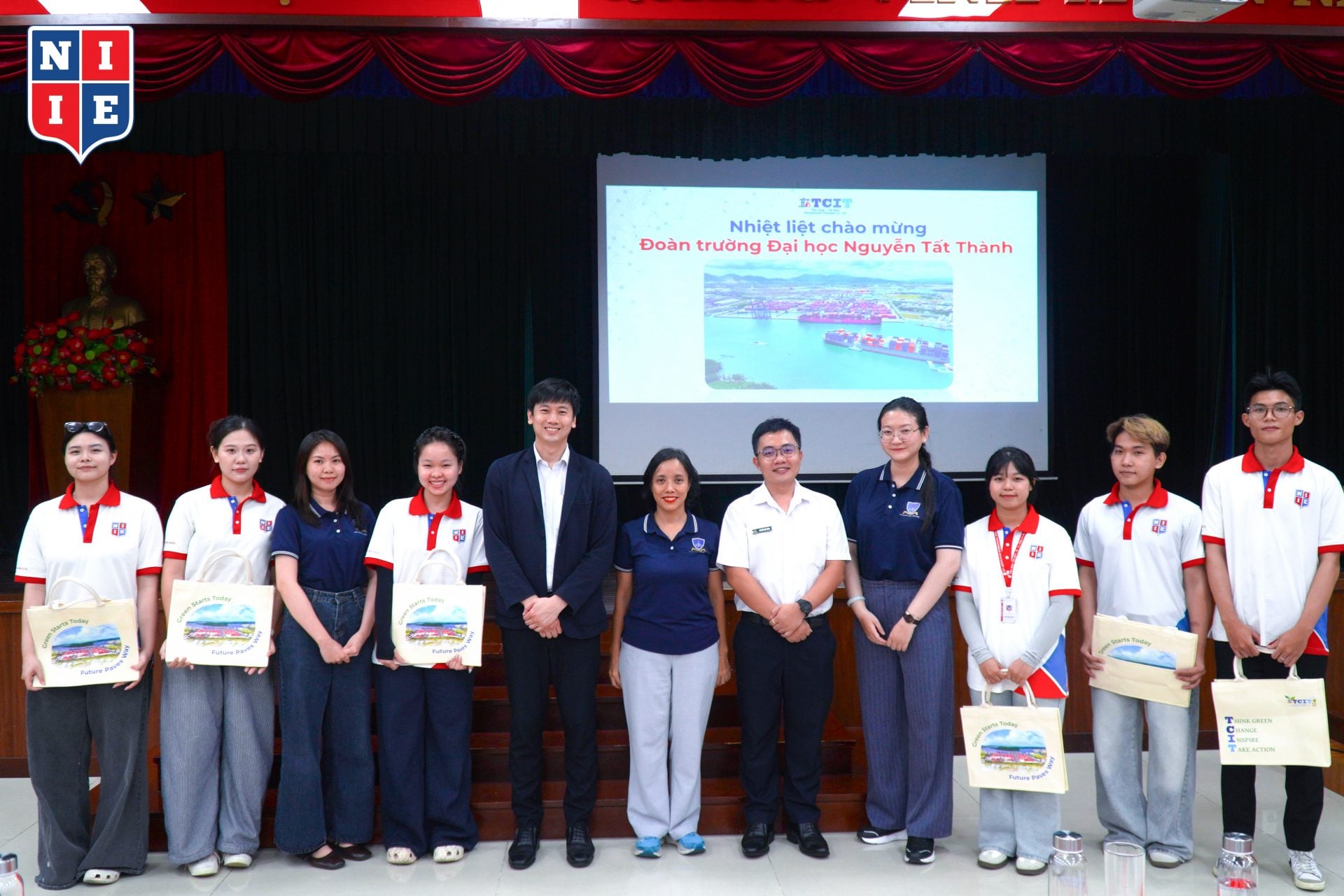
Dr. Ngo To Giao (center) with representatives from the International Port
From the lecture hall to a deep-water container port
Tan Cang – Cai Mep International Terminal (TCIT) provided an ideal practical setting for students to better visualize the position of seaports within the global logistics and supply chain network. As a deep-water container port, TCIT is capable of accommodating ultra-large container vessels, acting as a crucial gateway connecting cargo with international maritime shipping routes. Here, cargo handling is far more complex than simply “loading containers onto ships”; behind every move lies a seamlessly integrated system comprising the port, shipping lines, freight forwarders, trucking companies, inland waterway barges, cargo owners, and regulatory authorities.

The field trip kicked off with an overview of TCIT’s operational activities
During the tour, students received an overview of TCIT’s operational activities, terminal services, and the port’s role within the broader supply chain. Key concepts surrounding deep-water ports, international gateways, and the competitive drivers behind Vietnam’s logistics sector were highlighted. Furthermore, students had the opportunity to observe designated operational zones including the berths, container yards, handling equipment, gate areas, and the central control center.

Starting from geographical location, students explored core concepts of deep-water ports, international gateways, and factors driving Vietnam’s logistics competitive edge
Direct observation bridged the gap between academic theory and practice. Concepts such as import-export container flows, berth allocation, yard management, and traffic connections were no longer just static points on presentation slides. Students gained a vivid understanding of a container’s end-to-end journey—from entering through the port gate, stacking in the yard, moving to the berth, and connecting to multimodal transport systems.

Theoretical questions from students were addressed with real-world insights and practical experience
When logistics is a story of both physical cargo and digital data
One of the highlights of the visit was exploring how physical flows, information flows, and documentation flows synchronize seamlessly during seaport operations.
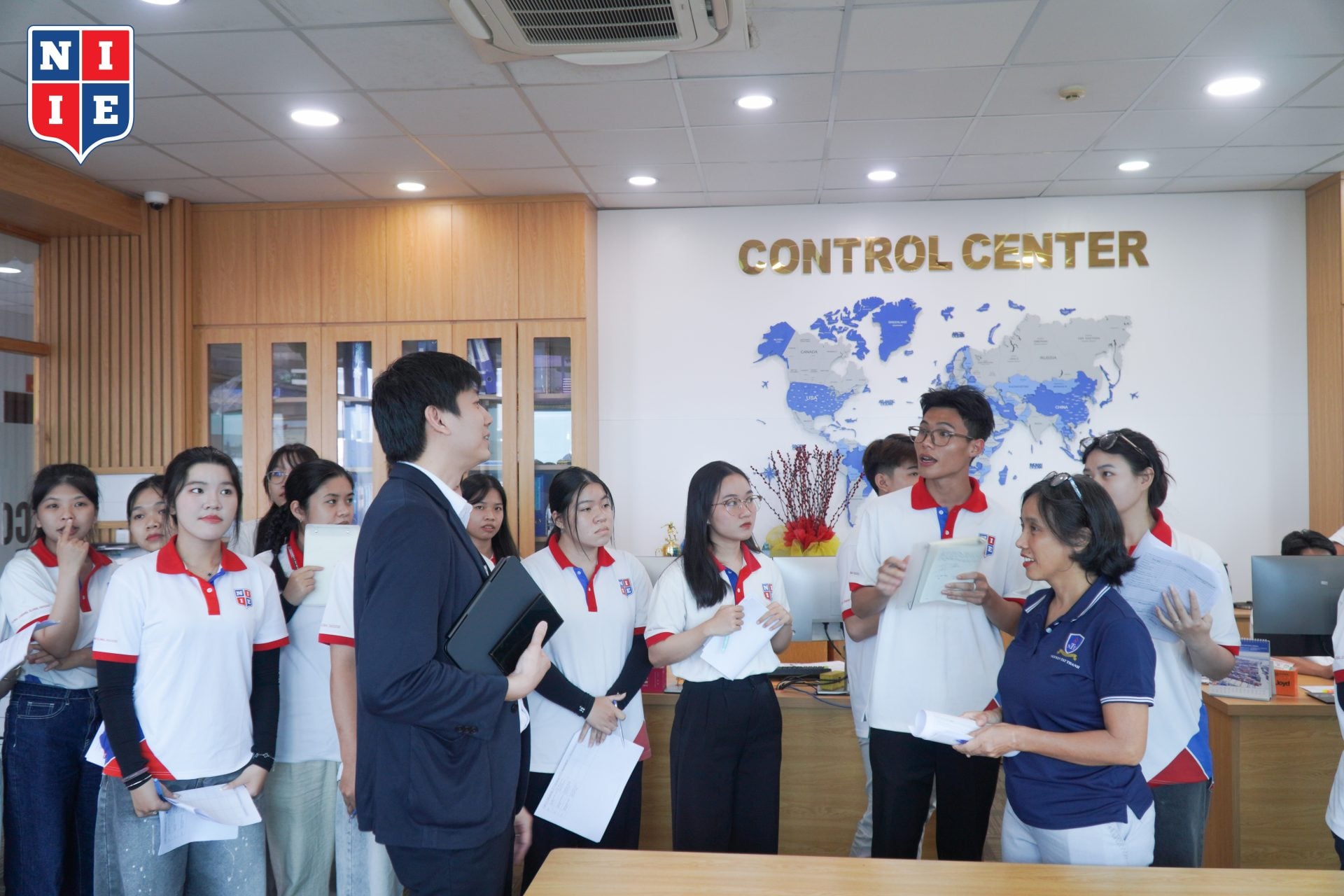
NIIE students at the Control Center, where physical cargo, information, and documentation flows are orchestrated for seaport operations
Students learned about the functions of heavy equipment such as ship-to-shore (STS) cranes, rubber-tired gantry (RTG) cranes, terminal tractors, and container reach stackers. Alongside physical machinery, technology plays a pivotal role in vessel and yard planning, gate management, container tracking, and electronic data interchange (EDI).
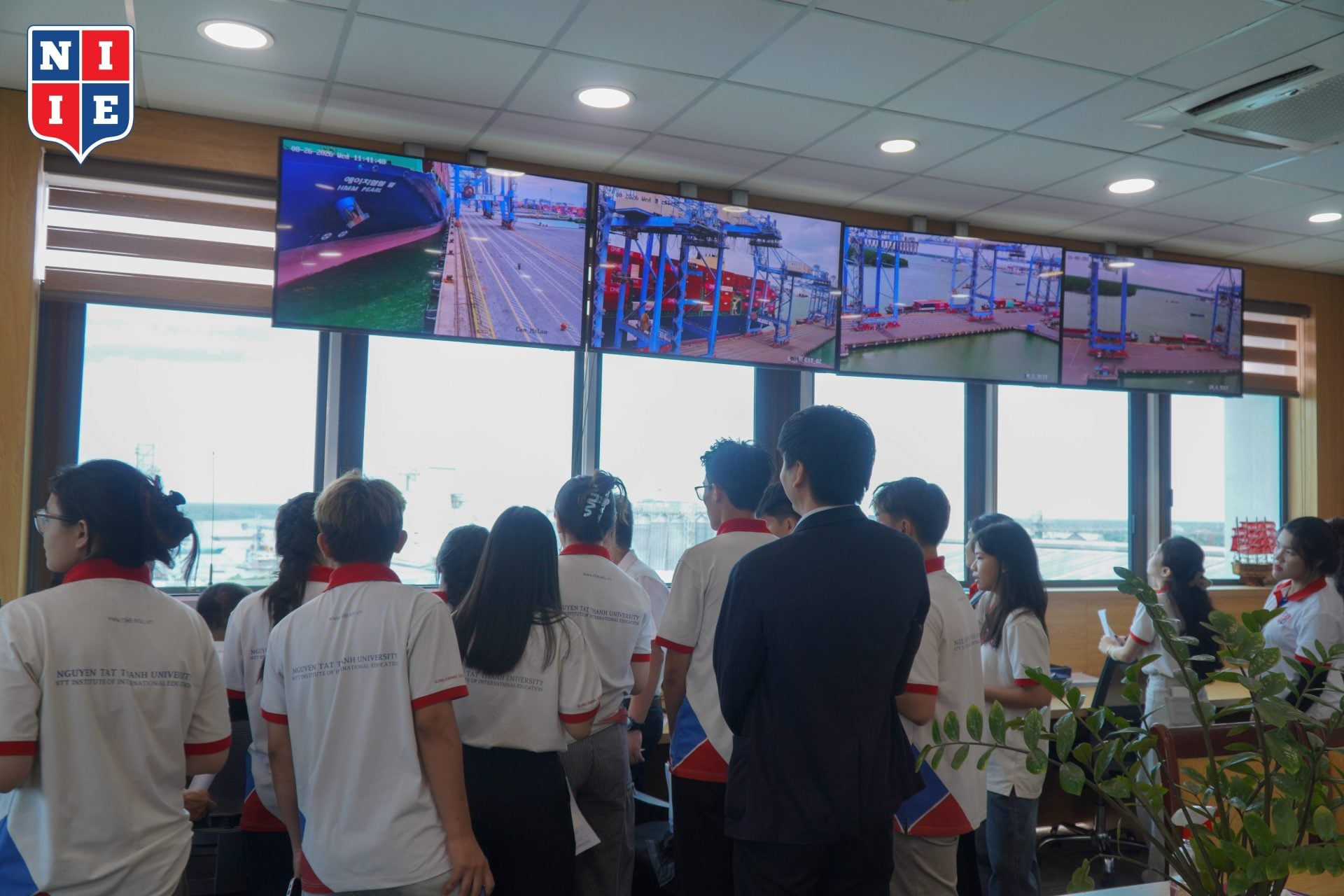
A managerial perspective at the Control Center
This was an invaluable experience for students taking “Logistics Information Systems”, allowing them to clearly see the direct correlation between digital technology and daily physical operations. Every container movement in the field is accompanied by real-time data updates, shipping documentation, and continuous decision-making recorded on the central software system.
The trip also offered insights into multimodal transport connectivity, emphasizing the crucial roles of road transport and inland waterways (barges) in transferring containers between the Cai Mep port cluster, manufacturing hubs, distribution centers, and inland container depots (ICDs).
Safety, green ports, and fresh perspectives on logistics careers
Beyond standard operating procedures, students were introduced to emerging priorities in the modern logistics industry, including occupational safety, maritime security, and sustainable green port development.
In a high-density operational environment filled with heavy machinery and continuous vehicular movement, strict operational discipline and safety compliance are mandatory requirements. Observing these operations live gave students a clear view of how personnel, equipment, and systems must collaborate rigorously to maintain maximum operational efficiency while effectively mitigating operational risks.

The importance of safety and security was emphasized during the trip, helping students understand how port clusters operate efficiently while minimizing risks
Key topics such as energy conservation, carbon footprint reduction, waste management, and the integration of eco-friendly technologies broadened the students’ understanding of Green Logistics and Sustainable Development—a top trend reshaping modern global supply chains.
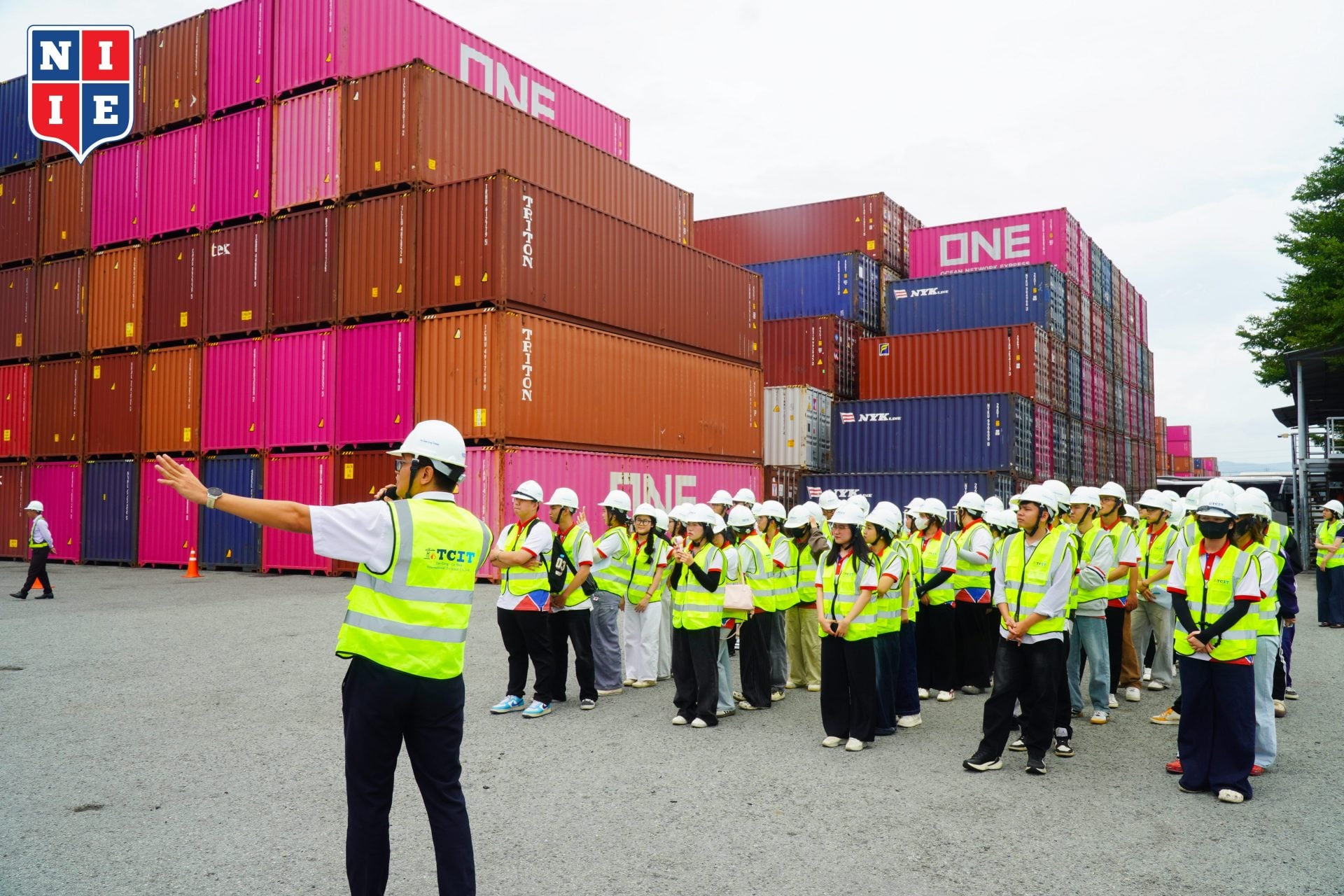
The field trip provided students with practical experience while giving them a clearer picture of career opportunities in the logistics sector
Importantly, through hands-on exposure, students gained direct visibility into various professional roles, including dispatchers, vessel/yard planners, gate inspectors, documentation specialists, equipment operators, HSE officers, IT specialists, port sales representatives, and customer service staff. This practical perspective helps each student map out career paths aligned with their individual skills and interests.
Travel to observe, learn to understand deeper
The field trip did not end when students left the port. During the visit, teams were assigned structured observation tasks, including recording technical terminology, tracking container workflows, and identifying potential operational bottlenecks or risks. Post-trip, students will analyze their findings, link them to coursework theories, and propose realistic operational improvements.
For Logistics and Supply Chain Management students at NIIE, experiential learning trips like the one to TCIT anchor academic concepts firmly into real-world operational contexts. From a single container or crane to system data, students discover how every link connects to form a seamless end-to-end supply chain. And often, to truly understand how logistics works, the best way is to step out onto the field, observe with your own eyes, and ask your own questions.
Article & Photos: Nhat Thien