
 Tiếng Việt
 Home
Home Introduction
 Announcements
 Student Essential
 Event attendance lists
In the context of Artificial Intelligence (AI) becoming one of the core technologies of the digital era, creating an environment for students to access, research, and apply AI to reality is increasingly prioritized by universities. At Nguyen Tat Thanh University, the 2026 Faculty of Information Technology Artificial Intelligence Competition recently took place, becoming a prominent academic highlight that attracted the attention of a large number of students, lecturers, and technology experts.
The event was organized at the Library Center (3rd floor), An Phu Dong campus, in a solemn, exciting, and highly creative atmosphere. More than 400 students attended to watch, cheer, and directly participate in the competing teams, creating a dynamic academic space where technological ideas were given wings. According to the organizing committee, this is an annual academic activity organized by the Faculty of Information Technology to create a specialized playground for students passionate about artificial intelligence—a field that is developing rapidly and playing an important role in the digital transformation process of enterprises and society.
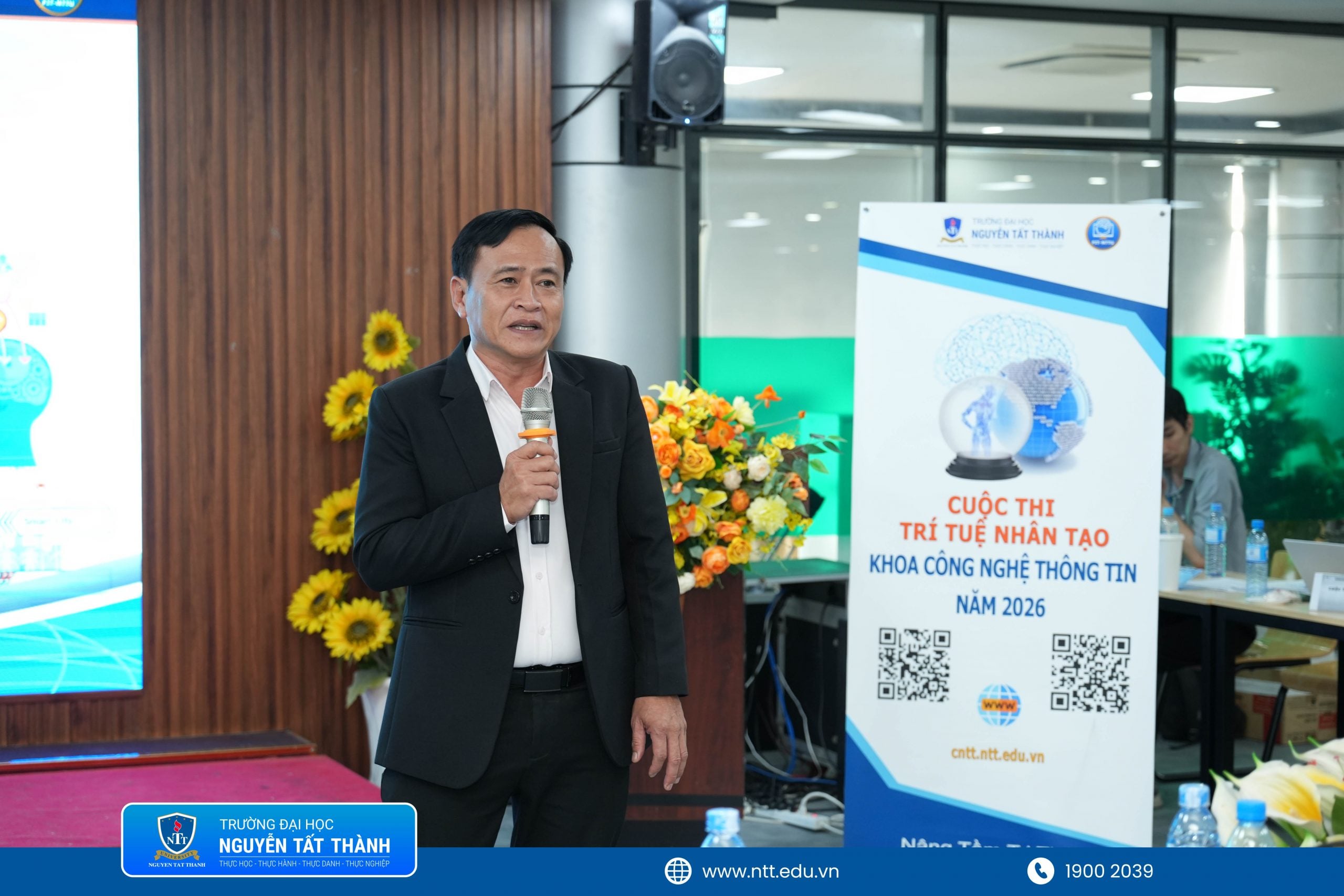
Dr. Nguyen Kim Quoc, Dean of the Faculty of Information Technology, delivers the opening speech and emphasizes the role of AI in solving practical problems
Speaking at the program, Dr. Nguyen Kim Quoc, Dean of the Faculty of Information Technology, stated that the competition is not only an opportunity for students to showcase their professional capabilities but also part of the high-quality human resource training strategy that the university is pursuing.
“AI is no longer just a trend of the future; it is already present in many fields of life. From business, education, and healthcare to agriculture, artificial intelligence is contributing to changing the way humans solve practical issues. Therefore, creating academic playgrounds like this competition is an opportunity for students to develop their research, creativity, and the application of knowledge into reality,” Dr. Nguyen Kim Quoc shared.
According to him, the training orientation of the Faculty of Information Technology is student-centered, enhancing practical experience and promoting applied research. Students are not only equipped with a solid foundation of professional knowledge but are also encouraged to develop innovative and creative thinking right from their university lecture halls.
From the very first minutes of the opening, the atmosphere of the competition became lively with the careful preparation of the teams. Each group brought well-invested products, models, and AI solutions, demonstrating serious research and the outstanding creative abilities of the students.
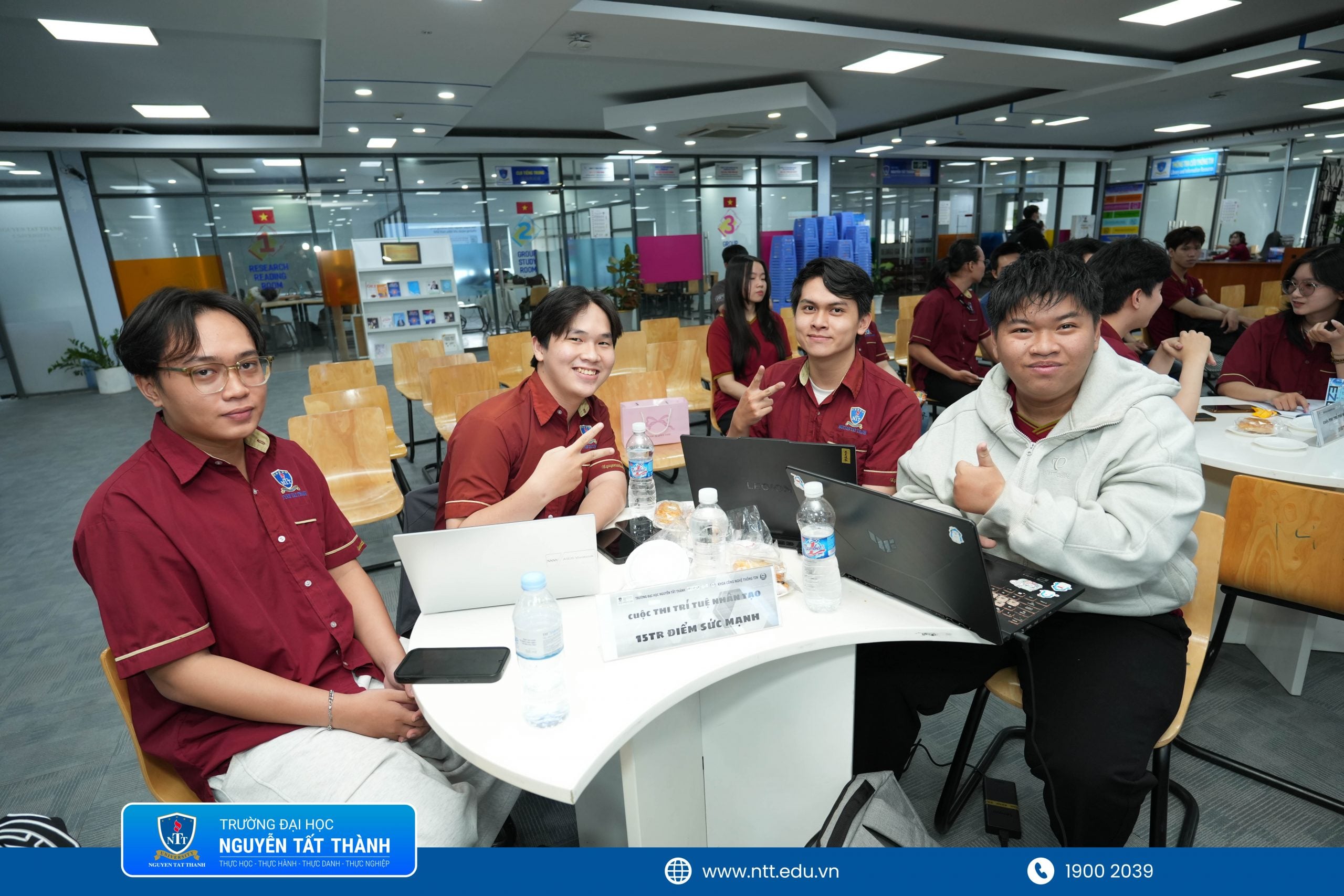
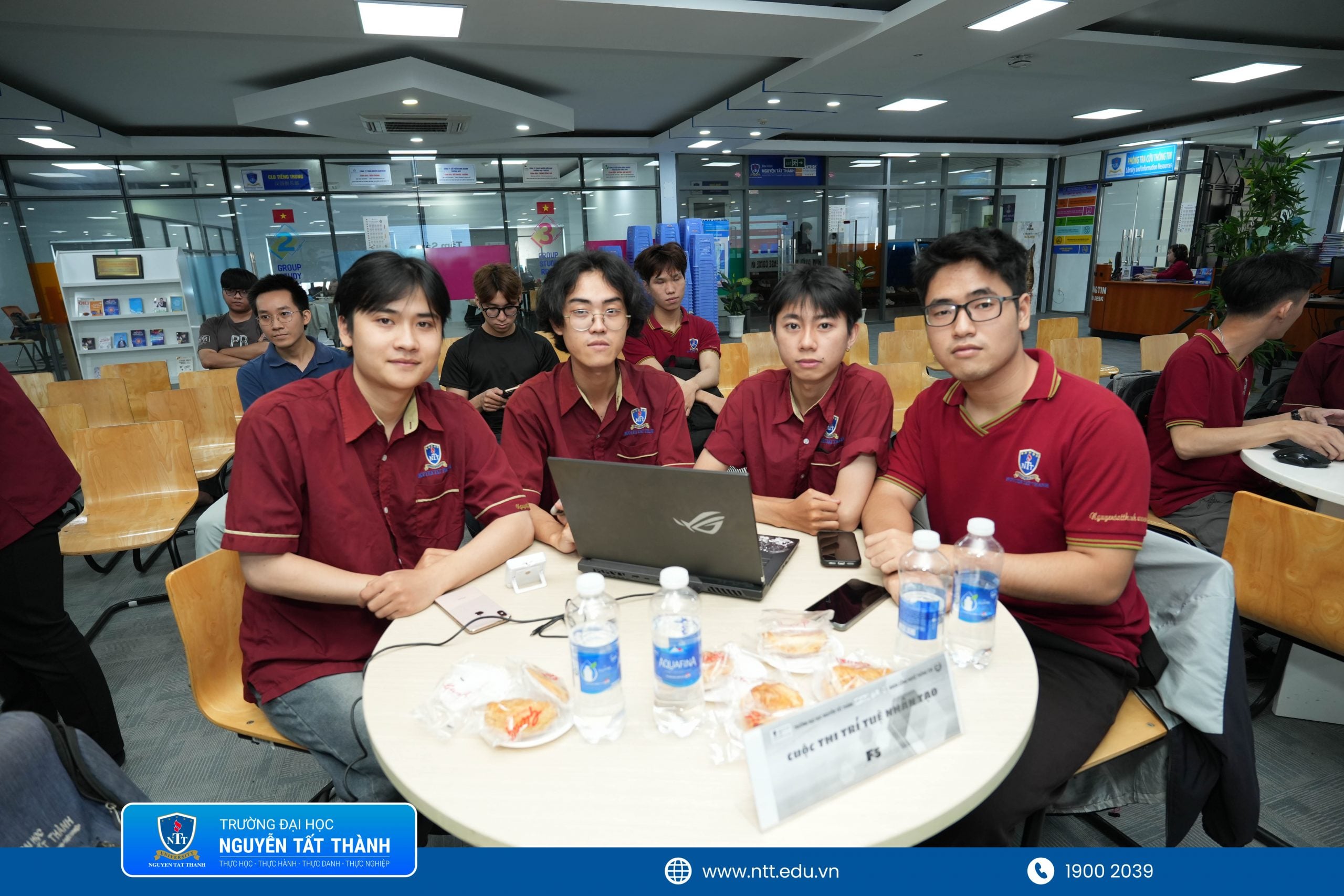
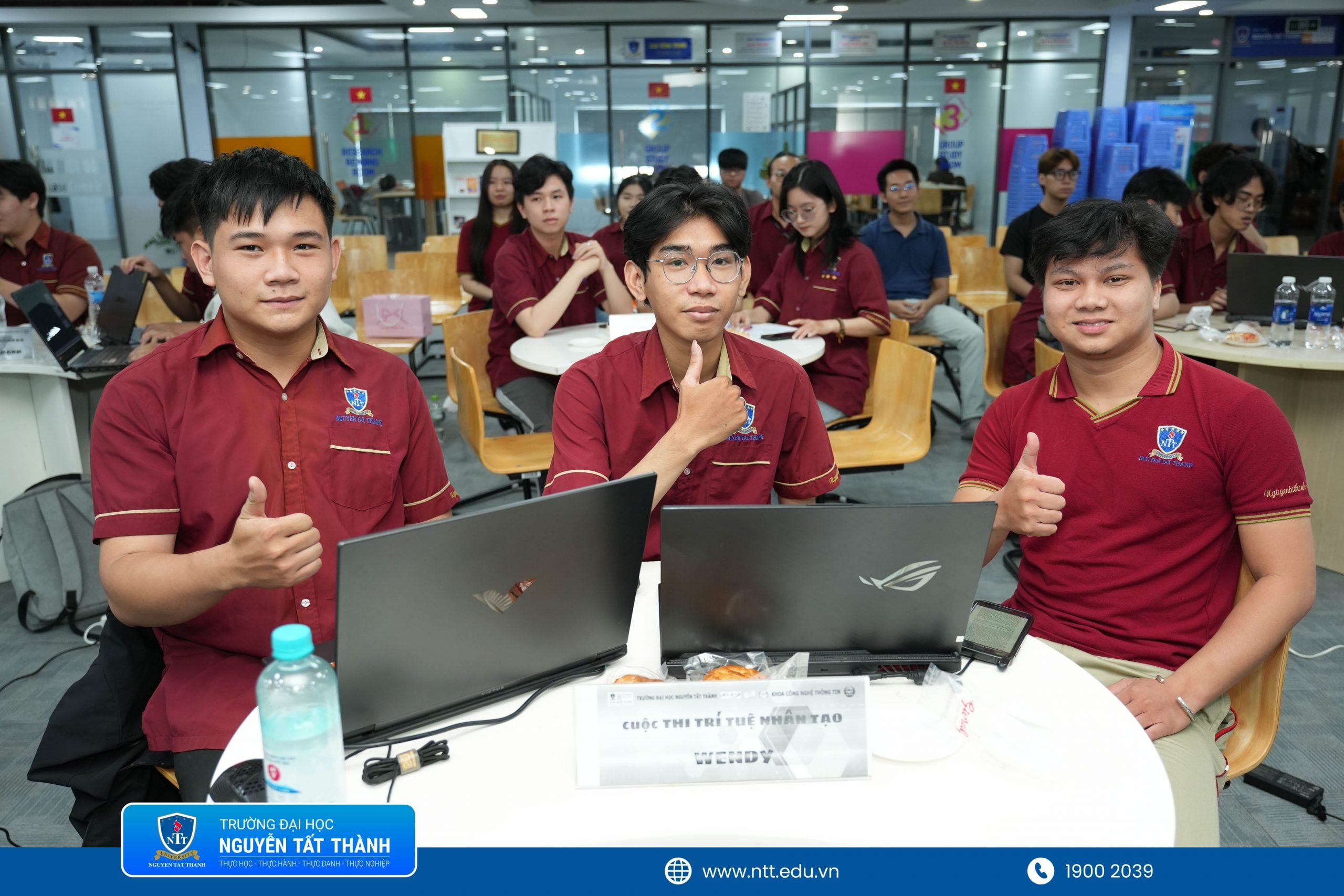
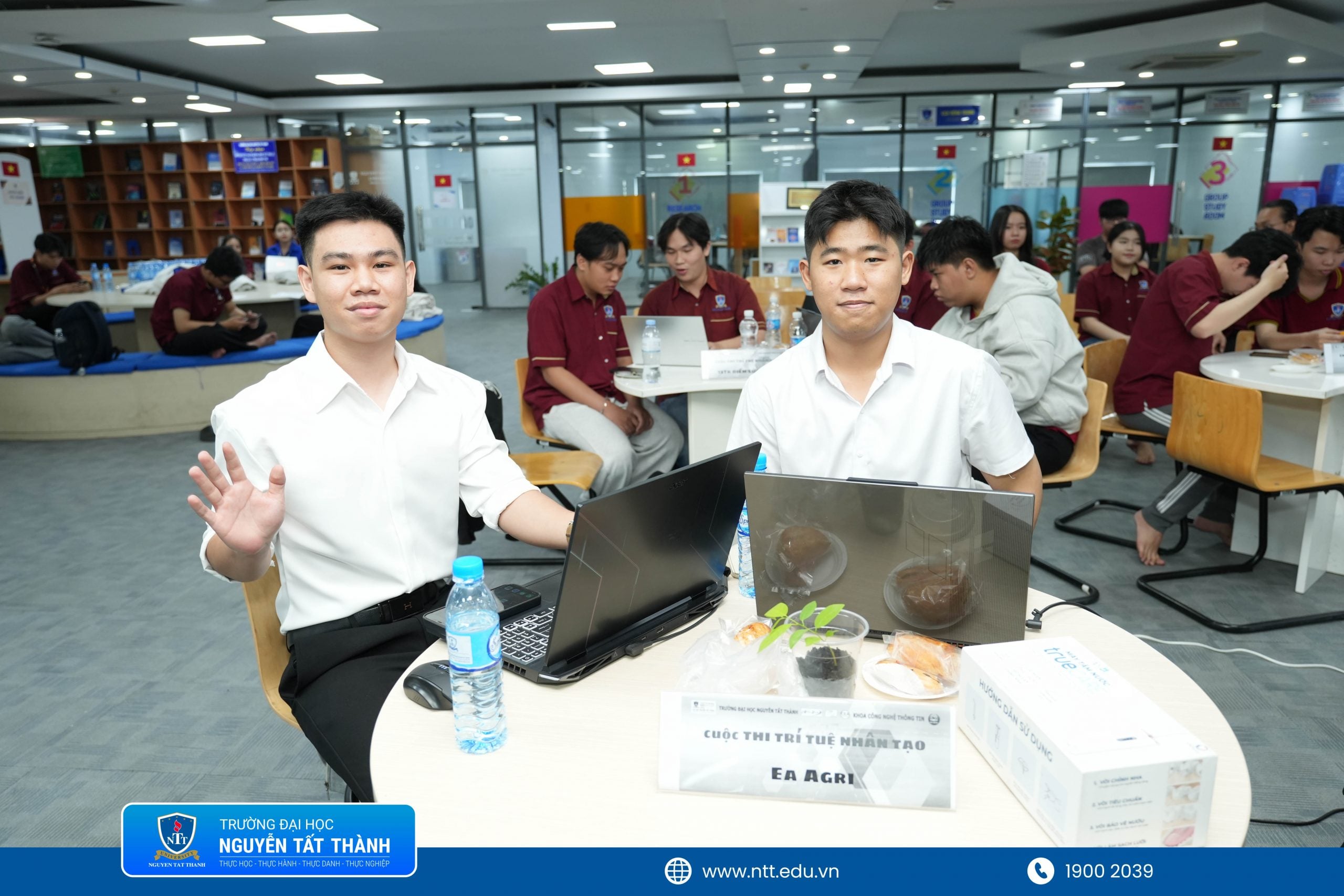
The highlight of this year’s competition was the diversity of application fields. The topics did not just focus on purely technical models but leaned strongly toward solving real-world problems facing society and businesses. The projects spanned multiple fields such as business, agriculture, tourism, education, healthcare, public administration, and technology infrastructure. This shows that students not only possess a solid grasp of AI, Machine Learning, and Data Science but also have the capacity to analyze practical needs to build appropriate solutions. According to the evaluation of the judging panel, many projects were developed into complete prototypes with intuitive interfaces, good data-processing capabilities, and high potential for real-world application.
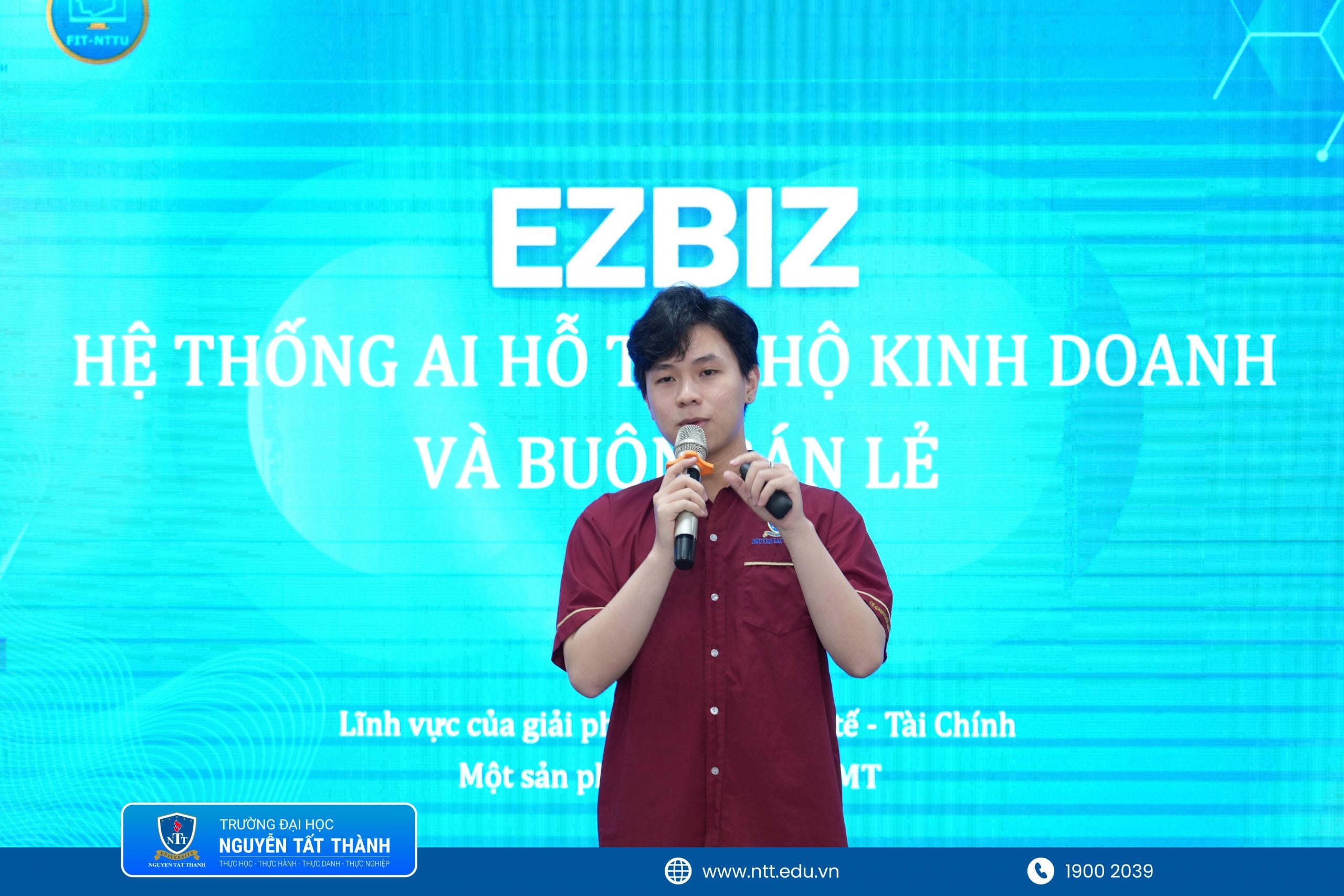
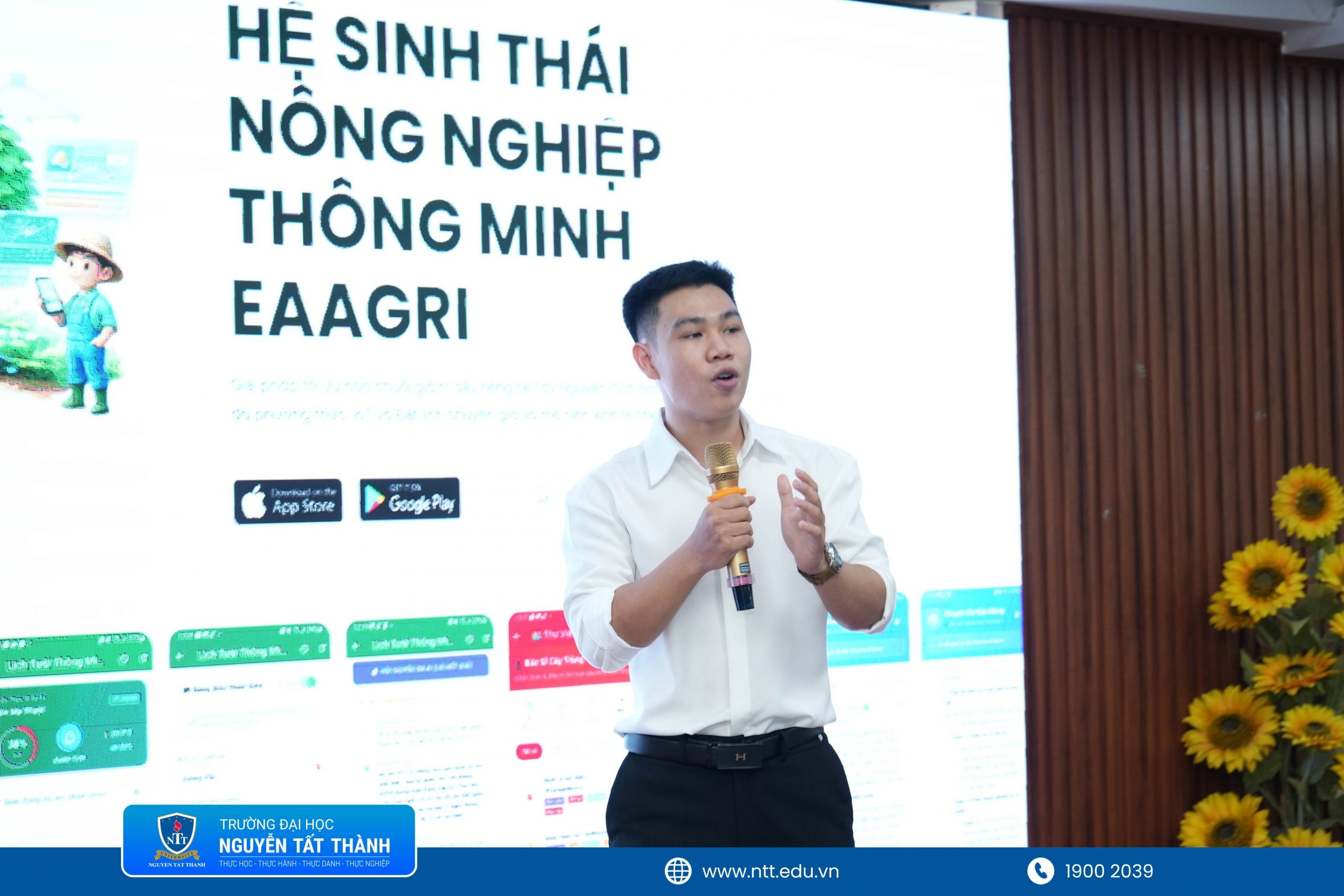
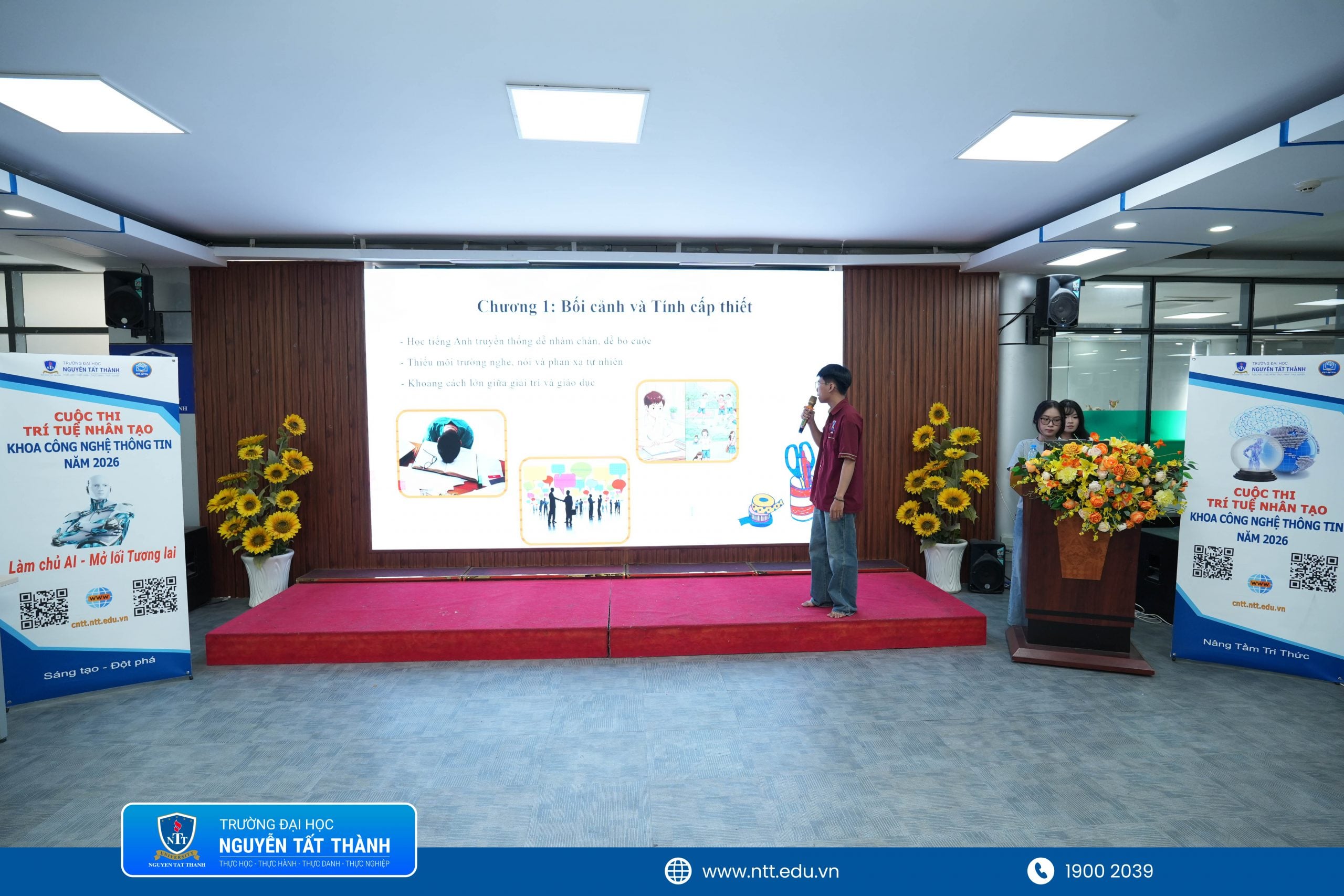
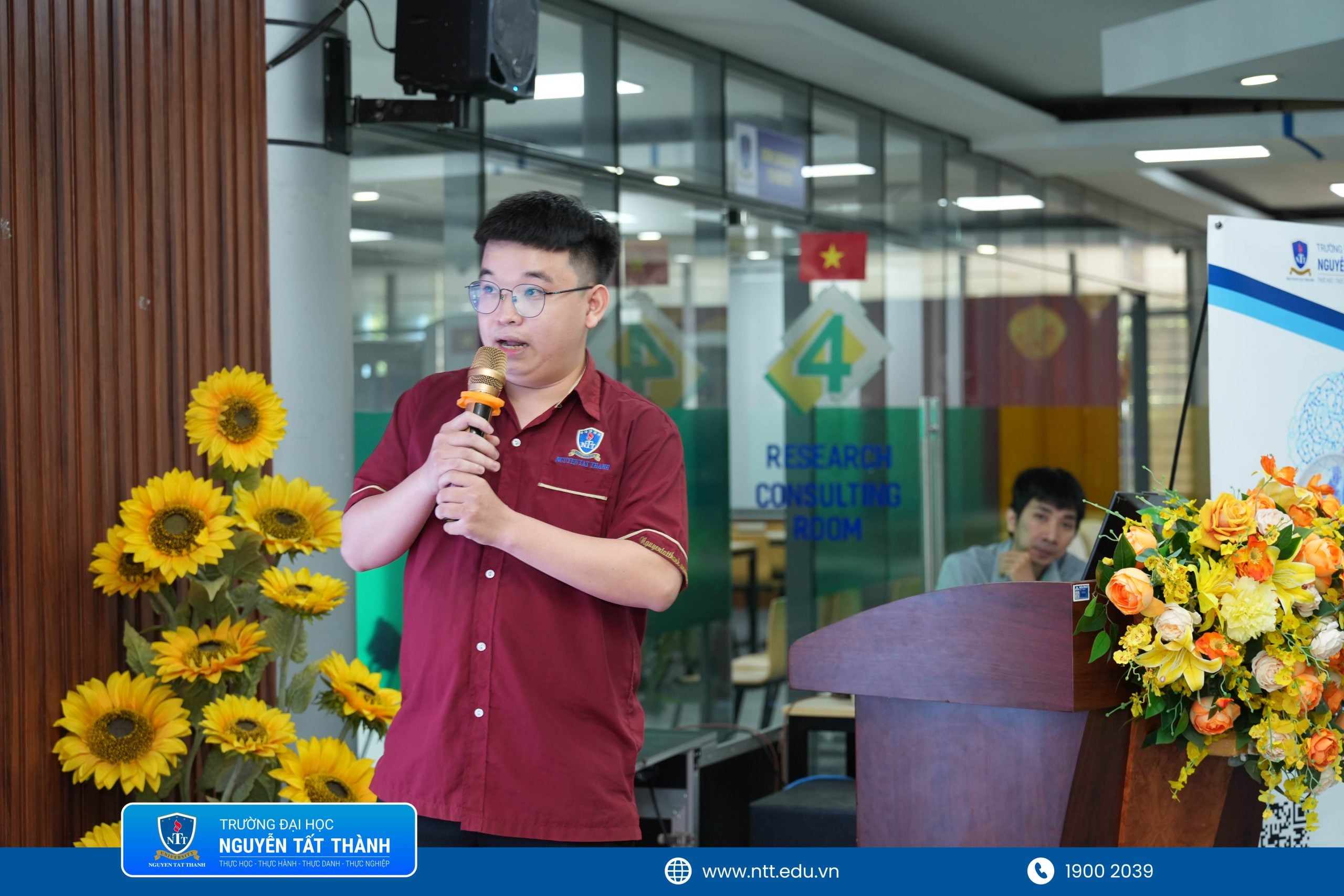
The competing teams present their projects to the judging panel during the final round
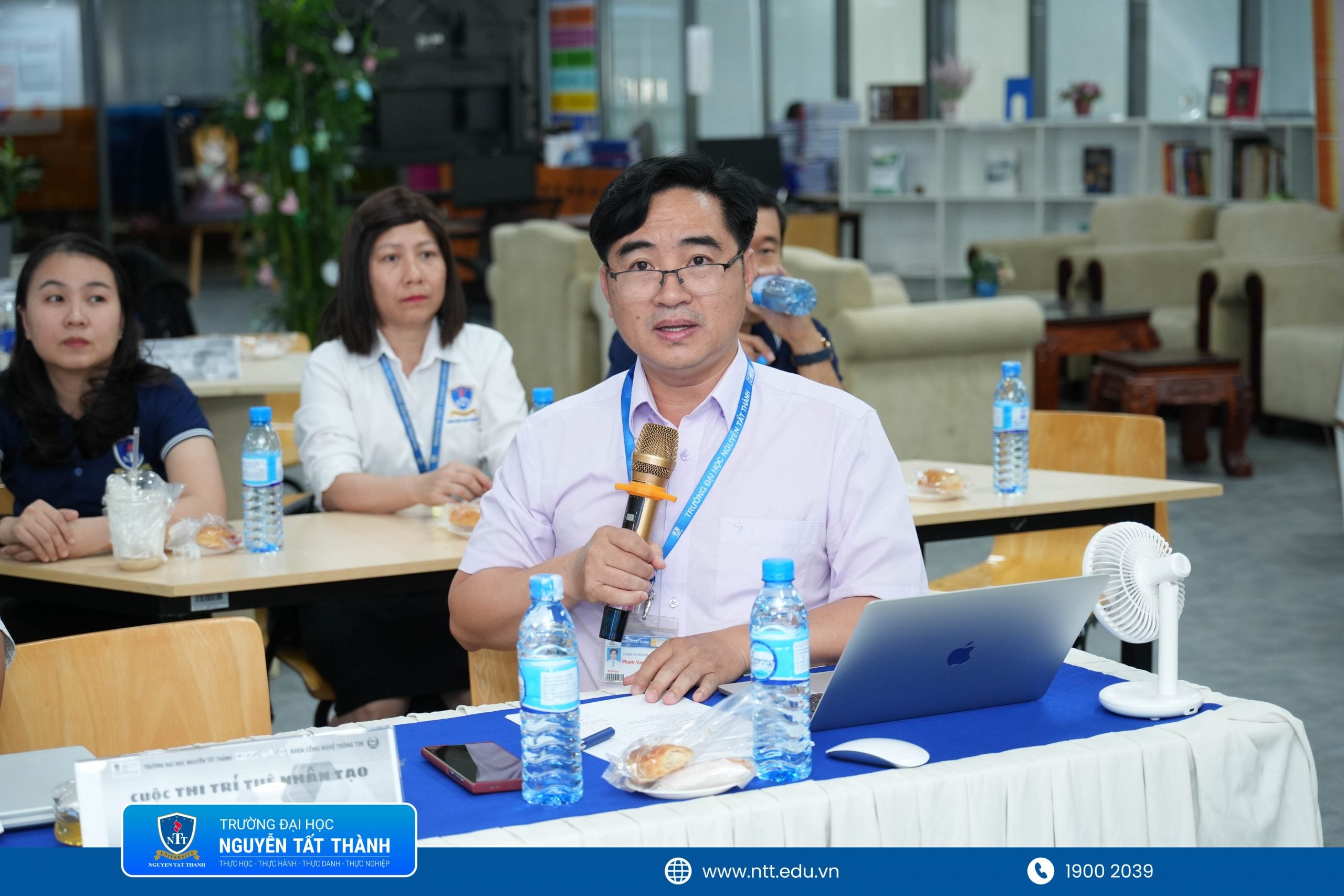
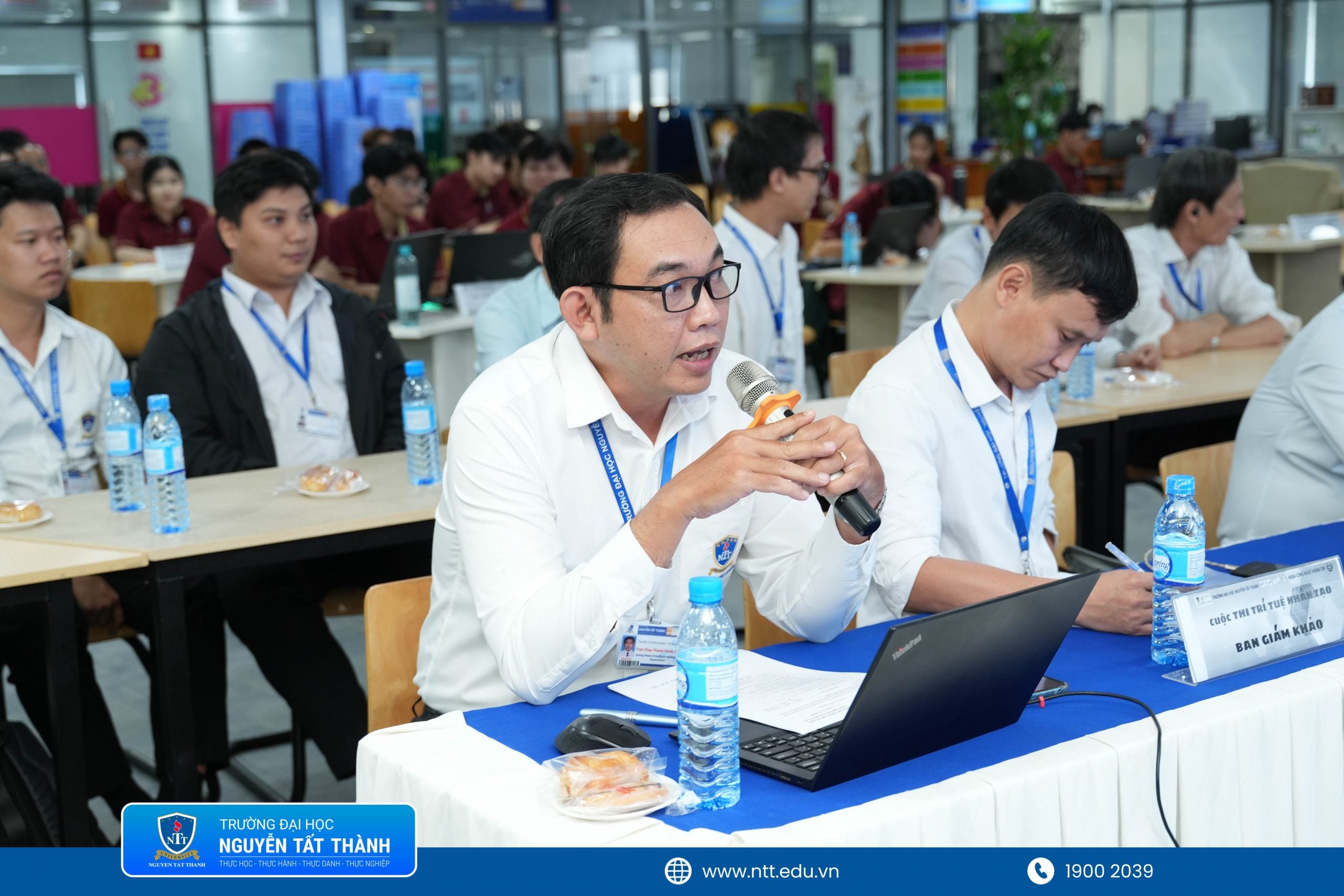
The judges ask in-depth questions to assess the applicability and growth potential of each project
Overcoming many heavyweight opponents, team DMT excellently won first place with the project “EZBIZ-AI – Supporting Households and Retailers”. This is an AI-driven solution aimed at helping small household businesses manage their sales operations smartly and efficiently. The system integrates features like customer demand forecasting, inventory optimization, consumer trend analysis, and strategic business recommendations. With an intuitive interface and flexible deployment capabilities, EZBIZ-AI was praised for its broad real-world potential, especially amidst Vietnam’s booming digital transformation. According to the judges, DMT’s victory came not only from an innovative concept but also from the project’s high degree of completion and their persuasive presentation.
In second place, team Ea Agri made a strong impression with their topic “AIoT Platform for Decision Support in Smart Agriculture”. The project merges artificial intelligence with the Internet of Things (IoT) to support farmers in production. The system collects environmental data such as temperature, humidity, and light intensity to provide automated recommendations for irrigation, fertilization, and pest control. Additionally, the platform integrates weather forecasting and early risk warnings, helping to boost yields and reduce losses. The project was highly valued for its practical nature, aligning perfectly with Vietnam’s high-tech agricultural development trends.
The two third place awards went to highly creative projects across various sectors. Among them, team “15tr diem suc manh” (15 Million Power Score) introduced “Travel Lung Tung – A Smart Assistant to Consult and Support Tourism in Vietnam”. This AI app serves as a personal travel assistant capable of suggesting itineraries, attractions, restaurants, and services tailored to the user’s specific needs and budget. The system also learns from user behavior to deliver increasingly accurate recommendations.
The other third-place spot belonged to team CineFluent with their topic “A Smart Ecosystem for English Learning via Film Platforms”. The project harnesses AI in education to help learners improve their English skills through movie streaming, combined with tools like smart subtitles, context analysis, and pronunciation practice.
Alongside the main prizes, the organizers awarded 6 consolation prizes to projects with substantial development potential and social meaning. Notable projects included team F5’s AI solution for pharmaceutical information and medical risk warnings, team WENDY‘s V-A Health system focusing on smart communication in healthcare, and team The Last Time‘s Clerical AI solution aimed at automating document classification and data extraction from administrative texts. Furthermore, team POV ALONE approached the problem of optimizing Cold Start in serverless systems using AI with their PHOENIX AI project; team Claude Opus 4.5 mini developed the Tam Sang system focused on transparency in charity activities; while team AAA created a multimodal AI assistant to look up traffic laws and calculate driver’s license points.
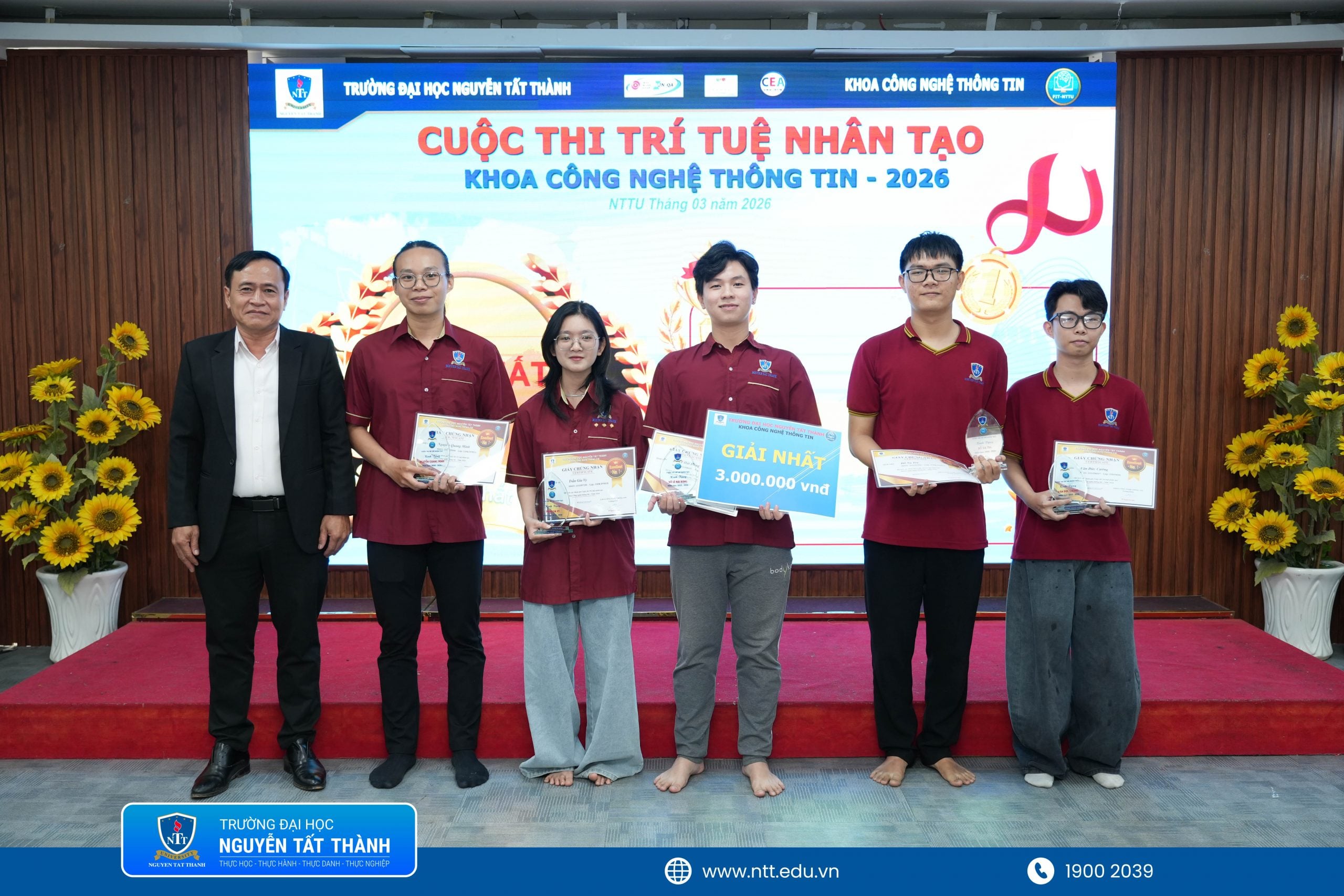
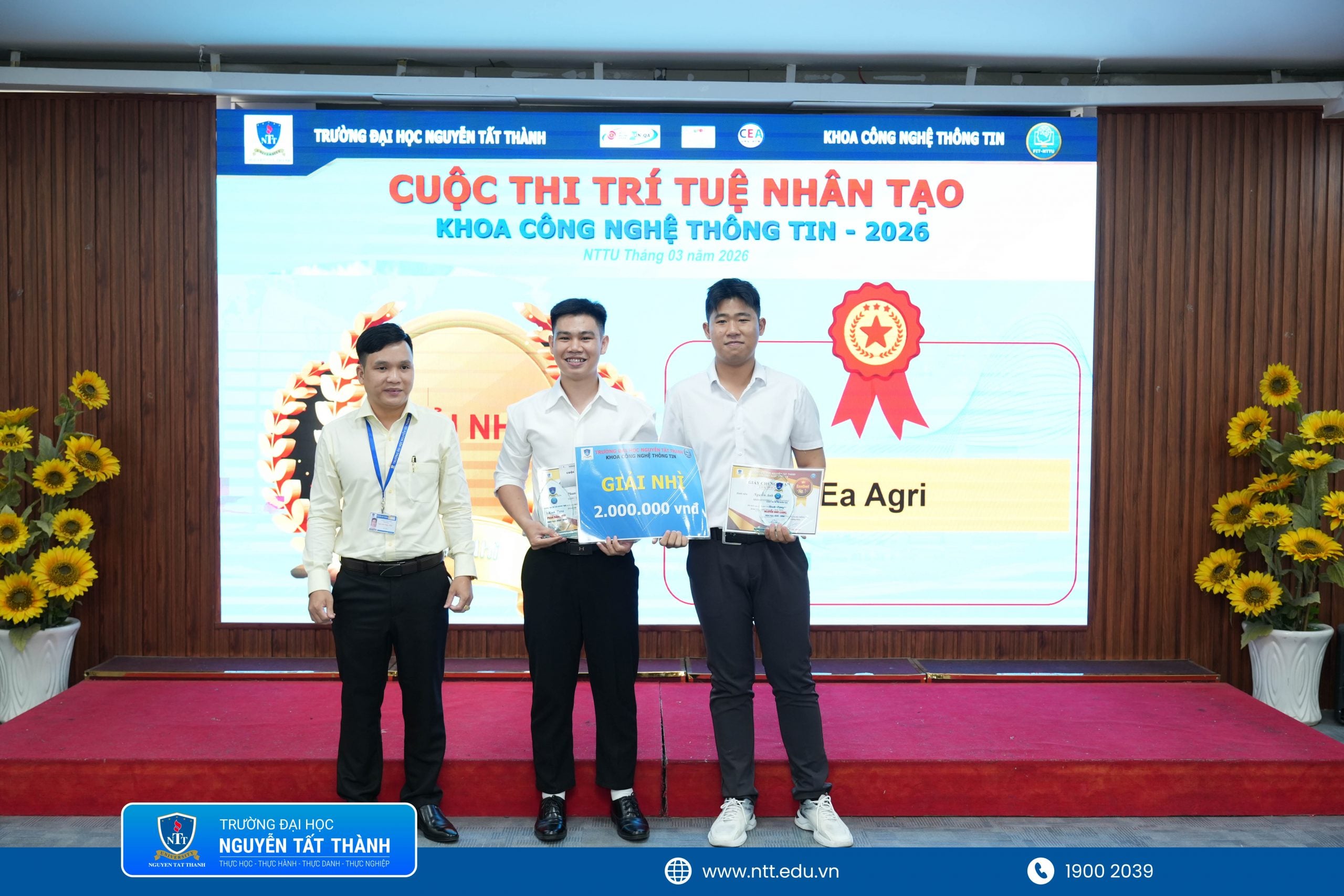
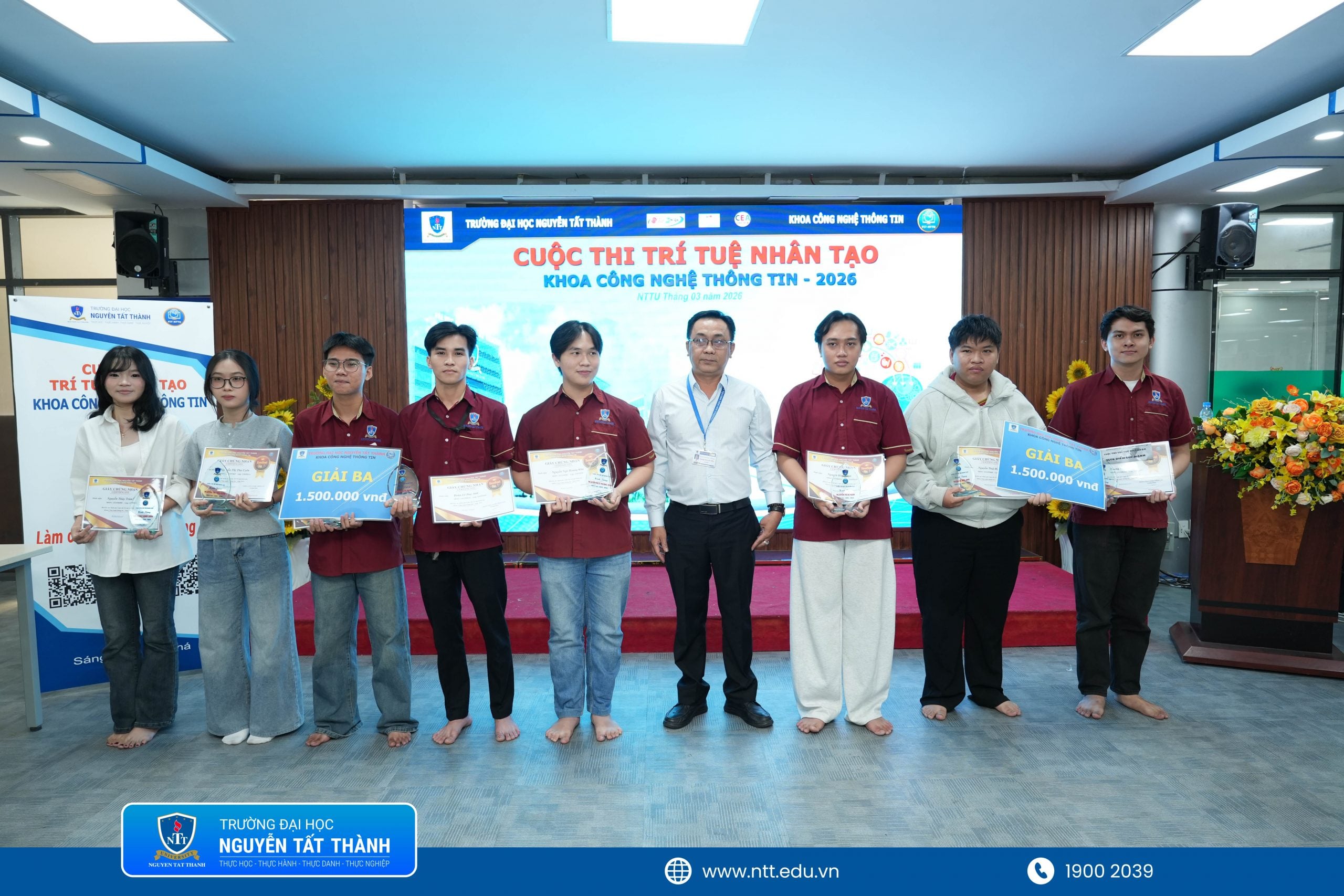
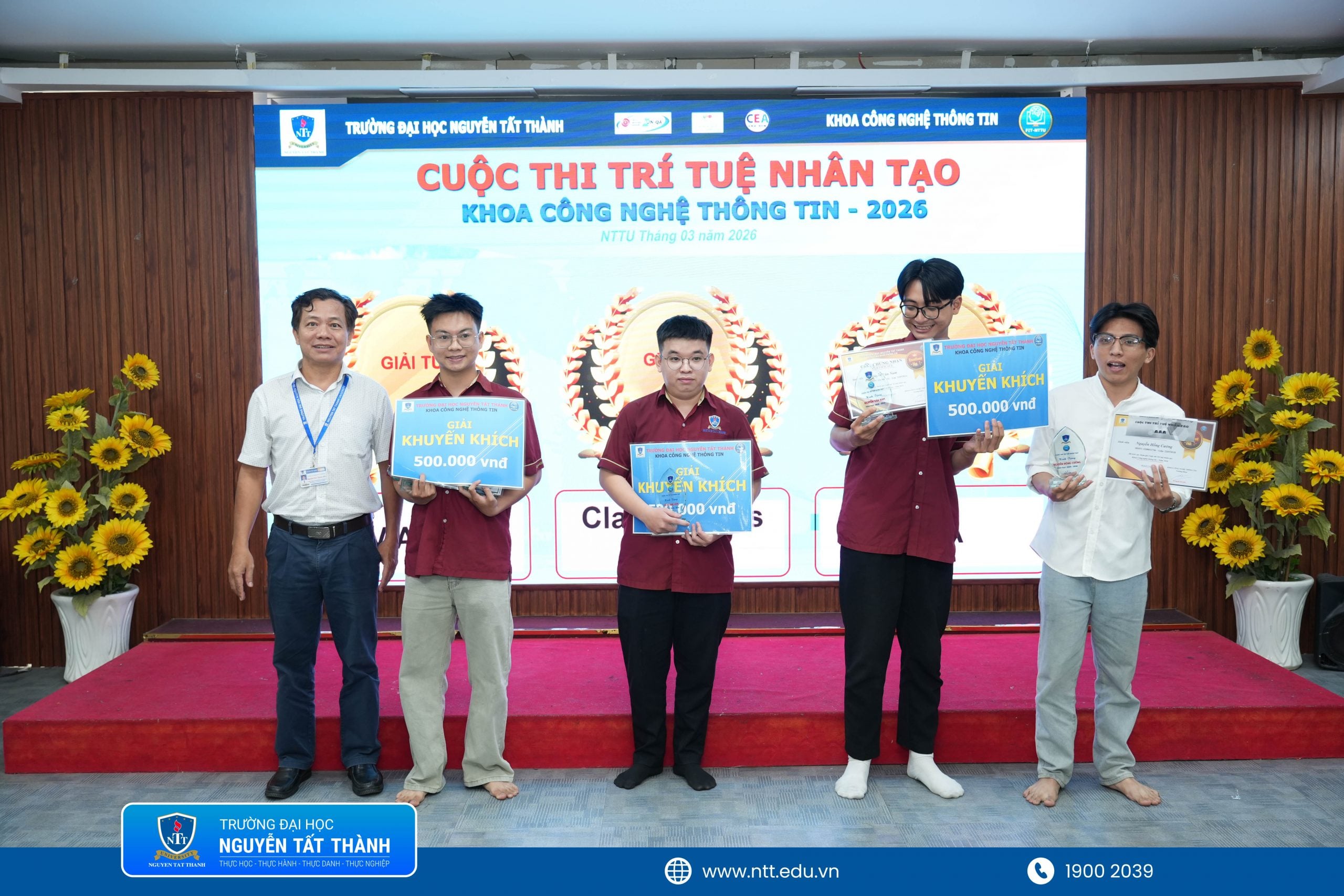
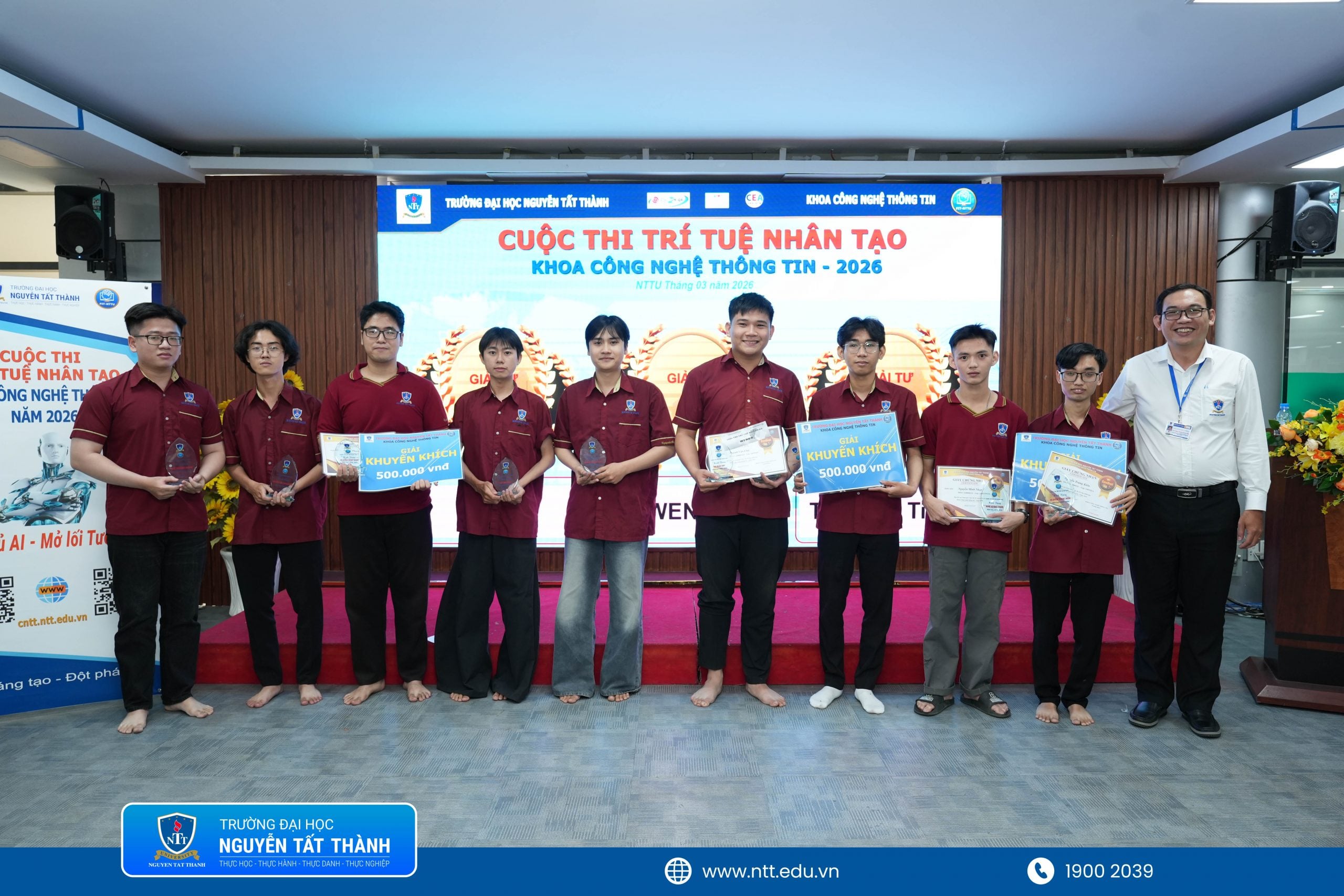
Team representatives receive awards and certificates at the AI 2026 competition closing ceremony
According to many lecturers, what is most commendable is not just the awards but the students’ analytical approach to problem-solving. Many projects demonstrated a capability to combine technical expertise with practical fields like small-scale retail, education, agriculture, and services—sectors that currently have a massive demand for digital transformation and AI integration.
A lecturer on the judging panel noted that today’s students possess a major advantage in accessing emerging technologies, particularly AI, Big Data, and Cloud Computing. “The vital part isn’t just coding an AI model, it’s knowing how to use AI to solve the right problem. Our students are proving they can do exactly that,” the lecturer shared.
The competition also mirrors the practice-linked training model that the Faculty of Information Technology actively pursues. Aside from fundamental knowledge, students are trained in teamwork, public presentation, debate, and systems thinking—skills highly sought-after by employers in today’s tech job market.
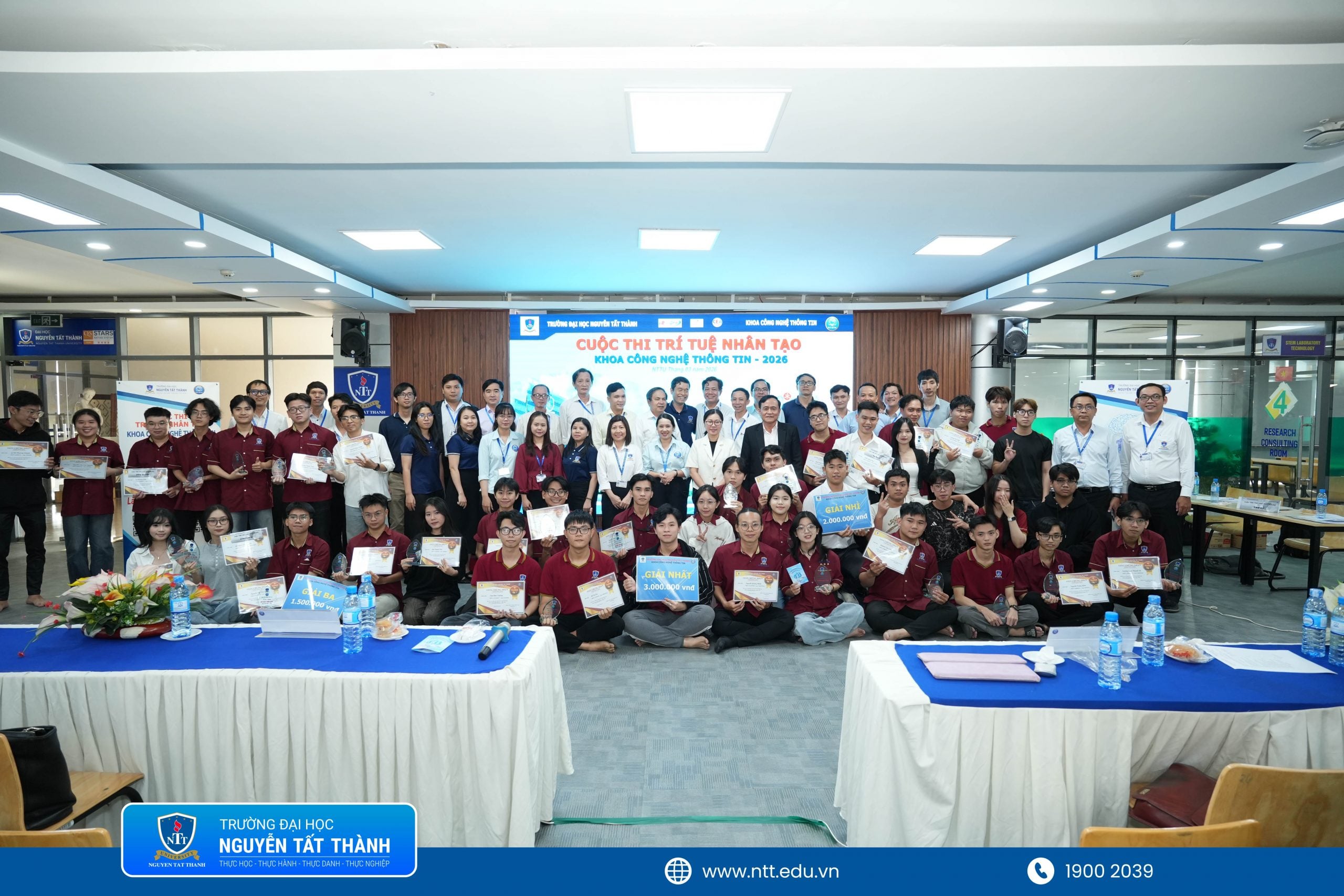
The competition has become an academic arena helping students hone their creative thinking, research, and application of new technologies
According to a university representative, many topics from the competition will continue to receive support to expand into scientific research topics, startup projects, or collaborative products with businesses. From an academic venue, the 2026 AI Competition has evolved into a launchpad for creative ideas, motivating students to boldly step into new technological fields.
The event also highlights a growing trend of students proactively engaging with advanced technologies like AI, Data Science, IoT, Cloud Computing, and digital transformation. In a job market requiring a massive supply of high-quality technology personnel, playgrounds like this are expected to nurture a generation of young tech engineers equipped with innovative mindsets, execution capabilities, and the flexibility to adapt to the digital age.
More than just a competition, the 2026 Artificial Intelligence arena has truly become a place where student ideas take flight, the spirit of innovation is fueled, and the passion to conquer technology is widely spread. From here, many projects hold promise to be developed further into research initiatives and startup products, contributing to solving practical problems in society.
Vxchi – Faculty of IT