
 Tiếng Việt
 Home
Home Introduction
 Announcements
 Student Essential
 Event attendance lists
Students majoring in Automotive Engineering Technology at the NTTU Institute of International Education (NIIE) – Nguyen Tat Thanh University have just completed their Graduation Capstone Defense for Semester 2 of the 2025–2026 academic year. This year’s topics focused on current trends drawing major interest in the automotive industry, such as alternative fuels, emission reduction, fault diagnosis simulation, and smart vehicle control systems.
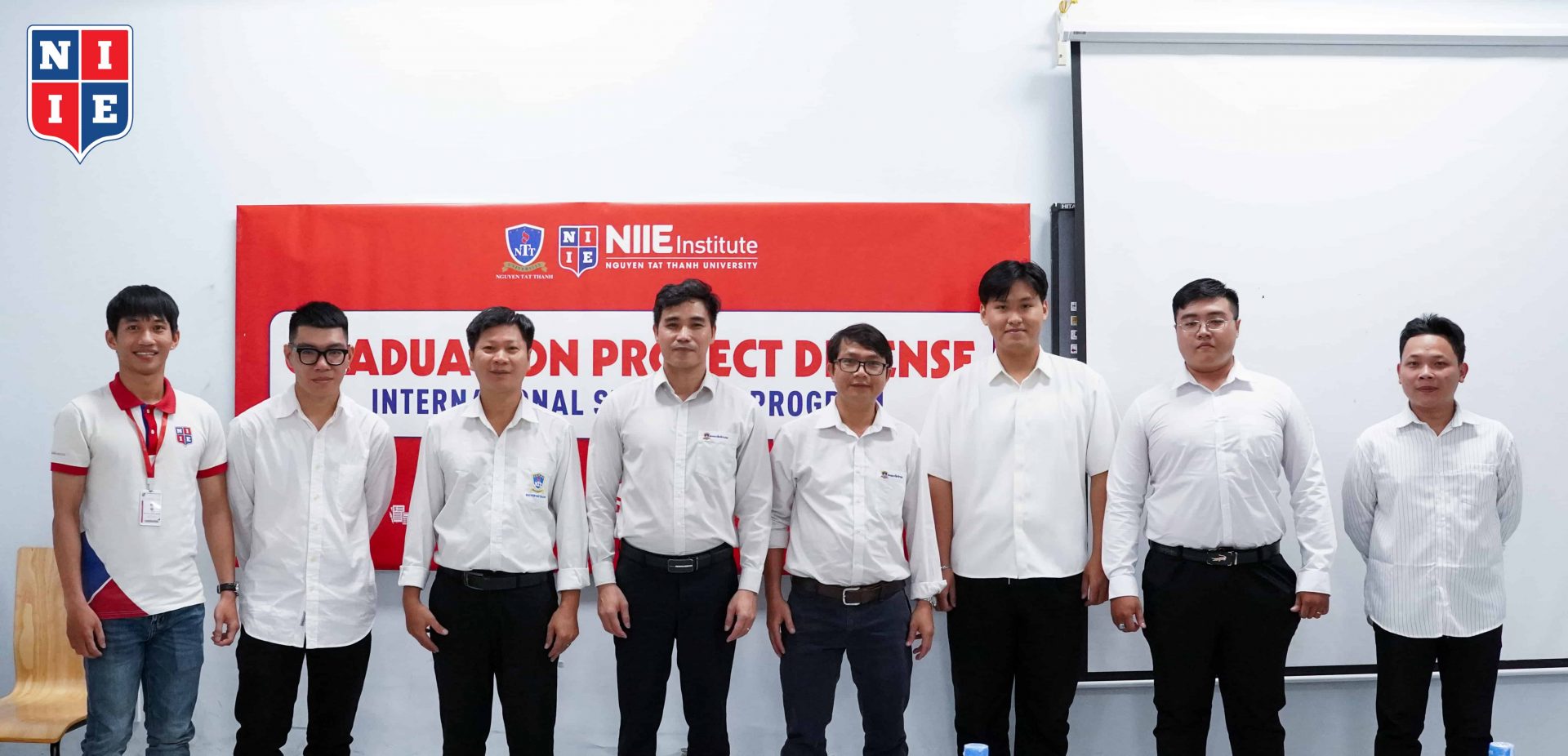
Defense Committee 1 with the participation of Dr. Duong Hoang Long, Head of the Automotive Engineering Technology Department at NIIE
The defense session was organized with two specialized academic committees. Committee 1 consisted of Dr. Duong Hoang Long as the Committee Chair, Dr. Luong Hung Truyen as the reviewer, and M.A. Phi Van Cuong as the committee secretary. Committee 2 included M.A. Dang Quoc Cuong as the Committee Chair, Dr. Kieu Ngoc Dich Vu as the reviewer, and M.A. Nguyen Van Tinh as the committee secretary.
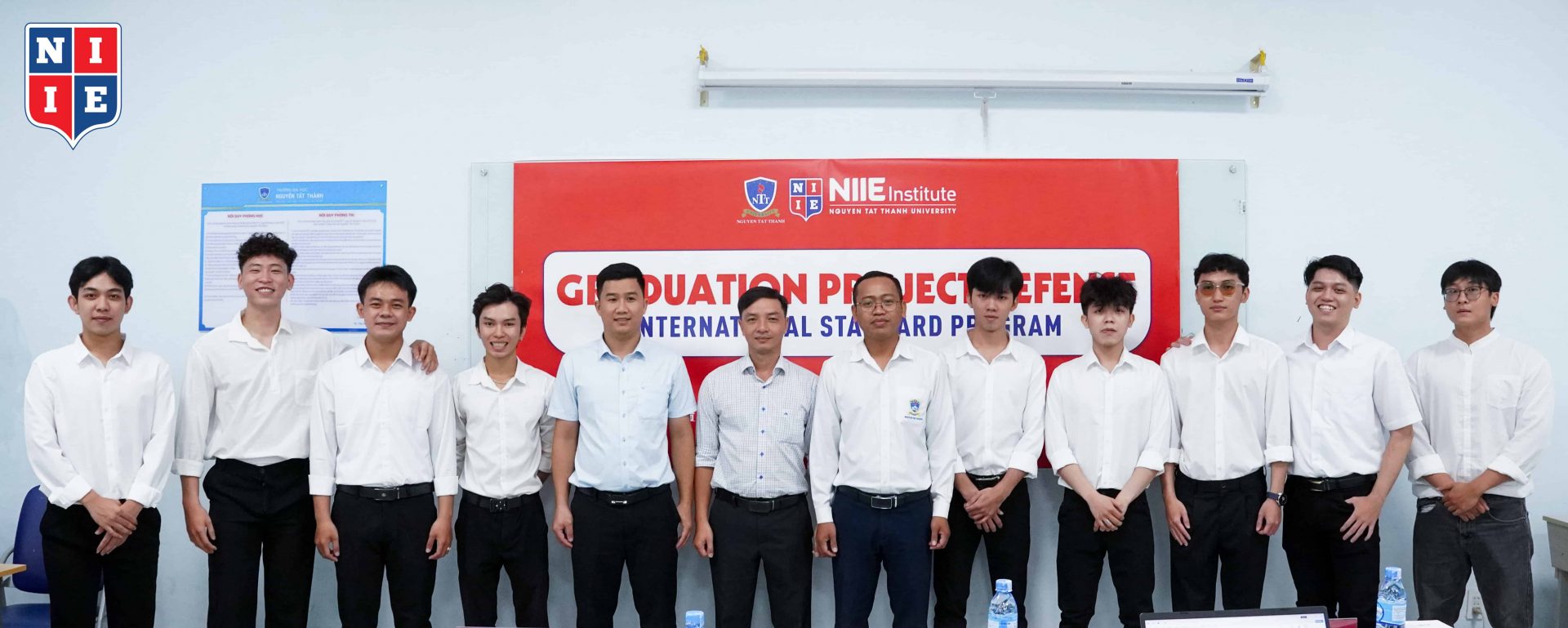
An overview of Committee 2
The highlight of this year’s capstones was the attention given to emission reduction solutions and sustainable automotive technology development. One of the topics that garnered significant attention was the research on hydrogen fuel supply systems for hydrogen-diesel dual-fuel engines. The student group focused on designing and fabricating a hydrogen supply model aimed at the applicability of clean energy sources in internal combustion engines, a field currently undergoing intensive research worldwide.
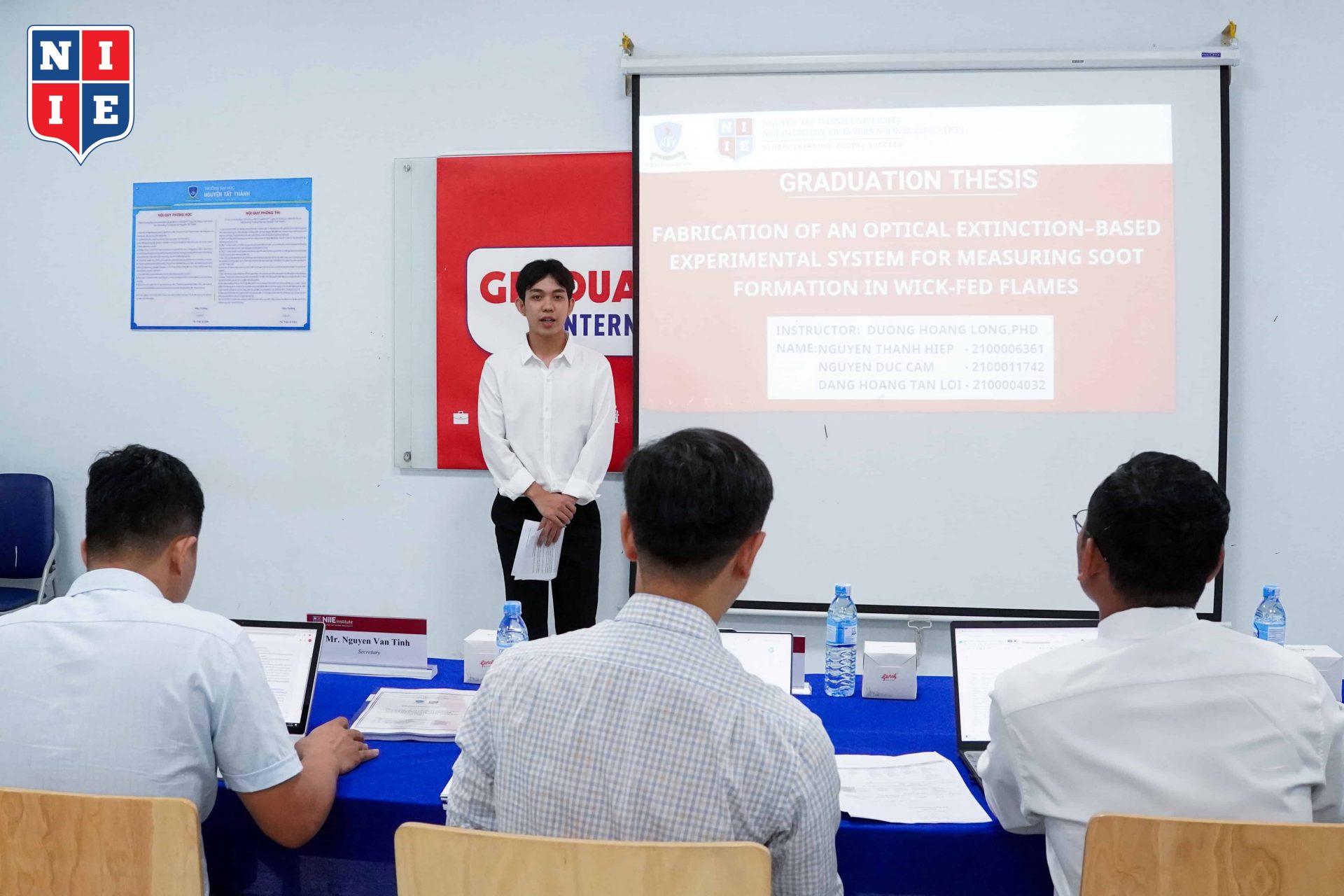
NIIE students demonstrate a particular interest in sustainable automotive technology development and green fuels
In addition, projects related to combustion processes and emissions also made a distinctive impression. A student group in Committee 2 conducted a research project to design and build a system that measures soot formation in flames based on the principle of light extinction. From constructing the experimental setup to investigating the effects of biofuels like hexanol and heptanol when blended with diesel, the projects all aimed at reducing emissions and improving engine combustion efficiency. This research group holds significant meaning in the context of the transportation industry gradually shifting toward greener solutions.
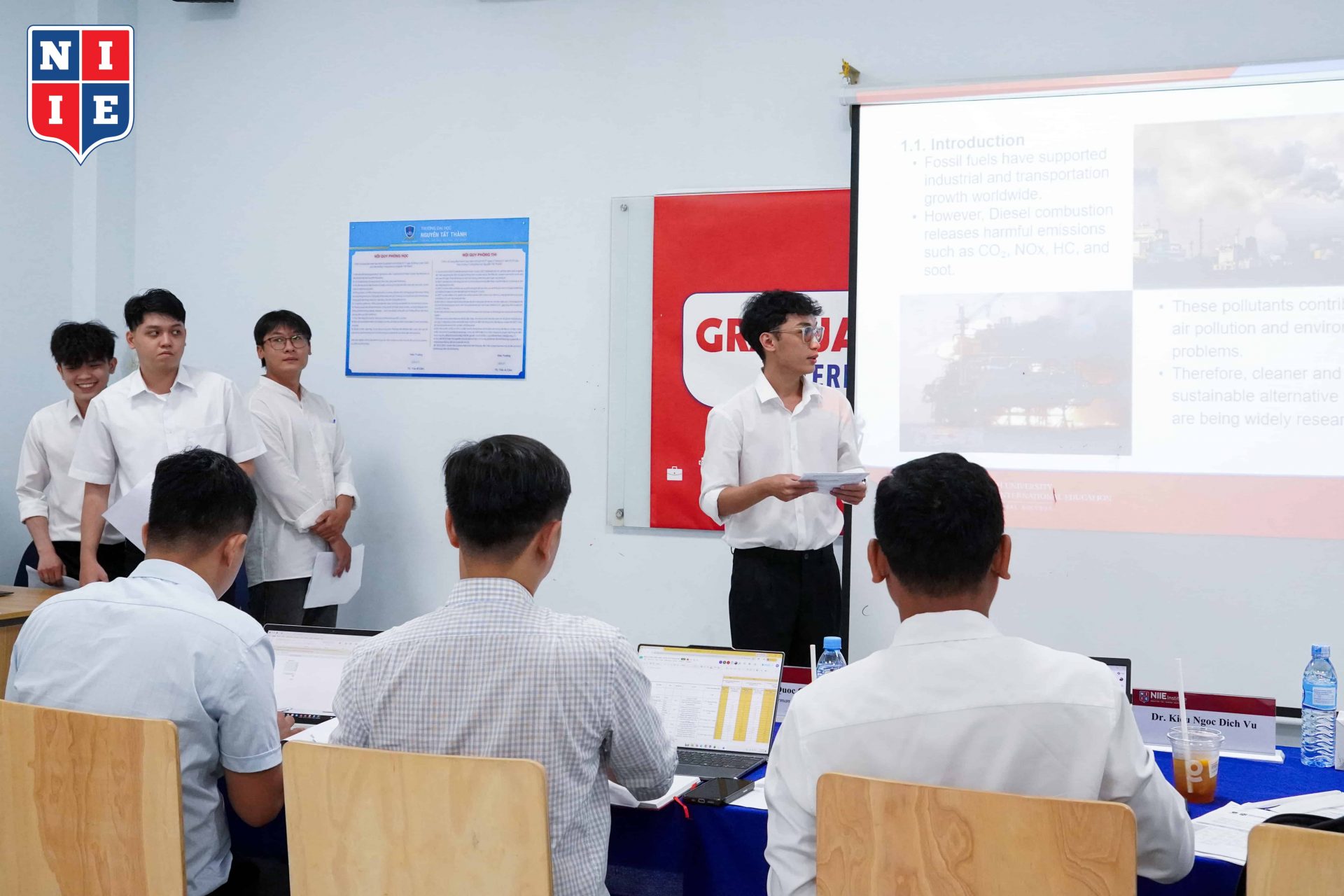
Topics related to combustion processes and emissions also left many distinctive impressions
Taking a different approach, many students chose to study diagnostics and control technologies for modern automobiles. Most notable was the project building a simulation model for starting system fault diagnosis using Simcenter Amesim software. The topic explored the application of simulation to assist in detecting and analyzing technical faults before deploying them on actual physical systems, thereby optimizing cost and time during vehicle research and maintenance.
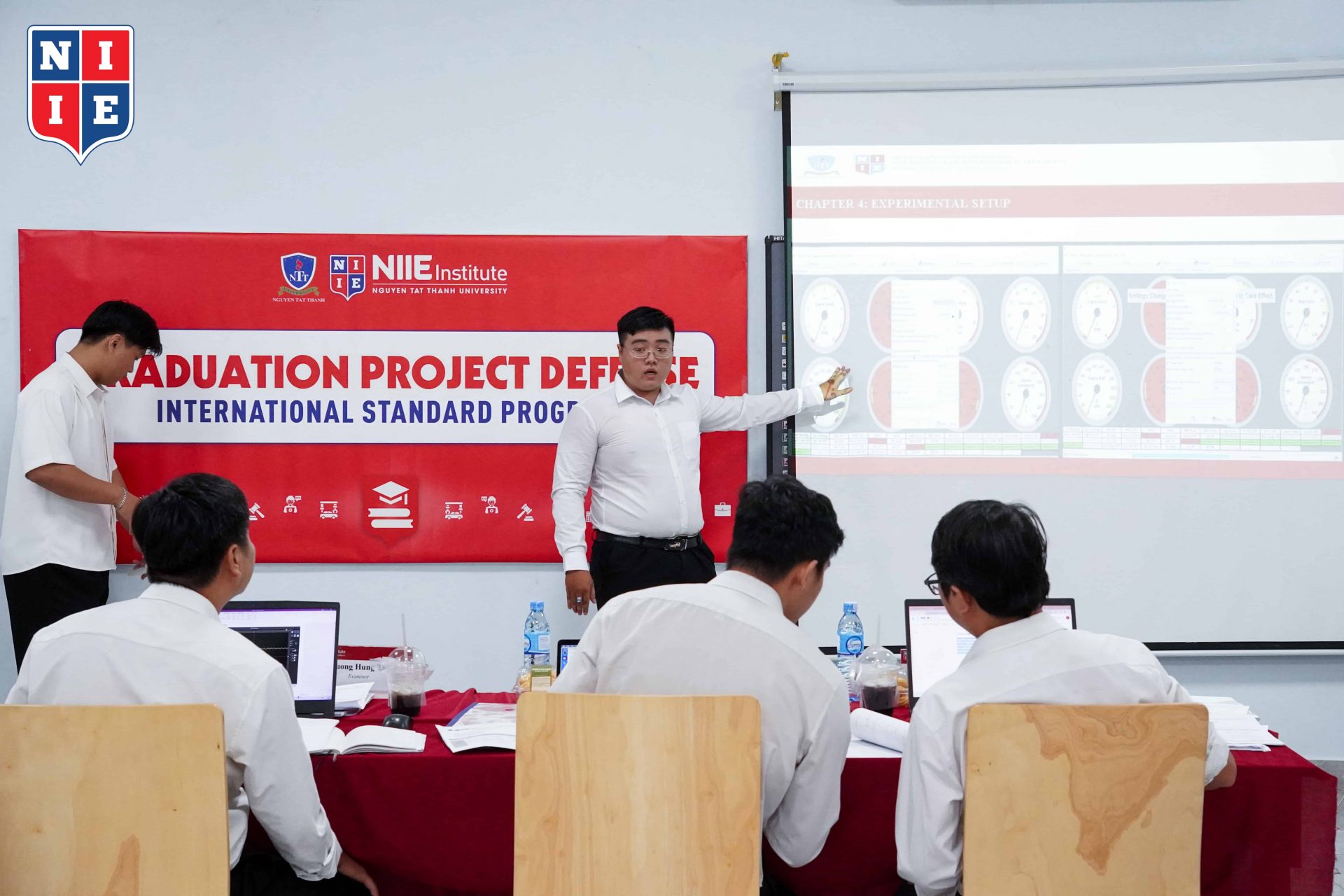
This year’s graduation capstones in Automotive Engineering Technology were highly rated for their freshness and creativity
Meanwhile, the project designing and fabricating an Immobilizer engine encoder system model focused on a familiar technology that plays a crucial role in enhancing vehicle safety and security. Researching the operating principles and developing an experimental model helped students gain a deeper understanding of the electrical and electronic systems widely applied in today’s vehicle line-ups.
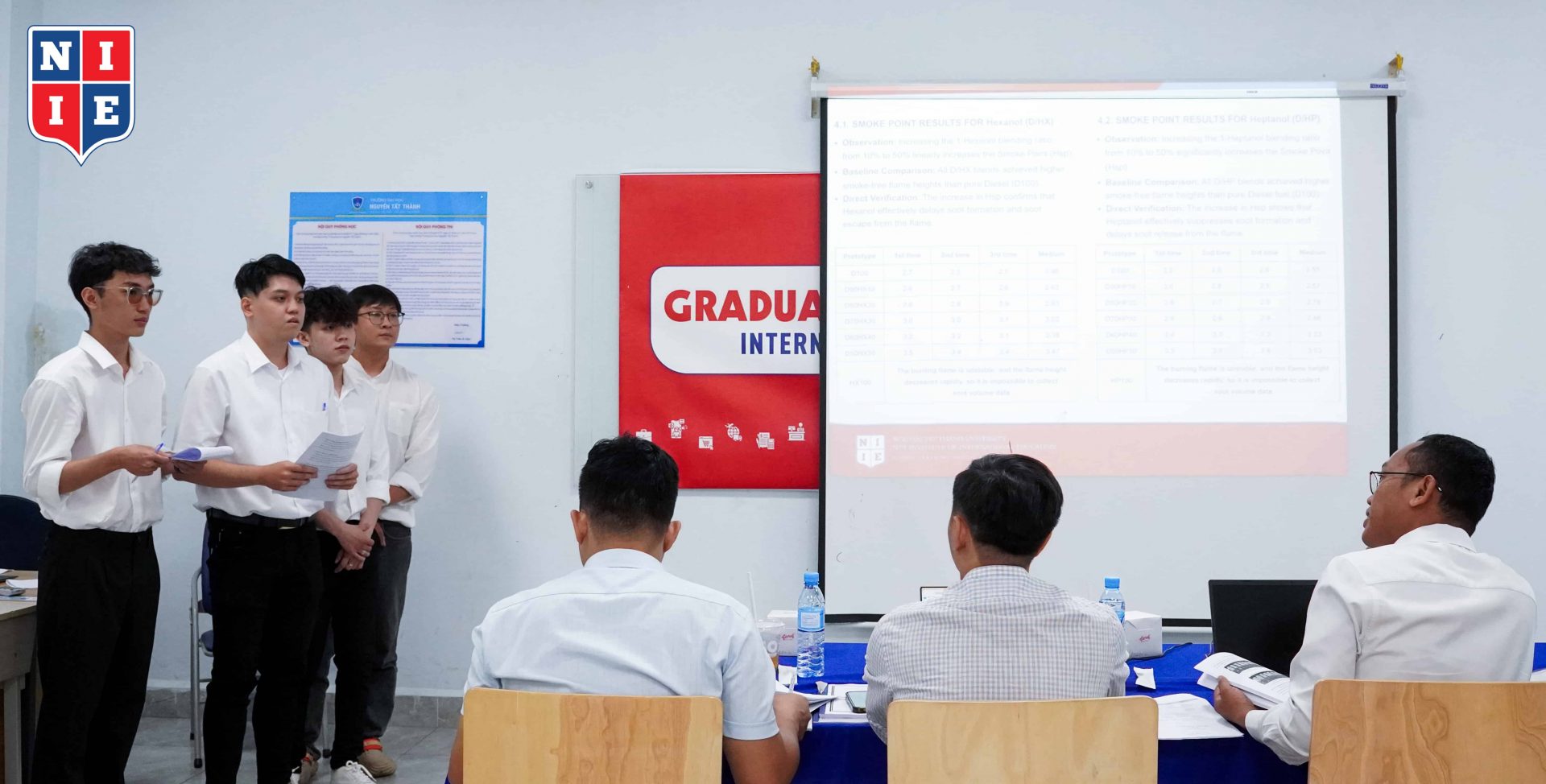
Each topic received significant feedback and advice from the Committee to perfect the students’ expertise, mindset, and professional skills
Throughout the defense, the committees provided extensive professional feedback, offering suggestions on research methodologies, practical applicability, and data presentation. These direct exchanges between lecturers and students not only helped refine the capstone projects but also served as an opportunity for the students to sharpen their engineering mindset, critical thinking, and defense presentation skills before an academic panel.
Through this year’s capstones, it is evident that NIIE Automotive Engineering Technology students are step-by-step embracing new industrial trends, ranging from clean fuels and emission reduction technologies to modern control and simulation systems. These are also the fields projected to see robust growth in the future, unlocking numerous career opportunities for the new generation of automotive engineers.
News article: Nhat Thien