
 Tiếng Việt
 Home
Home Introduction
 Announcements
 Student Essential
 Event attendance lists
In the context of Industry 4.0, science, technology, and innovation have become the deciding pillars of national competitiveness. This trend is driving universities to transform from mere training institutions into centers of knowledge creation, integrating research, innovation, and technology transfer. At Nguyen Tat Thanh University, the NTT Hi-tech Institute (NHTI) currently plays the role of an R&D core, connecting knowledge with practicality and leading the University’s innovation ecosystem.
Established on May 26, 2011, the NTT Hi-tech Institute was born from the strategic vision and dedication of the late President, Assoc. Prof. Dr. Nguyen Manh Hung, who early on recognized that for a university to assert its position on the scientific map, scientific research must become the core foundation. The establishment of the Institute was not just an organizational decision, but a strategic turning point, laying the foundation for the development of the research ecosystem at Nguyen Tat Thanh University.
Spanning over 15 years of formation and development, the NTT Hi-tech Institute has step-by-step asserted its position through a process of continuous and clearly-oriented transformation. From a modest initial foundation, the Institute quickly stabilized its organization in 2015 when Dr. Vu Van Van assumed the role of Institute Director, laying the groundwork for a methodical operational phase and long-term strategic development. The following years saw a process of investment and refinement of research capacity, along with expanding workspaces, upgrading infrastructure, and gradually establishing international connections. In 2021, Dr. Vu Minh Thiet and Assoc. Prof. Dr. Tran Viet Cuong took on the positions of Deputy Directors, finalizing a solid and unified leadership team for the Institute, which created an important foundation for the next stage of growth.
In tandem with expanding infrastructure and cooperation, the Institute focused heavily on closely linking research with training through the establishment of the Department of General Sciences, gradually forming a unified ecosystem. In 2021, the merger of the Faculty of Biotechnology contributed to expanding the scale and enhancing specialized capacity, creating a foundation for interdisciplinary development and integration. These steps demonstrate a purposeful developmental roadmap, where each phase represents not only an organizational expansion but also the refinement of a modern research institute model that bridges research with application.
A major turning point occurred in 2024 when the Institute relocated to the Nguyen Tat Thanh University High-Tech Development Center within the Ho Chi Minh City Hi-Tech Park, bringing research activities into a modern space directly connected to the national innovation ecosystem. In the same year, the Institute established additional specialized research centers, including the Center for Functional Genomics Research, the Center for Materials and Energy Research, and the NTT Infectious Disease Testing and Development Service Center, aiming to meet the demand for scale expansion and depth of research. By 2026, the Institute continued to establish the Center for Small Molecule and Peptide Application Research and the France–Vietnam Joint Research Center for Metabolism and Valuing Bio-resources, completing the model of an integrated, multi-disciplinary research institute. This chain of development not only reflects the growth in scale but also clearly demonstrates the Institute’s transformation from a traditional research unit into a modern R&D center capable of comprehensive implementation from basic research to application and technology transfer.
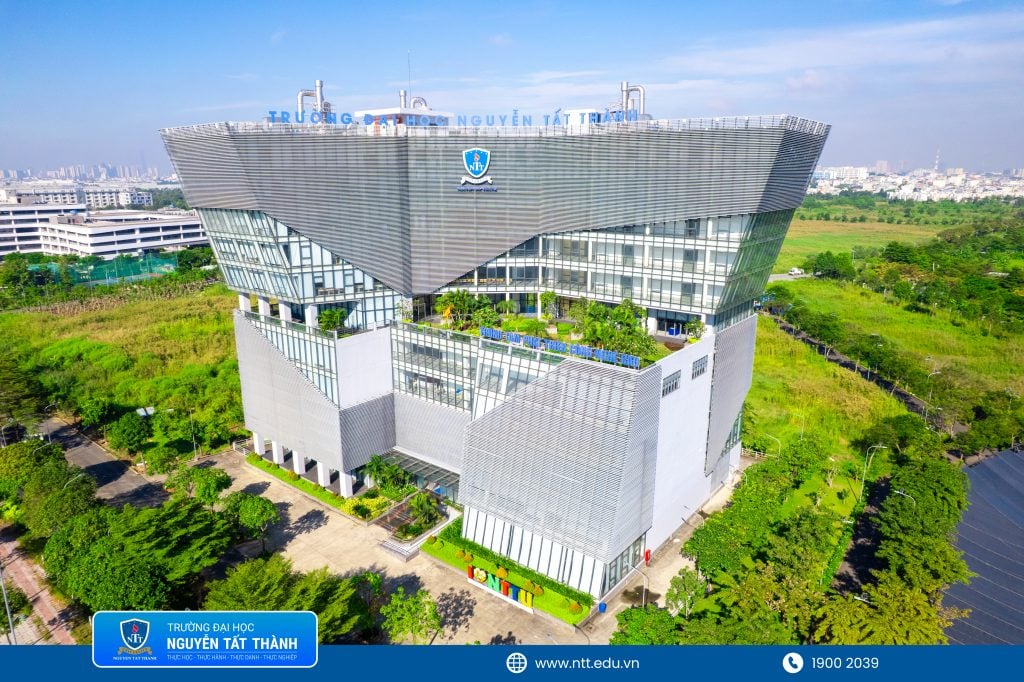
The NTT Hi-tech Institute is located on the campus of the N1 Building of Nguyen Tat Thanh University within the Ho Chi Minh City Hi-Tech Park
Following this developmental journey with key milestones, the Institute has not only expanded in scale but has also clearly shaped its modern operational model. The highlight that defines the identity of the NTT Hi-tech Institute is its integrated organizational model, where research, training, technology development, and applied transfer activities are tightly connected into a complete ecosystem. Instead of existing in isolation, these activities are designed in an interconnected value chain, allowing for seamless implementation from basic research to practical application and product commercialization.
The Institute’s system operates under the management of the Leadership Board alongside the Scientific and Training Council, ensuring all directions align with academic standards and practical development needs. The core of the system consists of 06 specialized research centers covering key fields such as biotechnology, materials–energy, molecular biology, biomedicine, pharmaceutical chemistry, and bio-resources. These centers do not operate independently but are organized interdisciplinarily, enabling scientists from various fields to collaborate on solving complex scientific problems, thereby creating high-value applied products.
Alongside the system of research centers, the Institute is invested with approximately 30 specialized laboratories, including molecular biology, microbiology, cell biology, polymer materials, electrochemistry, environment, and notably, pilot production testing rooms. The presence of the pilot system is a decisive factor, allowing the Institute to fully deploy the chain of research – testing – optimization – trial production – transfer, thereby shortening the gap between the laboratory and the market. This is precisely the point of distinction that helps the Institute move beyond pure academic research to create products capable of commercialization.
However, the core factor that drives the Institute’s strength is not just the infrastructure, but its high-quality human resources. From the early days with a limited number of staff, the Institute has now developed into a collective of about 75 officers, scientists, and specialized personnel. Among them, more than 30 PhDs trained in countries with advanced scientific backgrounds—such as the US, Germany, Japan, South Korea, Singapore, and Italy—have become the core force, playing an important role in enhancing research quality and international integration.
In that development journey, research quality has always been defined as the core metric, not quantity. The Institute remains steadfast in its view that every scientific work must meet strict academic standards, make a clear contribution to specialized knowledge, and hold potential for practical application. This philosophy is realized thanks to a dedicated, consistent scientific leadership team and the absolute consensus of its members. It is this spirit that has shaped the research culture at NHTI—a place where every topic, every experiment, and every paper is carried out with the highest sense of scientific responsibility. The Institute’s researchers are not only encouraged to publish in WoS/SCOPUS indexed journals with high impact factors, but are also guided to build specialized research directions that hold both continuity and breakthrough potential. This is the foundation for creating sustainable scientific prestige—something that cannot be achieved by output volume alone, but must be accumulated through works of true depth and value.
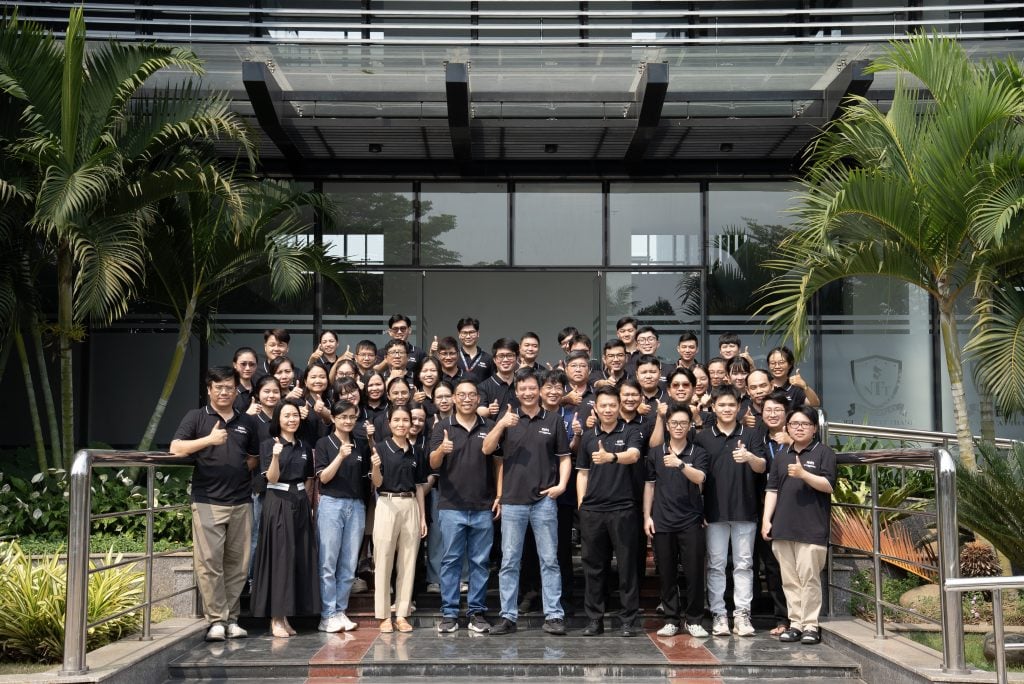
Personnel team of the NTT Hi-tech Institute
Unremitting efforts in capacity building have helped the Institute achieve many impressive results. In terms of scientific publications, the Institute has achieved more than 600 high-quality international articles listed in the WoS/SCOPUS database, with the 2024-2025 academic year alone reaching 131 articles. Regarding research activities, the Institute has chaired 18 NAFOSTED projects, more than 15 ministerial and provincial-level projects, along with over 300 institutional-level projects. Remarkably, the Institute possesses 01 international patent (USPTO), 7 patents and utility solutions, 4 applications currently undergoing substantive examination for exclusive patent granting, and 25 patent applications with formal acceptance decisions. These figures reflect not only the scale but also the academic depth and technology-mastering capabilities of the Institute.
Beyond focusing on research, the Institute’s team actively participates in training activities, directly teaching and guiding students in scientific research. In the 2024-2025 academic year alone, the Institute guided 29 students to complete their theses and research topics, exceeding the set target. This shows the effectiveness of the training-linked-with-research model, where students do not just passively receive knowledge but directly participate in the process of knowledge creation.
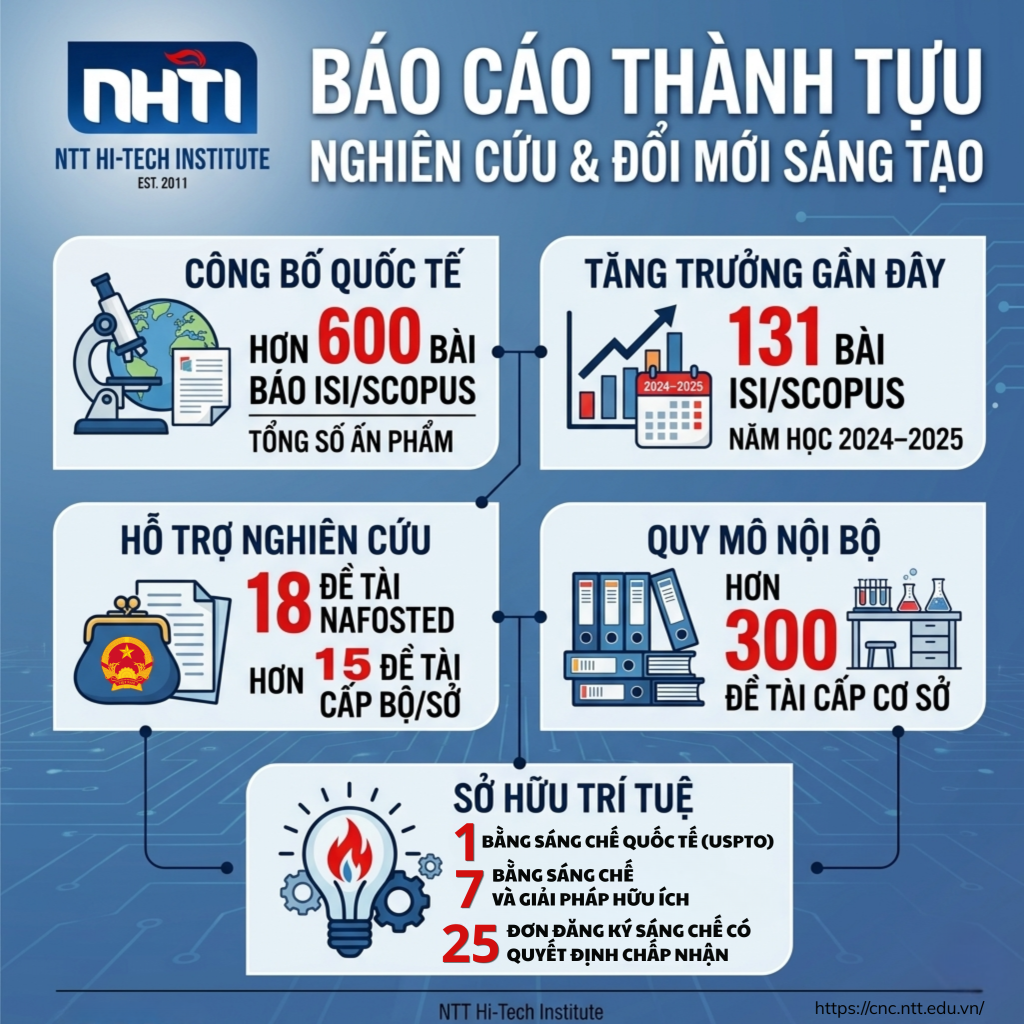
Impressive milestones achieved by the NTT Hi-tech Institute over the past 15 years
Importantly, the Institute’s research does not stop at scientific publications but is strongly oriented toward applications for the community. Many representative products have been developed, brought into reality, and received great attention from the scientific community and enterprises, such as: bird’s nest beverages utilizing biotechnology, graphene materials and high-durability graphene paint, naturally sourced and eco-friendly biodegradable products, disease diagnostic kits utilizing LAMP/RPA technology, or probiotic preparations that help control Vibrio bacteria in aquaculture. These products carry not only scientific value but also contribute to solving practical issues in agriculture, the environment, and biomedicine.
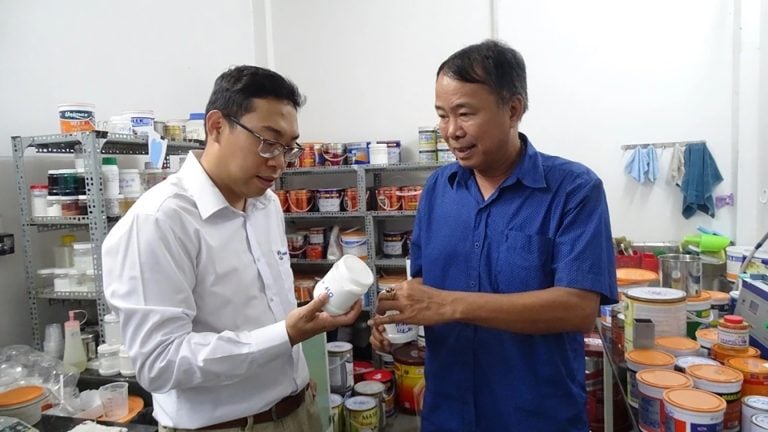
From that foundation, the Institute has gradually driven the transformation of research results into commercial products. A prime example is the project to produce and apply astaxanthin- and DHA-producing microalgae strains in aquaculture, which has been successfully deployed and laid the groundwork for forming the spin-off enterprise Hi-Tech Care JSC. This model shows a clear direction for the Institute in taking research out of the laboratory and increasing economic value.
To expand its implementation and application capabilities, the Institute simultaneously builds a widespread cooperation network with domestic and international partners. Domestically, the Institute collaborates with many prestigious research and training units, such as the Vietnam National University, the Pasteur Institute, the Vietnam Academy of Science and Technology, and the Vietnam Academy of Agriculture. On the international stage, the Institute has established relationships with universities and research institutes such as the University of California, Los Angeles (UCLA, USA), the National University of Singapore (NUS), KAUST (Saudi Arabia), the University of Padova (Italy), and Jeonbuk National University (South Korea). Furthermore, the Institute deploys collaborations with many domestic enterprises, such as Minh Phu Seafood Corporation or Viet Nhat Paint and Waterproofing Joint Stock Company, along with international partners like Sigetronics, NewTech Wave, and TEAMs (South Korea). This interconnected network not only creates favorable conditions for academic exchange but also drives technology transfer, contributing to elevating the research capacity and scientific standing of the university.
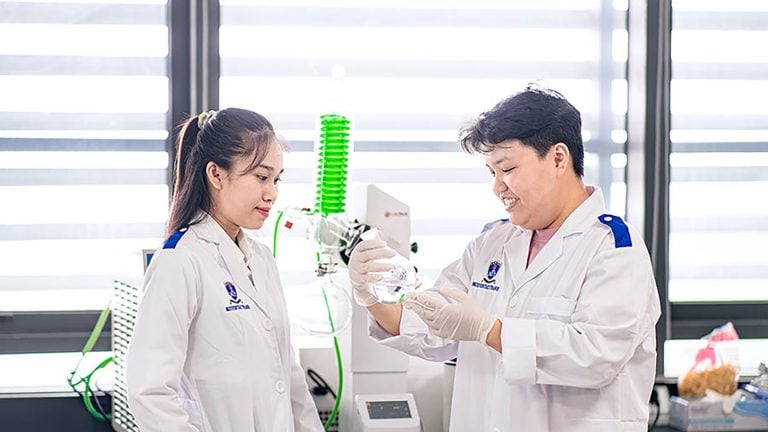
Today’s achievements of the NTT Hi-Tech Institute are a clear testament to a correct developmental roadmap where science always goes hand in hand with reality. Reaching far beyond the scale of an ordinary research unit, the Institute has risen to become a strategic link in driving technology transfer and elevating research capacity in Vietnam. Steadfast in its mission to serve, the values created by the Institute do not just contribute to the development of the University, but also radiate strongly, contributing to solving the real-world problems of life and driving the sustainable development of the knowledge economy.
Ho Quy