
 Tiếng Việt
 Home
Home Introduction
 Announcements
 Student Essential
 Event attendance lists
From July 6 to July 19, 2026, 12 students majoring in Chinese Language at the Faculty of Foreign Languages, Nguyen Tat Thanh University, participated in a summer camp program at Zhongshan Torch Polytechnic in Zhongshan City, Guangdong Province, China. Two weeks of study opened up a diverse experiential space where students practiced the language with native teachers, explored traditional culture, and directly learned about the technology business environment.
The program involved more than 40 students from various universities. In this diverse learning environment, NTTU students not only used Chinese in the classroom but also had to proactively communicate, connect, and adapt to daily life.
This is an international exchange activity that the Chinese Language major, Faculty of Foreign Languages, NTTU, has maintained in recent years. The program contributes to expanding the educational space beyond the lecture hall, helping students verify their language proficiency and gradually build confidence when entering new environments.
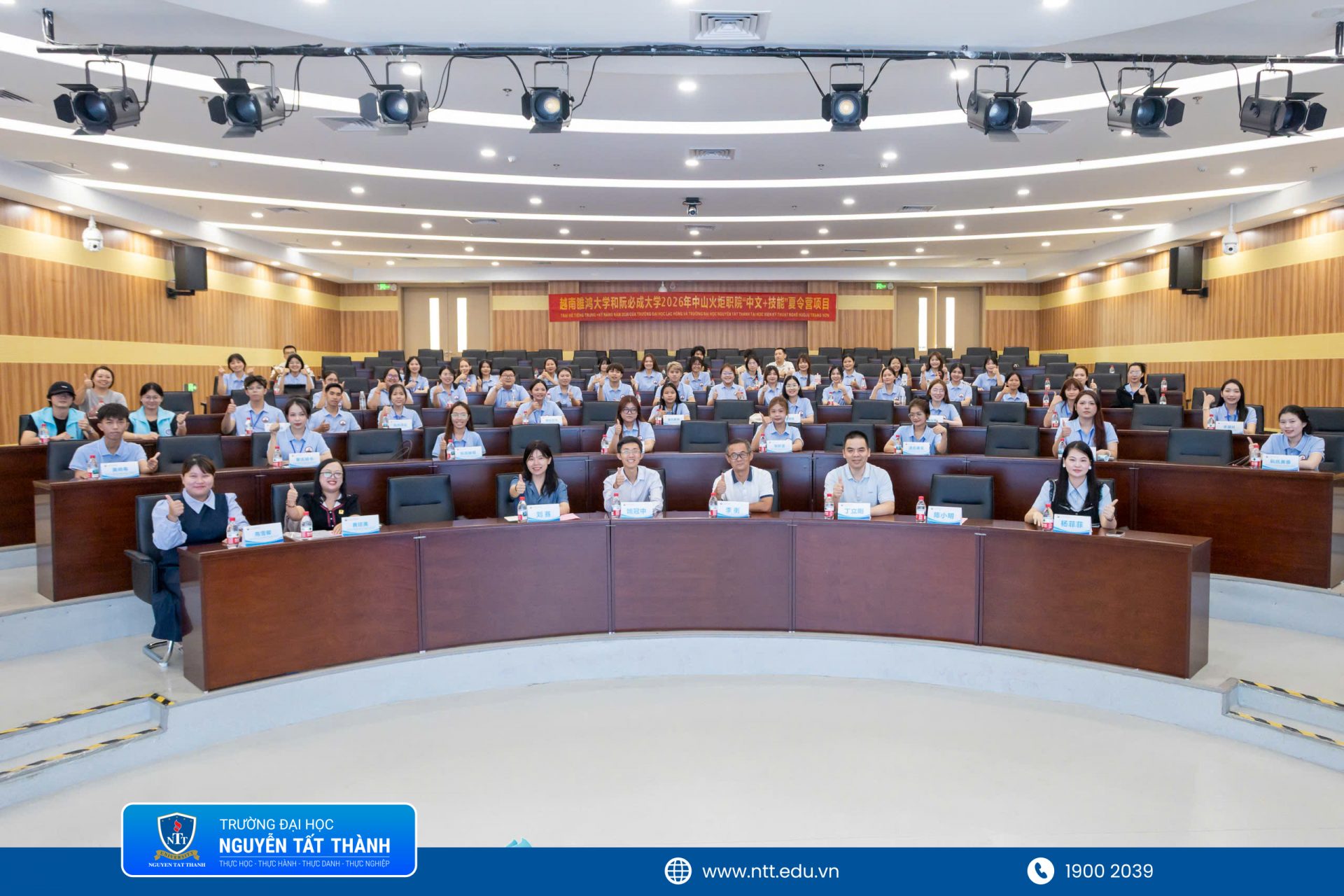
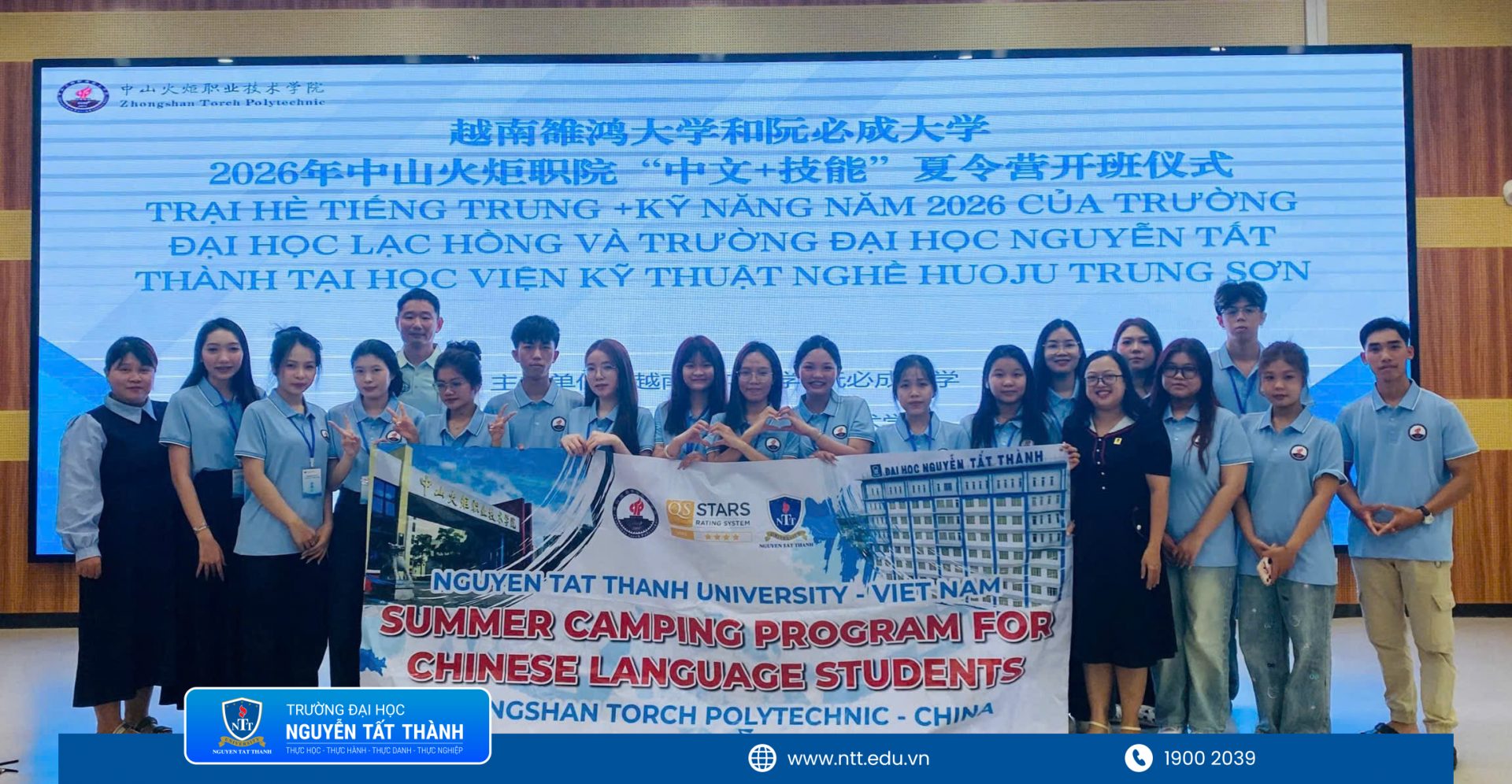
NTTU students attending the opening ceremony of the 2026 “Chinese + Skills” summer camp program at Zhongshan Torch Polytechnic
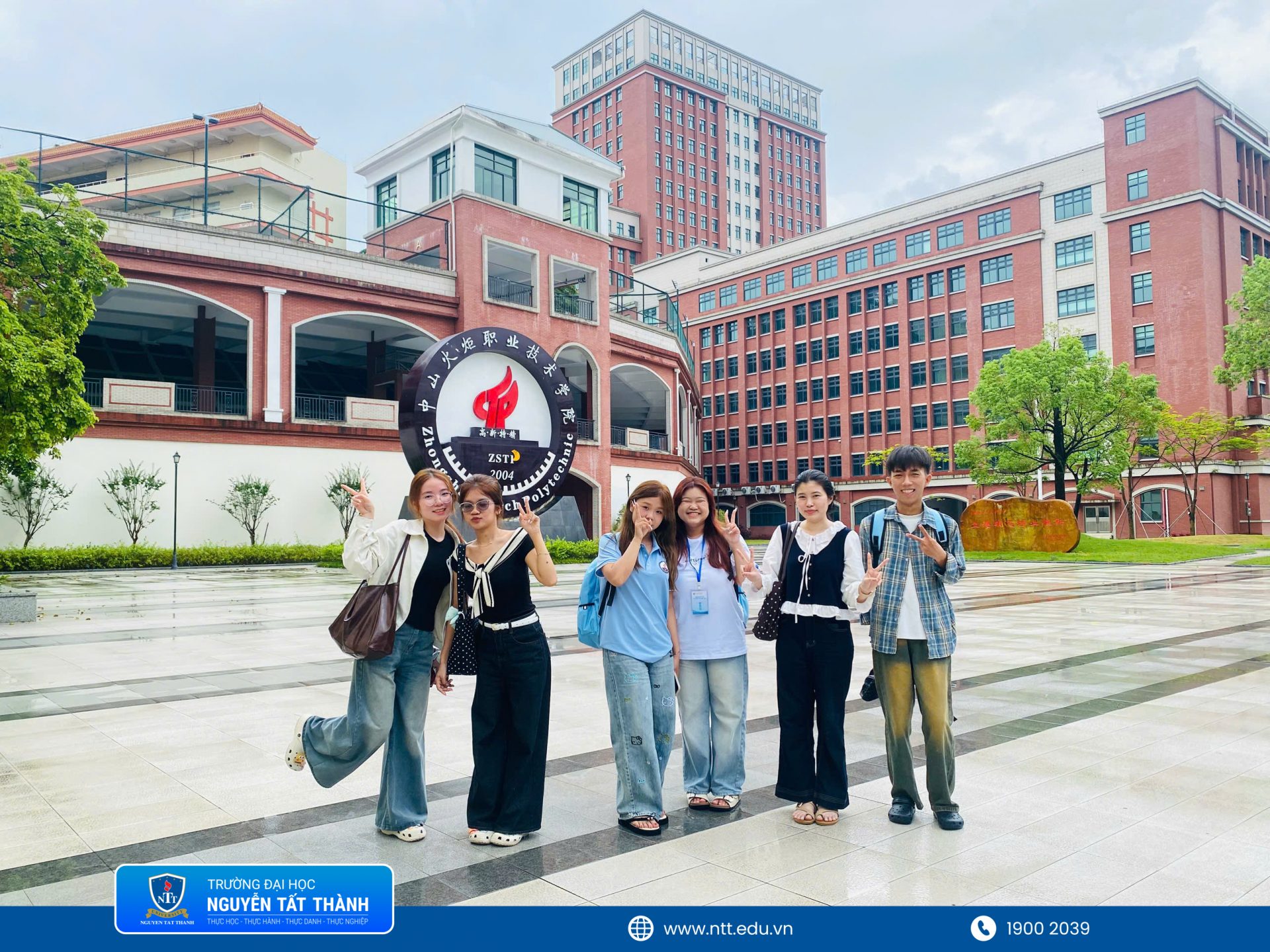
The learning environment at Zhongshan Torch Polytechnic creates conditions for NTTU students to practice Chinese, expand connections, and adapt to a new environment
Taking Chinese out of the classroom, turning every situation into a lesson
At Zhongshan Torch Polytechnic, NTTU students participated in classes and Chinese language practice with native teachers.
If in the classroom, learners have time to prepare vocabulary, arrange sentence structures, and adjust expressions, in a native environment, every exchange happens naturally and faster. Students must proactively listen, react, and convey their thoughts in each specific situation.
From exchanges with teachers and students from other schools to gathering information during daily life, every activity becomes a language practice session. Knowledge from textbooks is thus placed into real life, where students must directly choose words, express thoughts, and adjust their way of speaking to be understood.
This environment helps them realize the gap between memorizing knowledge and the ability to use language to communicate effectively. A new word no longer just appears in exercises; a sentence structure no longer stays on paper but becomes a tool to connect with those living in the cultural space of that very language.
Besides practicing Chinese, students also learned skills in filming, cutting, and editing short videos. This activity helped them get acquainted with content production on digital platforms while attempting to apply foreign languages to storytelling and conveying information through images.
Combining language with communication skills also helps students view their major in a broader direction. Chinese is not only used in communication, teaching, or translation/interpretation but can also support learners in communication, trade, tourism, and service activities.
According to Dr. Ho Van Han – Dean of the Faculty of Foreign Languages, students learning foreign languages in the current context not only need language usage proficiency but must also develop communication skills, adaptability, and a practice-oriented mindset.
“Study programs in a native environment help students realize that a foreign language is not a standalone subject. Language only truly becomes a professional competence when learners know how to use it to communicate, connect, and handle real-life situations,” shared Dr. Ho Van Han.
According to the Dean of the Faculty of Foreign Languages, studying, exchanging, and experiencing abroad also helps students better identify their current capabilities, thereby proactively supplementing knowledge and skills right during their study process at the university.
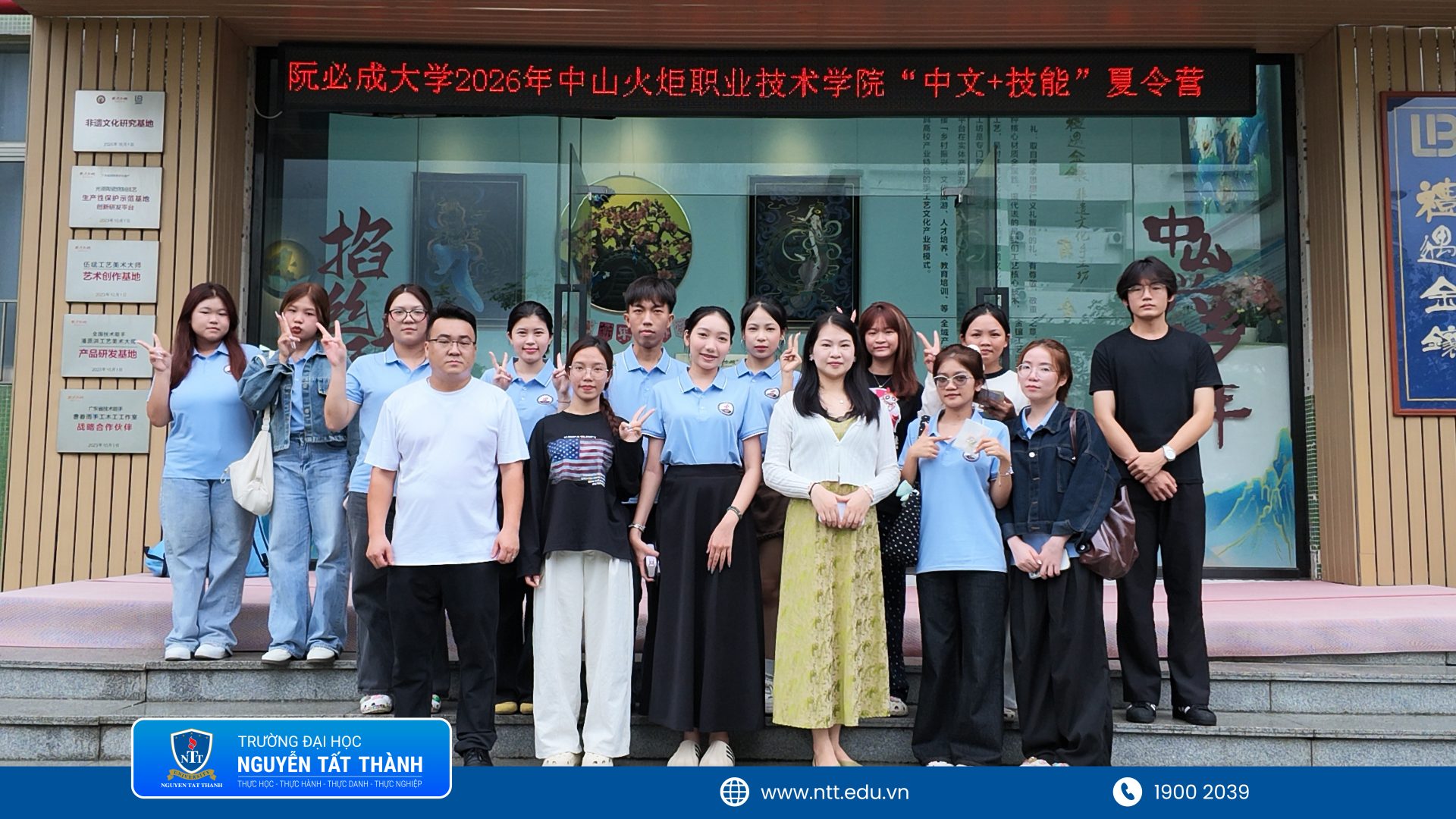
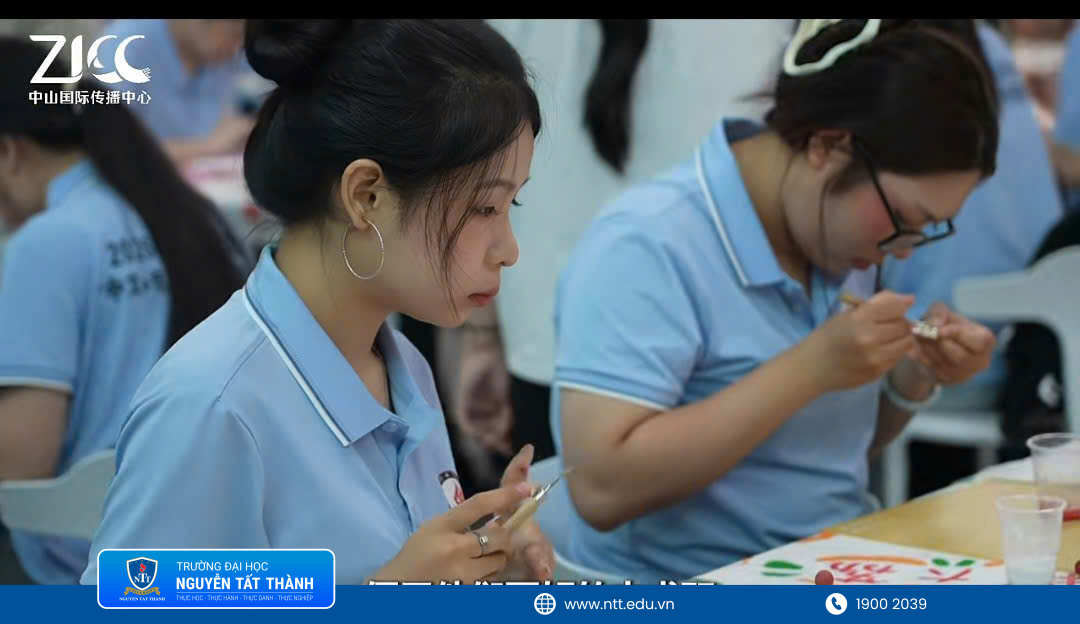
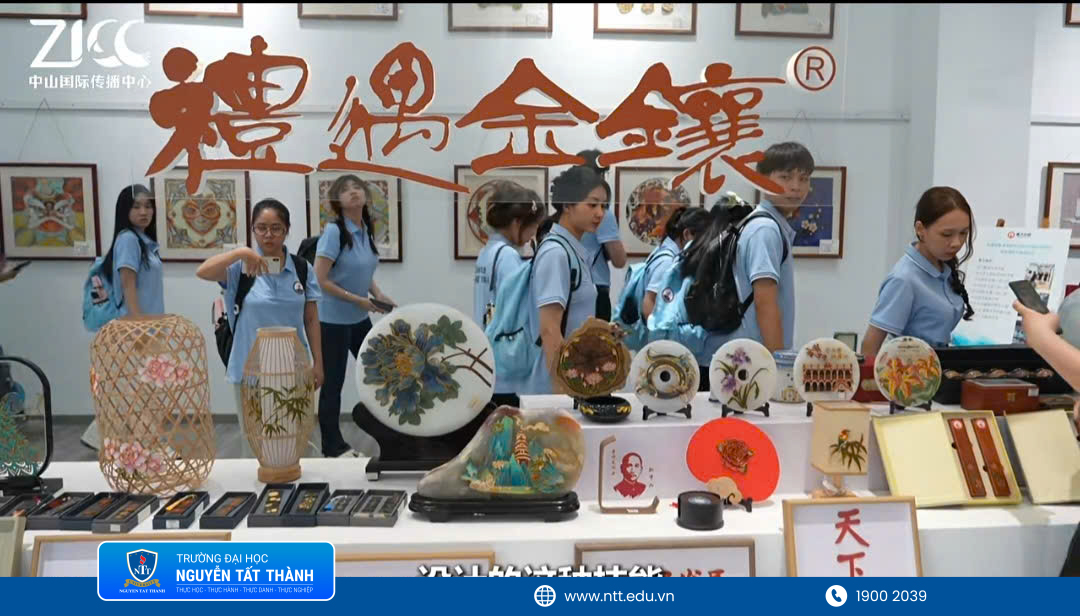
Students directly experience cloisonné art and learn about traditional cultural values expressed through techniques, colors, and patterns
From cloisonné art to industrial robots: Expanding the “amplitude” of the major
One of the highlights of the program was a series of activities exploring traditional Chinese culture. Students were introduced to paper-cutting art, cloisonné – a technique of enameling on metal – and explored unique intangible cultural values.
Instead of just observing through images or hearing introductions, they directly practiced, learned how products are created, and discovered the cultural meanings expressed through colors, patterns, and crafting techniques.
Through each activity, language is placed in a broader context. Students understand that to communicate effectively, learners not only need to pronounce correctly or use correct sentence structures but also must understand the history, culture, and way of thinking of the native people.
From the space of traditional values, the journey continued to bring students closer to technology, manufacturing, and the modern business environment.
Zhongshan Torch Polytechnic is located in the Zhongshan Torch Hi-tech Industrial Development Zone. With an applied training orientation, focusing on practical skills, the polytechnic has many activities connecting with businesses in the technical and technological fields.
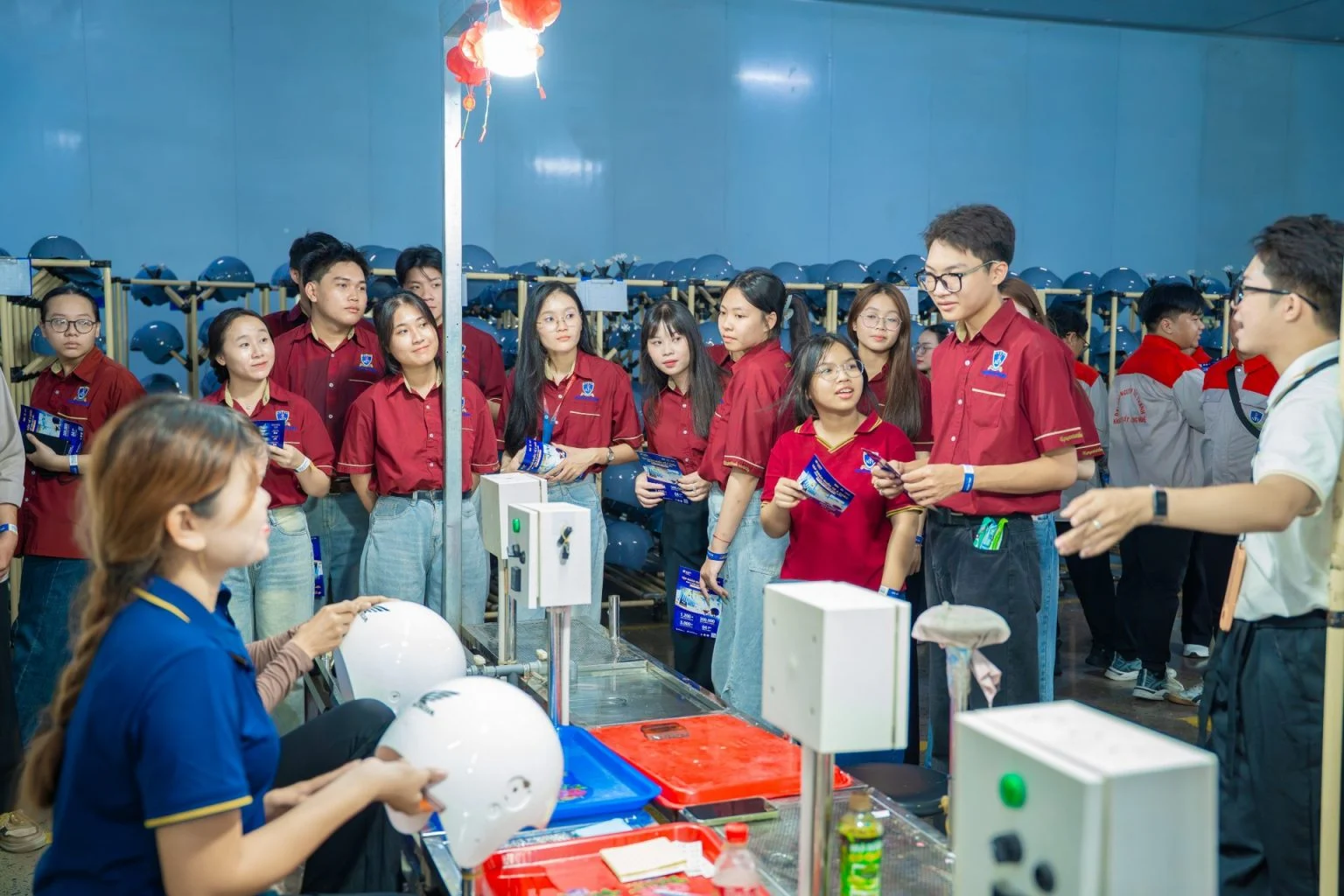
Within the framework of the summer camp, NTTU students visited Foshan Huashu Robotics Co., Ltd – a business operating in the field of industrial robots and production automation.
Here, they had the opportunity to observe the actual operating environment, learn how robots are applied in production lines, and approach the changes that technology is creating in business operations.
The tour also helped students see the connection between the language major and fields seemingly inclined toward technicality. In a production environment with international elements, besides engineers and technology experts, businesses also need human resources capable of foreign languages to communicate with partners, support trade, translate/interpret documents, and convey information between departments.
Students also visited Zhongshan Rejee Food Co., Ltd, thereby learning more about production, organization, and business operations in the food sector.
From industrial robots to food production, each destination brings a different slice of the labor market. Students observed how businesses operate and recognized the role of foreign languages in production, business, and international cooperation.
These experiences contribute to expanding the students’ perception “amplitude” about the Chinese Language major. In addition to familiar career paths such as teaching, translation, and interpretation, Chinese language proficiency can also be applied in areas such as external relations, import-export, commerce, communication, tourism, and customer service.
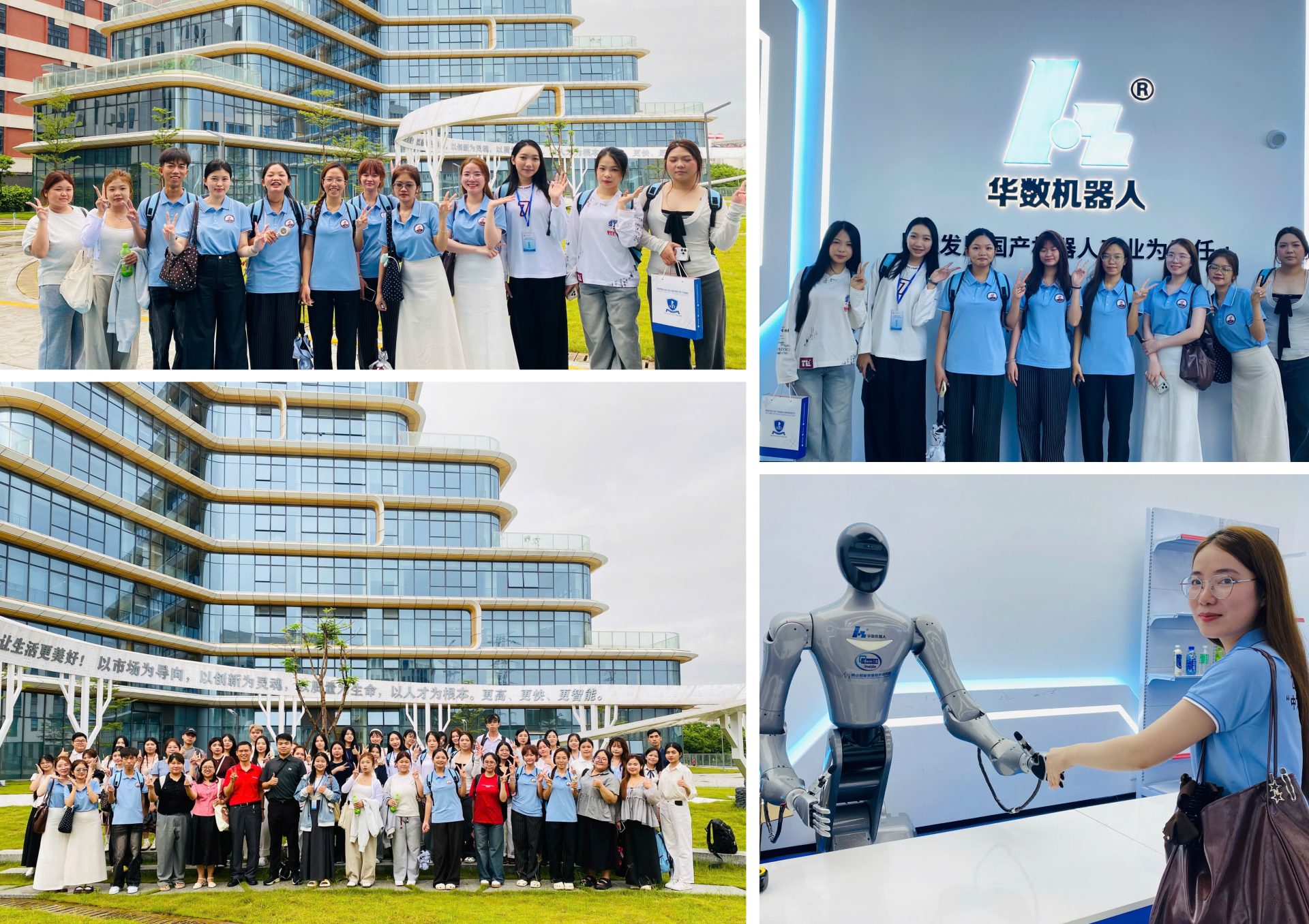
NTTU students directly learn about robots and the applications of automation technology in modern production
Going to “unlock” confidence
In addition to lessons and business tours, students also had the opportunity to explore cultural and tourist destinations in Zhongshan City and neighboring cities such as Guangzhou, Foshan, and Shenzhen.
Each destination became an “open classroom,” where students directly observed the life, culture, and development pace of cities in China.
During that journey, familiar activities such as asking for directions, searching for information, exchanging when shopping, or communicating at sightseeing spots became opportunities for students to practice reflex ability in Chinese.
No longer with a teacher standing next to them correcting every sentence, they had to choose their own expressions, listen to feedback, and flexibly change communication methods so that the other person understood what they wanted to convey.
Sharing about the days of studying in China, student Huynh Minh Tho, class 24DTT1A, said that regularly using Chinese in the classroom and in life has helped him be more proactive in communication.
“Before the trip, I was still hesitant when having to communicate entirely in Chinese. But when directly exchanging with teachers, students from other schools, and local people, I gradually became more confident. Every time I heard and understood or expressed what I wanted to say, I realized more that the knowledge learned in class could be applied very practically in life,” shared Minh Tho.
If Minh Tho is impressed with the change in communication ability, student Nguyen Thi Bao Giang, class 25DTT1B, sees the openness of the major through the diverse series of activities of the program.
“What I found interesting is that the program doesn’t just have Chinese lessons. We also experienced traditional arts, learned video making skills, and visited robotics businesses. Through each activity, I understood more that the Chinese Language major can connect with many fields and open up more professional development directions than I once imagined,” said Bao Giang.
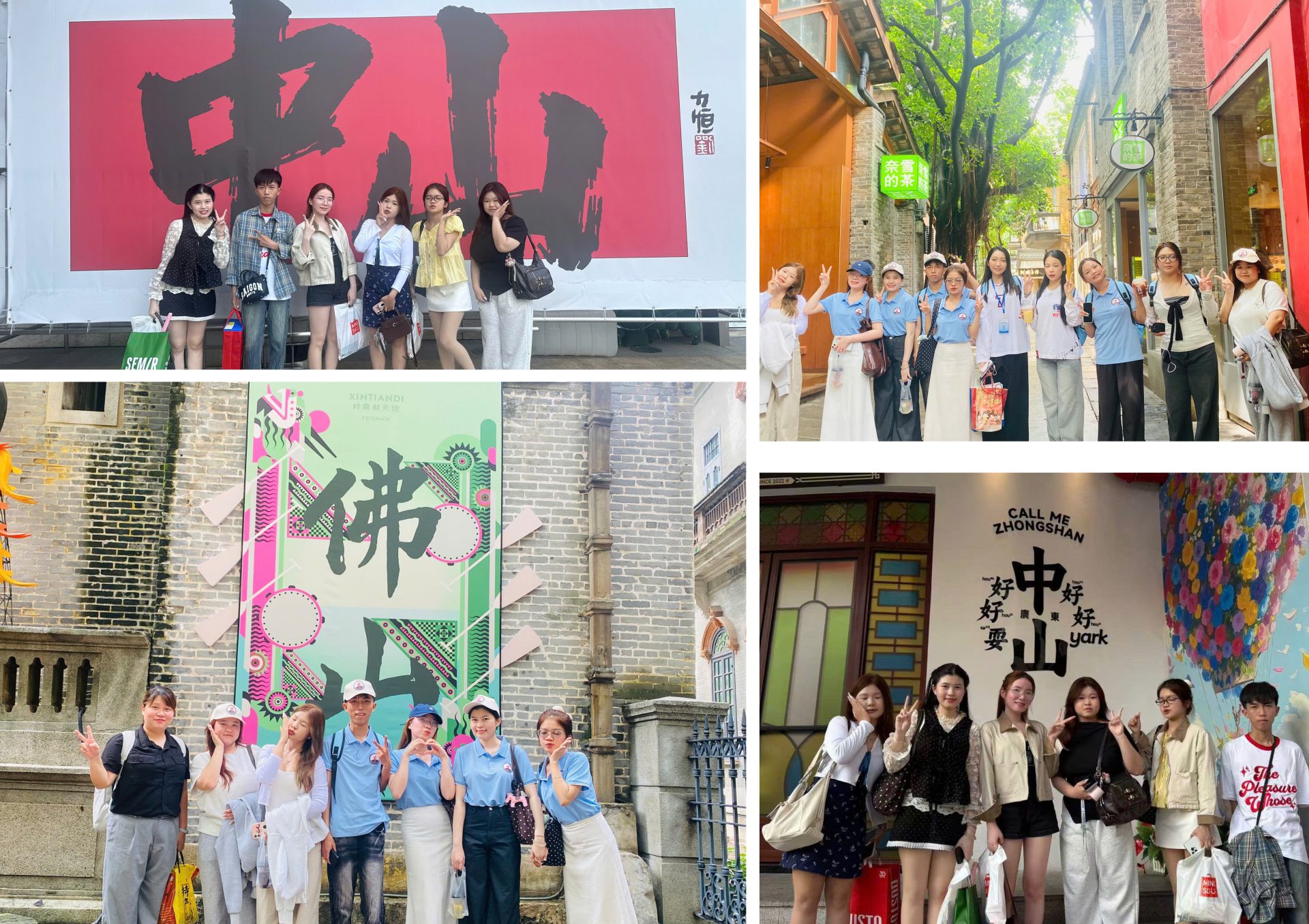
NTTU students explore cultural spaces in Foshan and Zhongshan, turning each destination into an “open classroom” to learn about architecture, local life, and proactively practice Chinese in daily communication
The program in Guangdong also contributes to concretizing the philosophy “Real Learning – Real Practice – Real Reputation – Real Employment” of Nguyen Tat Thanh University. Students learn Chinese in a native environment, experience culture through practical activities, approach digital communication skills, and directly observe the business environment.
Knowledge, therefore, does not stop at “learning to know,” but is gradually transformed into the ability to communicate, adapt, and work.
From Chinese classes in Zhongshan City to the space of cloisonné art, from the first short videos to industrial robot assembly lines, each activity brings students a new perspective on their major.
Through the learning journey in Guangdong, students not only accumulate memorable experiences but also gradually improve their Chinese communication ability, boldly stepping out of their comfort zone, and shaping their career development direction more clearly. Those practical experiences will become luggage for NTTU Chinese Language students to continue perfecting professional competence, increasing competitive advantage, and confidently integrating into the international working environment.
Reporter: Cam Thach
Photos: Faculty of Foreign Languages