
 Tiếng Việt
 Home
Home Introduction
 Announcements
 Student Essential
 Event attendance lists
On July 15, 2026, at Hall A803, 300A Campus, Nguyen Tat Thanh University organized a training session on “Intellectual Property and Branding for Innovative Startup Projects”. The program helps students identify, protect, and progressively exploit the value of their ideas, products, brands, logos, and digital content during the development of startup projects.
The program was attended by guest speakers: Dr. Ngo Dac Thuan – Chairman of the Board of Directors of IP Group Joint Stock Company; Dr. Nguyen Huu Thuan Anh – Deputy Head of the Science and Technology Department, Nguyen Tat Thanh University; along with MSc. Huynh Hong Mai – Deputy Director of the Center for Innovation and Startup Incubation (NIIC), as well as lecturers and specialists from various faculties, institutes, and units within the University.
In a context where ideas, images, and content can be created, shared, and copied rapidly on digital platforms, intellectual property is no longer a concern only when a product is finalized or a project begins to approach the market. For students and startup teams, identifying rights to intellectual property right from the idea formation stage is crucial in limiting legal risks, protecting creative value, and creating a foundation for the development and commercialization of products.
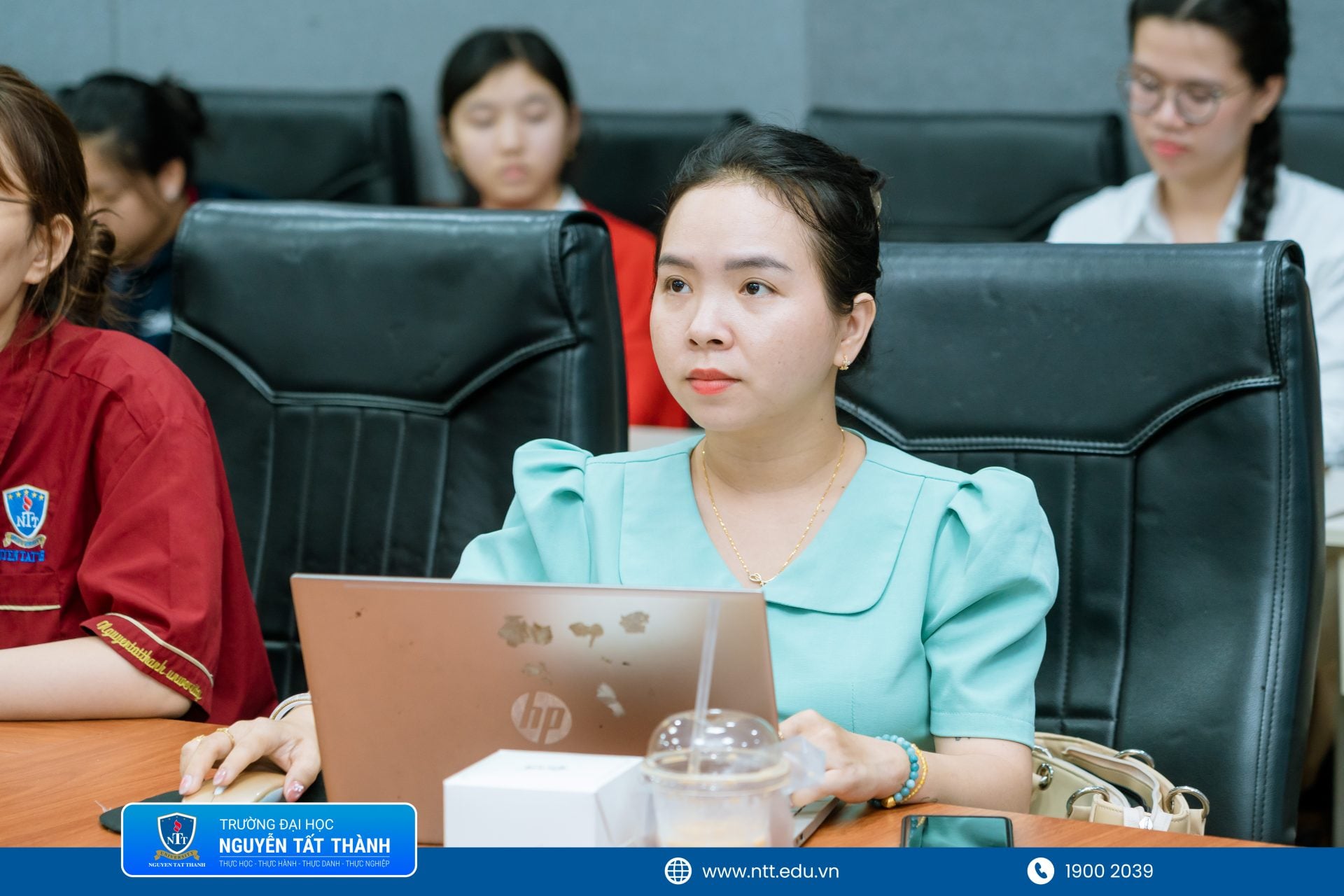
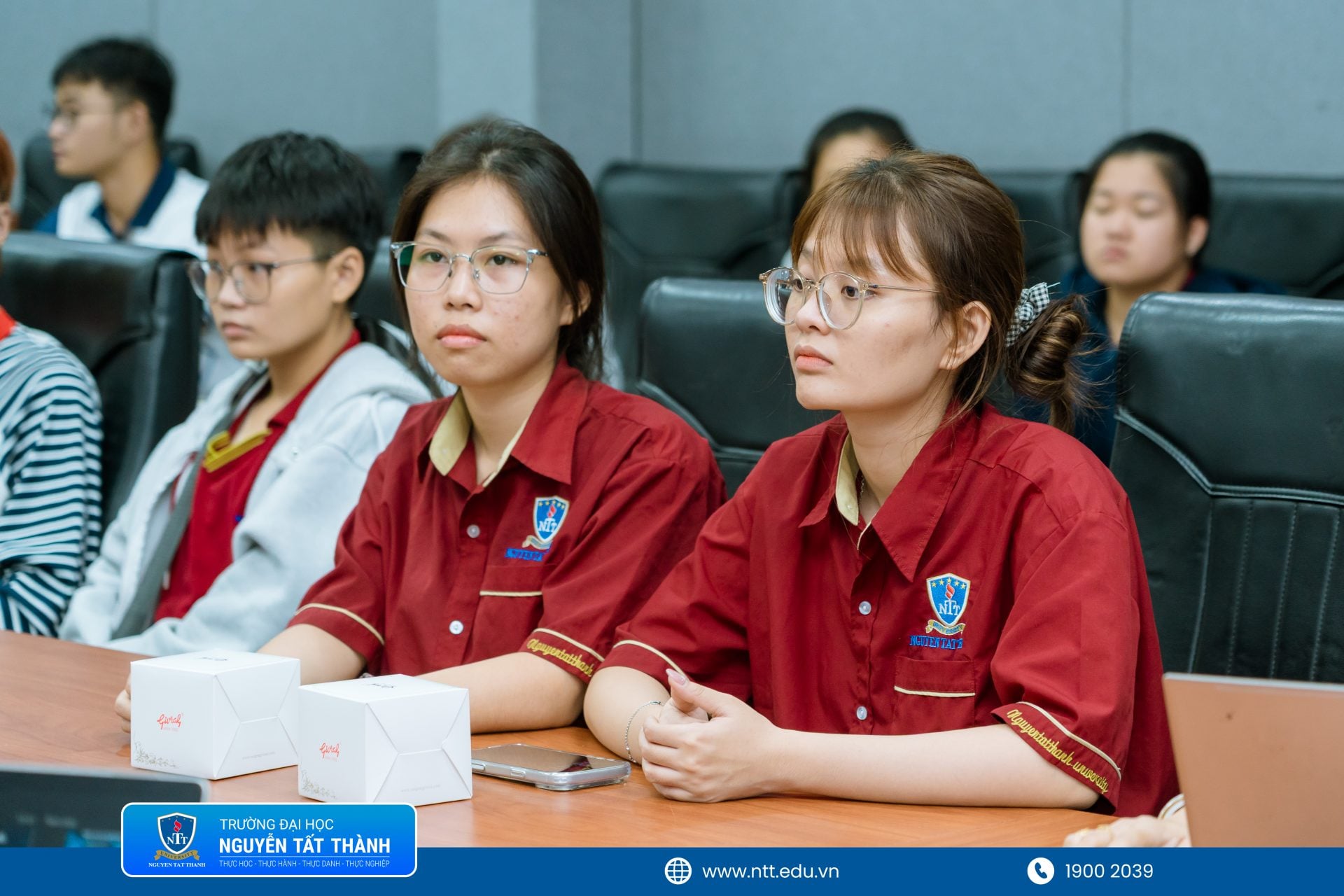
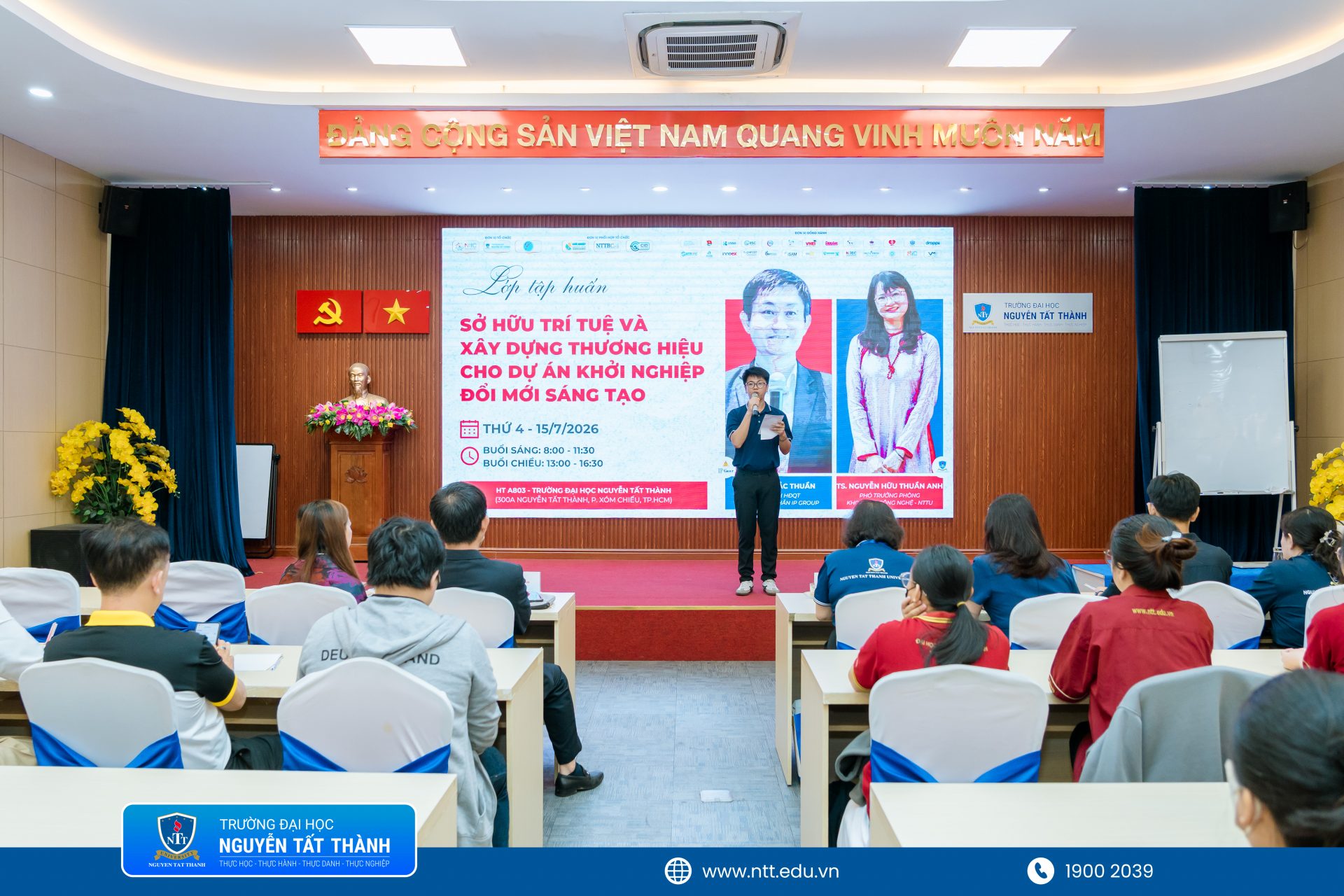

The training session “Intellectual Property and Branding for Innovative Startup Projects” attracts the participation of NTTU students.
Protecting creative value right from idea formation
At the training session, Dr. Ngo Dac Thuan – Chairman of the Board of Directors of IP Group Joint Stock Company, shared key points regarding intellectual property and branding in the digital age.
Through real-world cases like Apple and Vinamilk, students were guided to distinguish more clearly between a trademark and a brand. A trademark is a sign used to distinguish the goods or services of organizations or individuals and can be registered for protection under the law, whereas a brand is the total sum of perceptions, associations, reputation, and value formed in the customer’s mind over time.
Students were also introduced to basic principles for selecting and protecting trade names, trademarks, and logos; identifying the entities entitled to register; and identifying risks that may arise when naming a project or using images and signs that are easily confused with others.
For logos, depending on the characteristics and purpose of use, project teams can consider appropriate protection mechanisms, such as registering as a trademark or protecting copyright as an applied art work. Understanding each object and the scope of protection helps students avoid equating logos, trademarks, and brands – concepts that are related but not identical in essence and legal mechanisms.
Furthermore, the content on copyright helped learners better understand the basis for the birth of rights, the owner, the scope of rights, and the responsibilities when exploiting and using the creative products of others. This is necessary knowledge for students who frequently create products for study, research, communication, design, or content development on digital platforms.
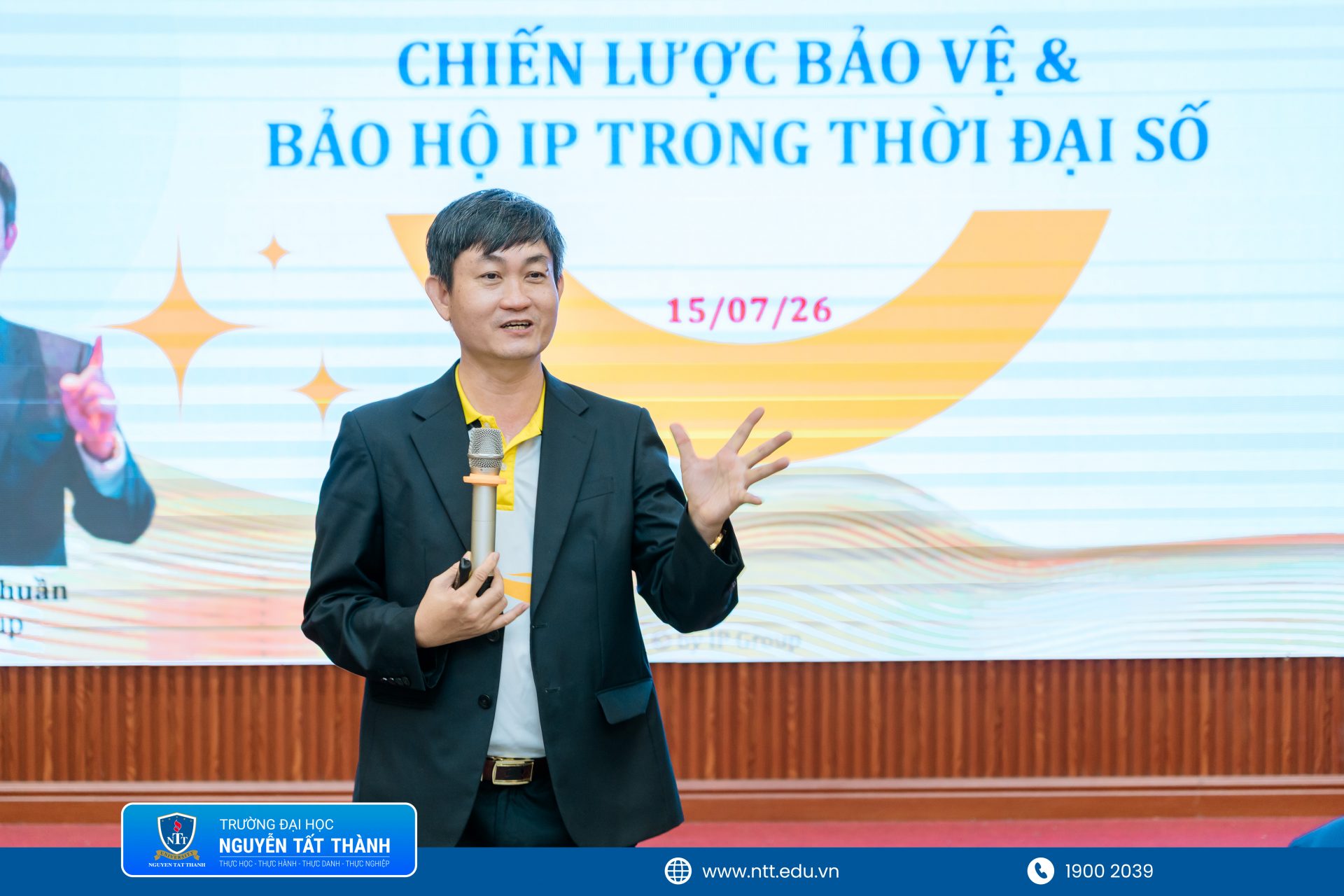
Dr. Ngo Dac Thuan sharing knowledge about intellectual property and branding in the digital age.
Identifying intellectual property risks in the digital and AI environment
One of the topics that received much attention at the program was protecting intellectual property in the context of rapidly developing artificial intelligence and creative activities increasingly tied to the digital environment.
Through issues such as copyright for digital content, watermarks, Digital Rights Management (DRM) technology, and the use of data, images, and works on online platforms, students were guided to identify risks that could affect the rights and interests of individuals and project teams.
Watermarks and DRM were introduced as technical measures to support the identification, management, and control of content exploitation. However, to comprehensively protect creative value, project teams need to identify the correct owner, retain evidence of the product formation process, agree clearly on rights among members, and choose an appropriate protection mechanism.
The program also helped students begin to identify intellectual property assets that can be formed in a startup project, from the project name, logo, media content, design, and software to processes, technical solutions, and data. Thereby, intellectual property is approached not only from the perspective of dispute prevention but also as a resource that can contribute to building competitive advantage and increasing value for the project.
Bringing situations associated with technology and startup activities into the training session helped students see more clearly the relationship between creativity, law, and the market. An idea wanting to develop sustainably not only needs novelty and applicability but also requires the creator to know how to protect, manage, and exploit the value they have created.
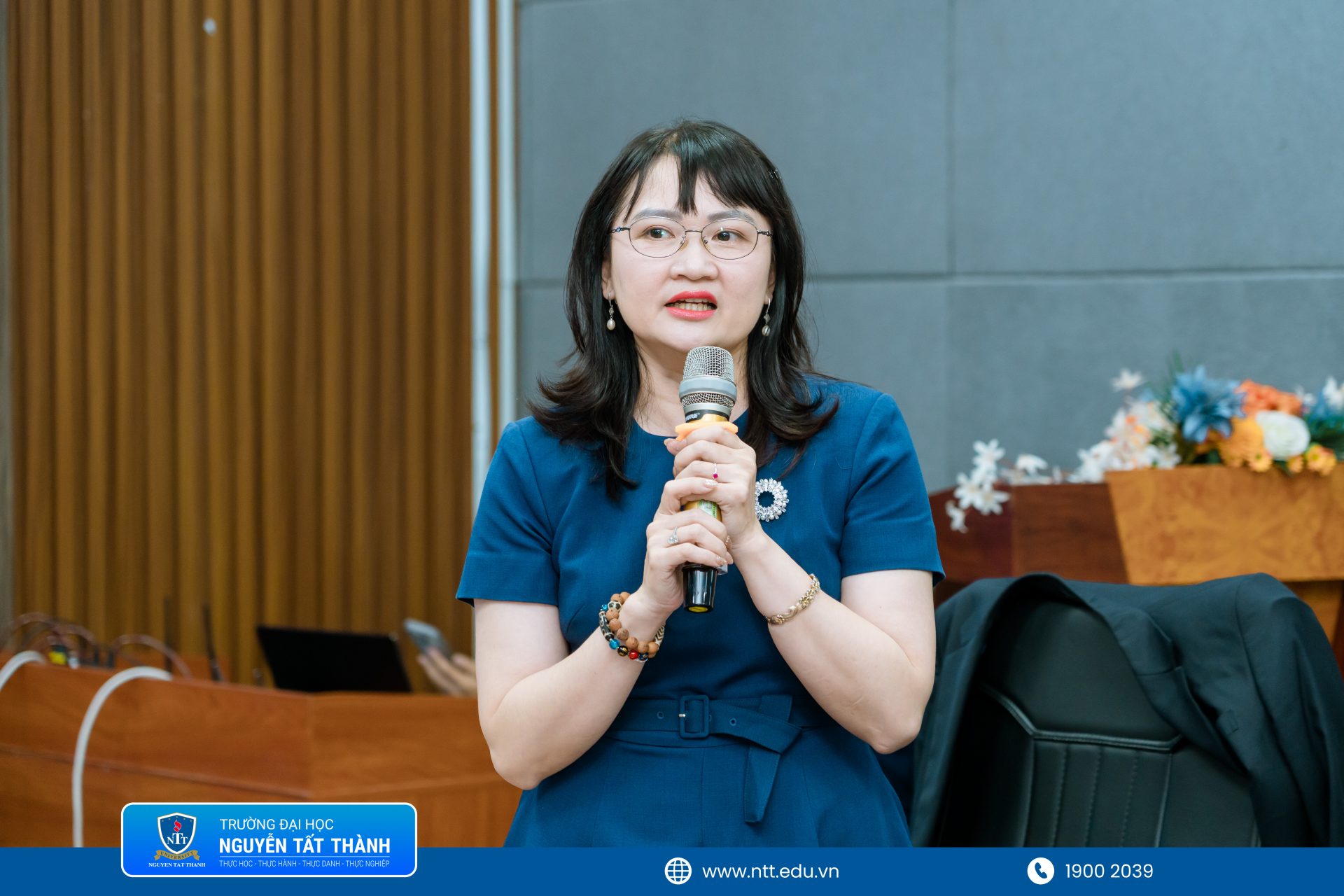
Dr. Nguyen Huu Thuan Anh – Deputy Head of the Science and Technology Department, Nguyen Tat Thanh University, introduces the University’s support policies related to intellectual property.
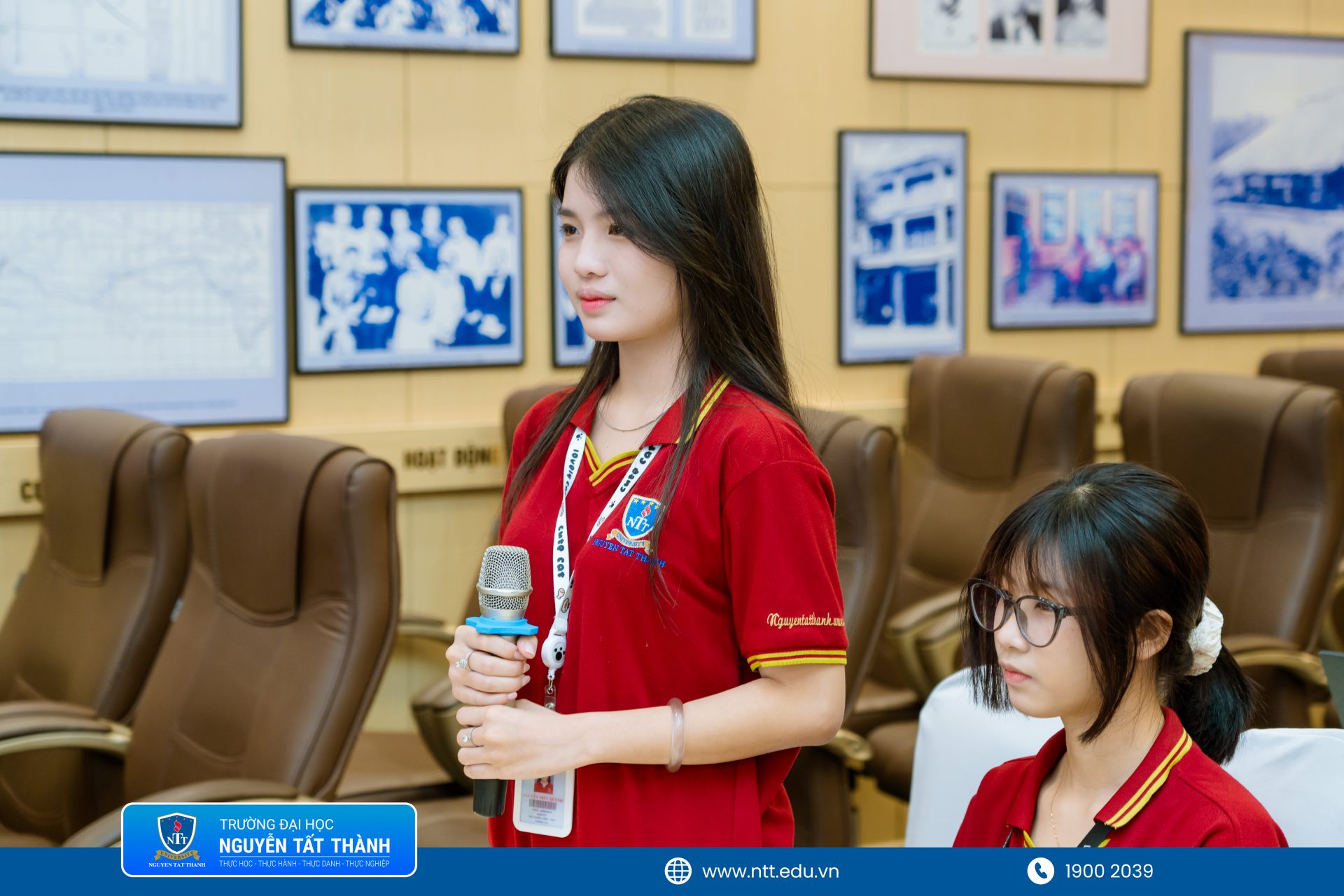
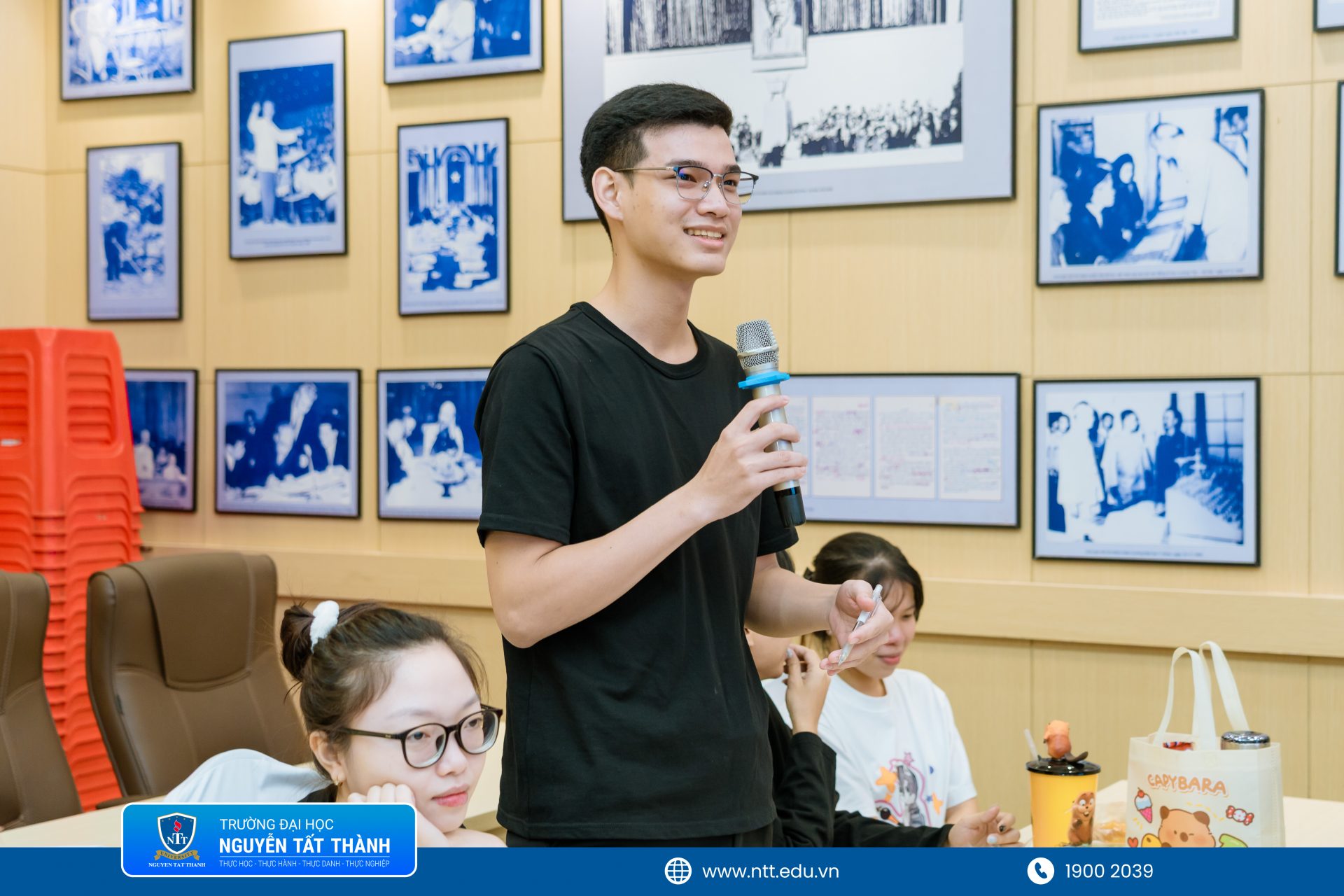
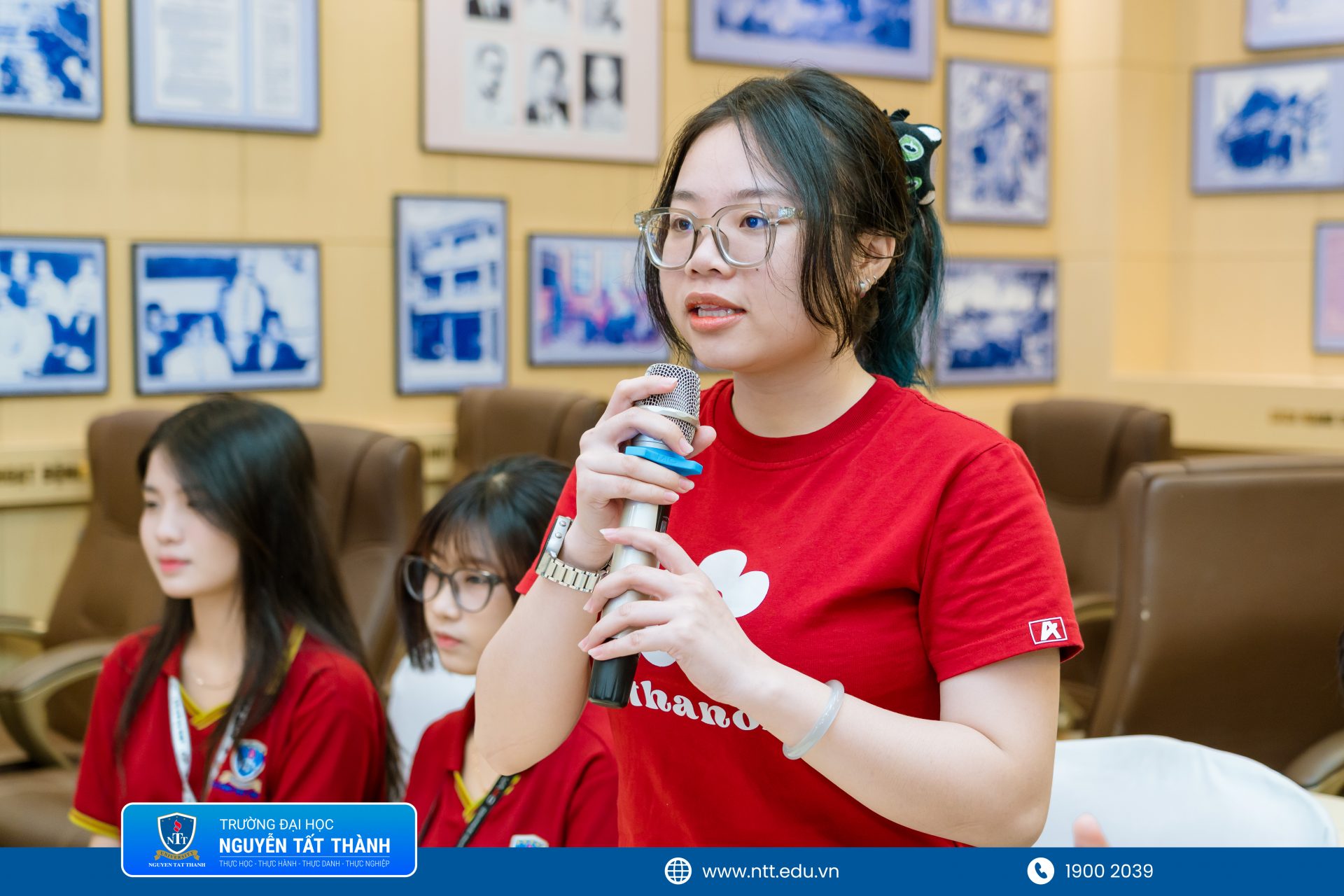
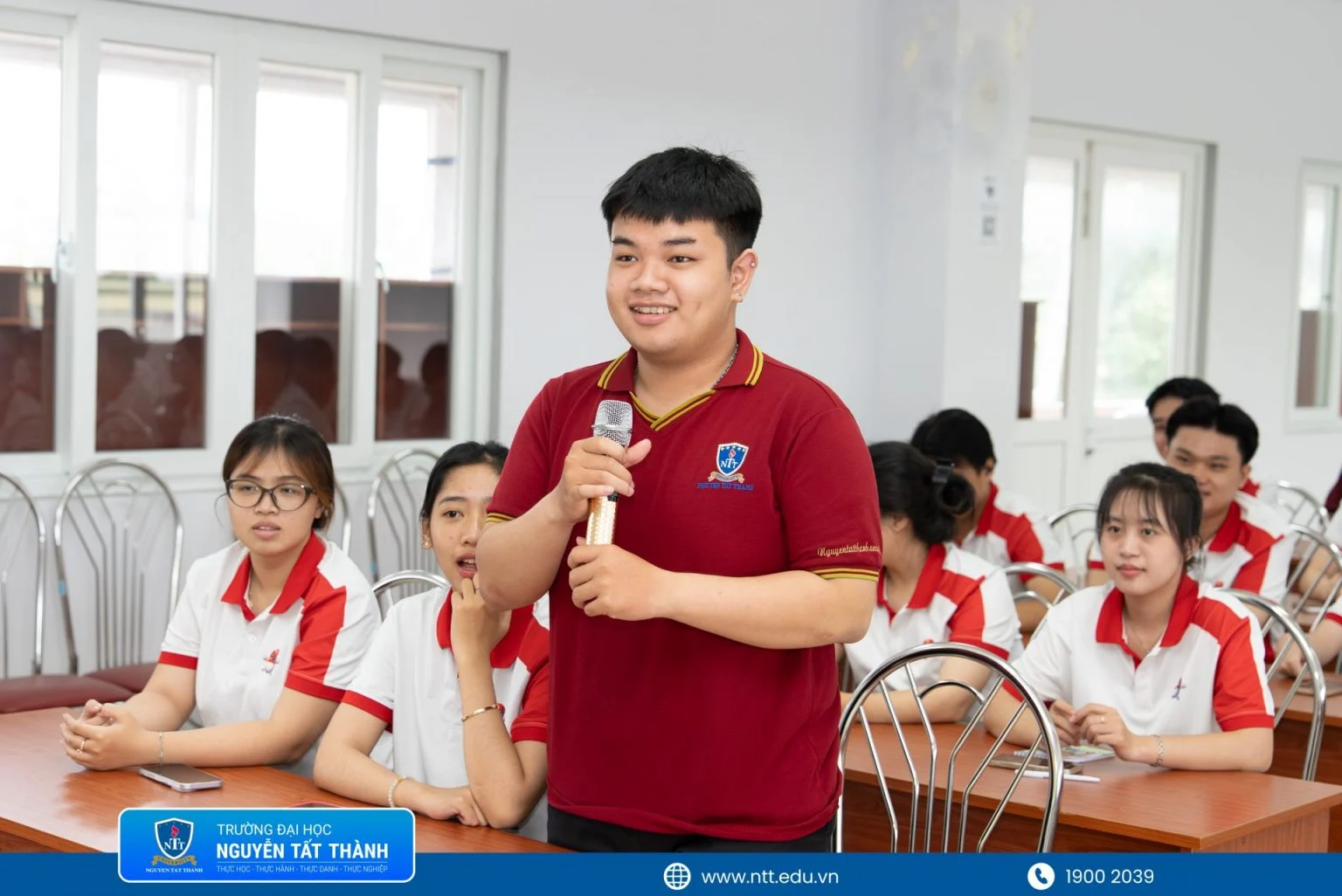
NTTU students actively ask questions and exchange with guest speakers about intellectual property protection and brand development for startup projects.
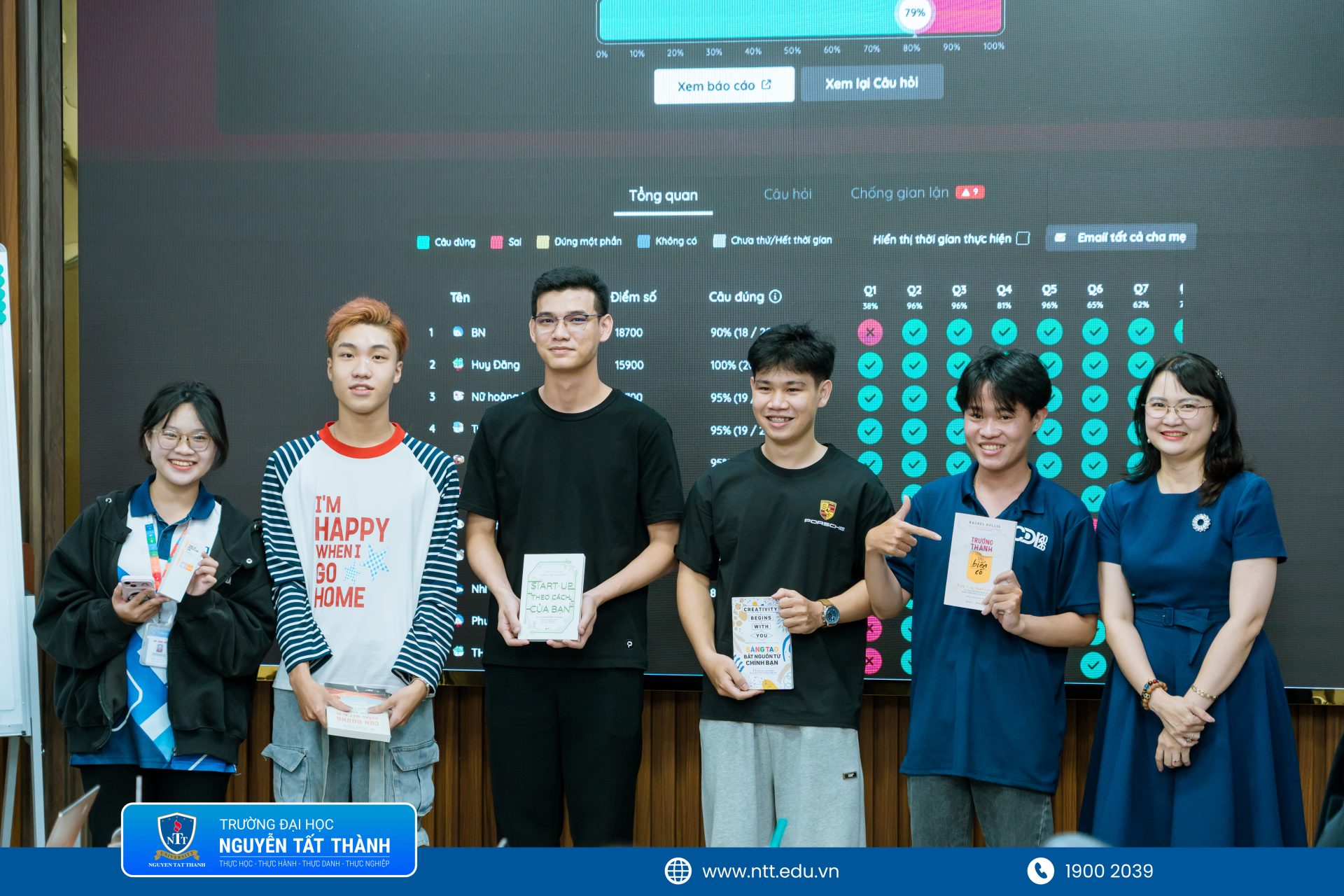
Students receiving gifts from the Organizing Committee during the interactive session.
From intellectual property knowledge to the project incubation journey
In addition to professional content, Dr. Nguyen Huu Thuan Anh shared about the University’s support policies related to intellectual property. This sharing session helped students, lecturers, and research groups better understand the mechanism by which the University accompanies them in the process of identifying, registering for protection, and developing intellectual property assets formed from scientific research, innovation, and startup activities.
MSc. Huynh Hong Mai, Deputy Director of the Center for Innovation and Startup Incubation (NIIC), shared: “Through the training session, NIIC hopes to help students approach intellectual property not as a distant concept, but as a practical tool to protect ideas, products, and develop brands for startup projects. In the context of strong digital transformation, students need to be equipped with practical knowledge to understand correctly, do correctly, and know how to exploit their creative value sustainably.”
According to MSc. Huynh Hong Mai, this is also a foundation to help students be more confident when participating in scientific research, innovation, and startups, and step-by-step commercializing solutions in the future.
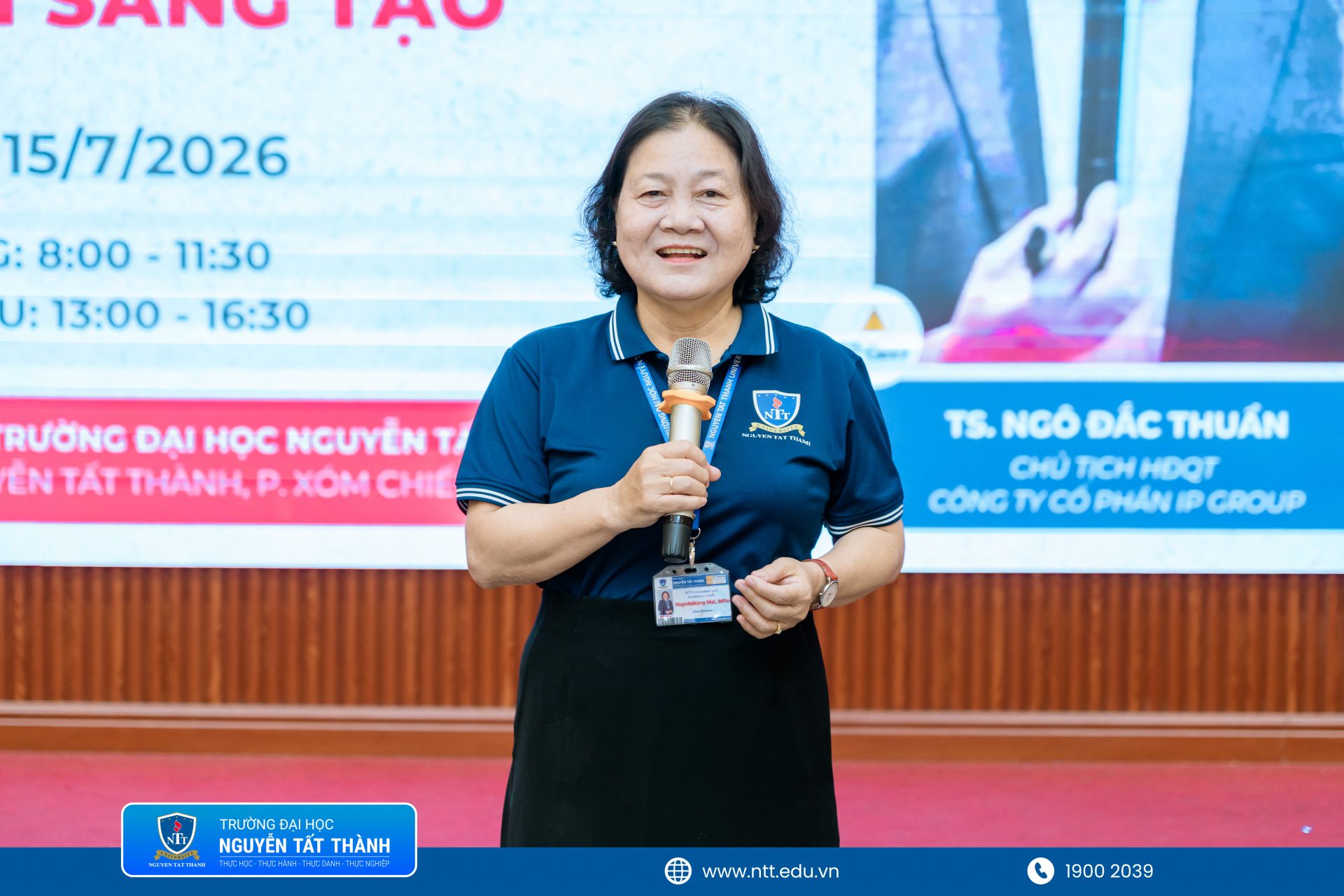
MSc. Huynh Hong Mai – Deputy Director of the Center for Innovation and Startup Incubation, sharing guidance on accompanying students in the process of completing and developing projects.
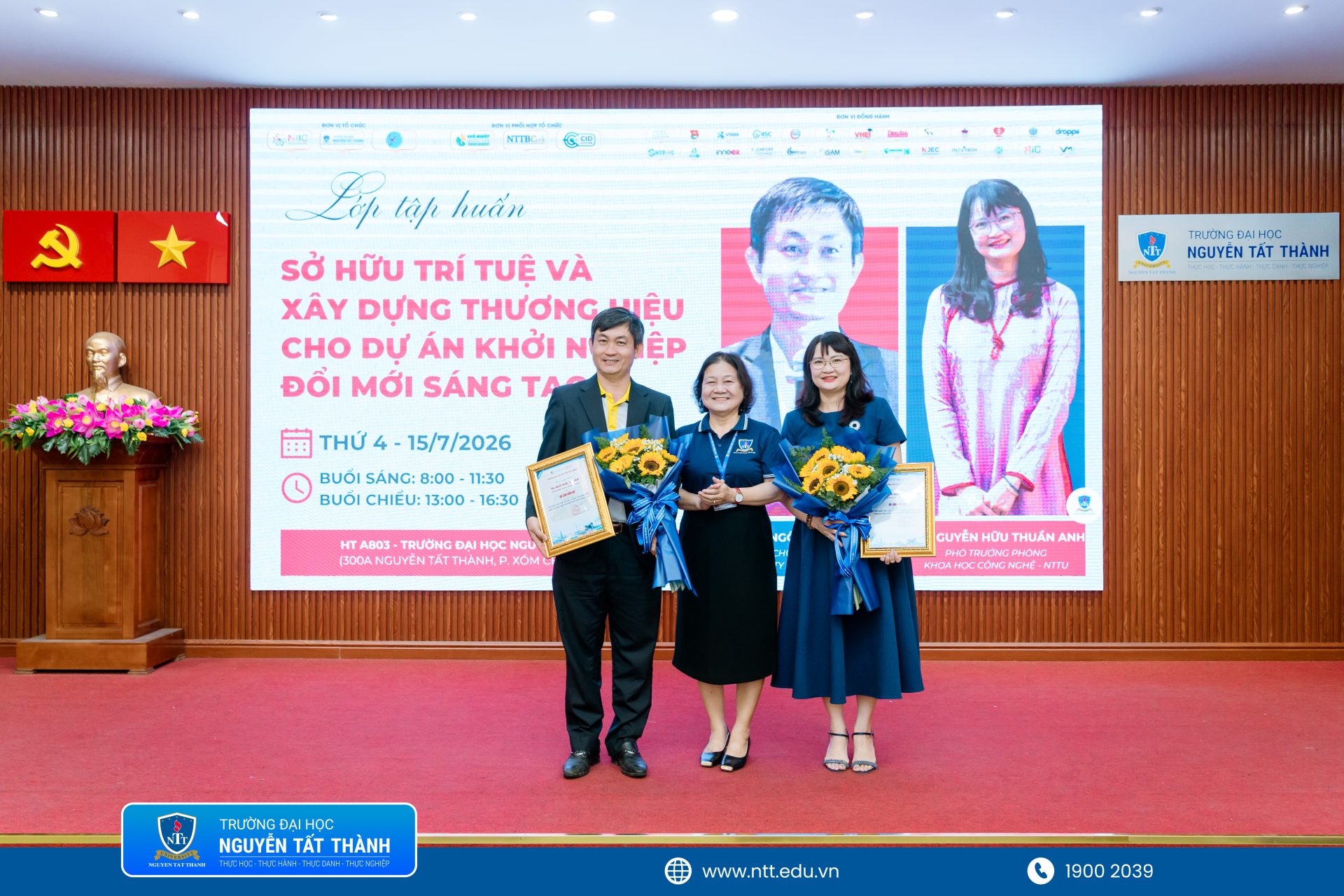
Representatives of the Organizing Committee present thank-you letters and flowers to Dr. Ngo Dac Thuan and Dr. Nguyen Huu Thuan Anh for their practical insights at the program.
The training session not only supplemented legal knowledge and brand-building skills but also contributed to forming a culture of respecting intellectual property in the university environment. More importantly, the program helped students realize that protecting intellectual property needs to be a priority from the very start of creation, rather than waiting until the product has been announced or taken to market.
Center for Innovation and Startup Incubation (NIIC)
Editorial Board – NTTU Communications Department
Dai Hai