
 Tiếng Việt
 Home
Home Introduction
 Announcements
 Student Essential
 Event attendance lists
From observing how a resort operates and experiencing services from a customer’s perspective to exploring the relationship between resources and tourism products, Resort Tour 2026 – Sustainable Journey brought students majoring in Hotel Management, Faculty of Tourism, Nguyen Tat Thanh University closer to the professional environment in Ho Tram.
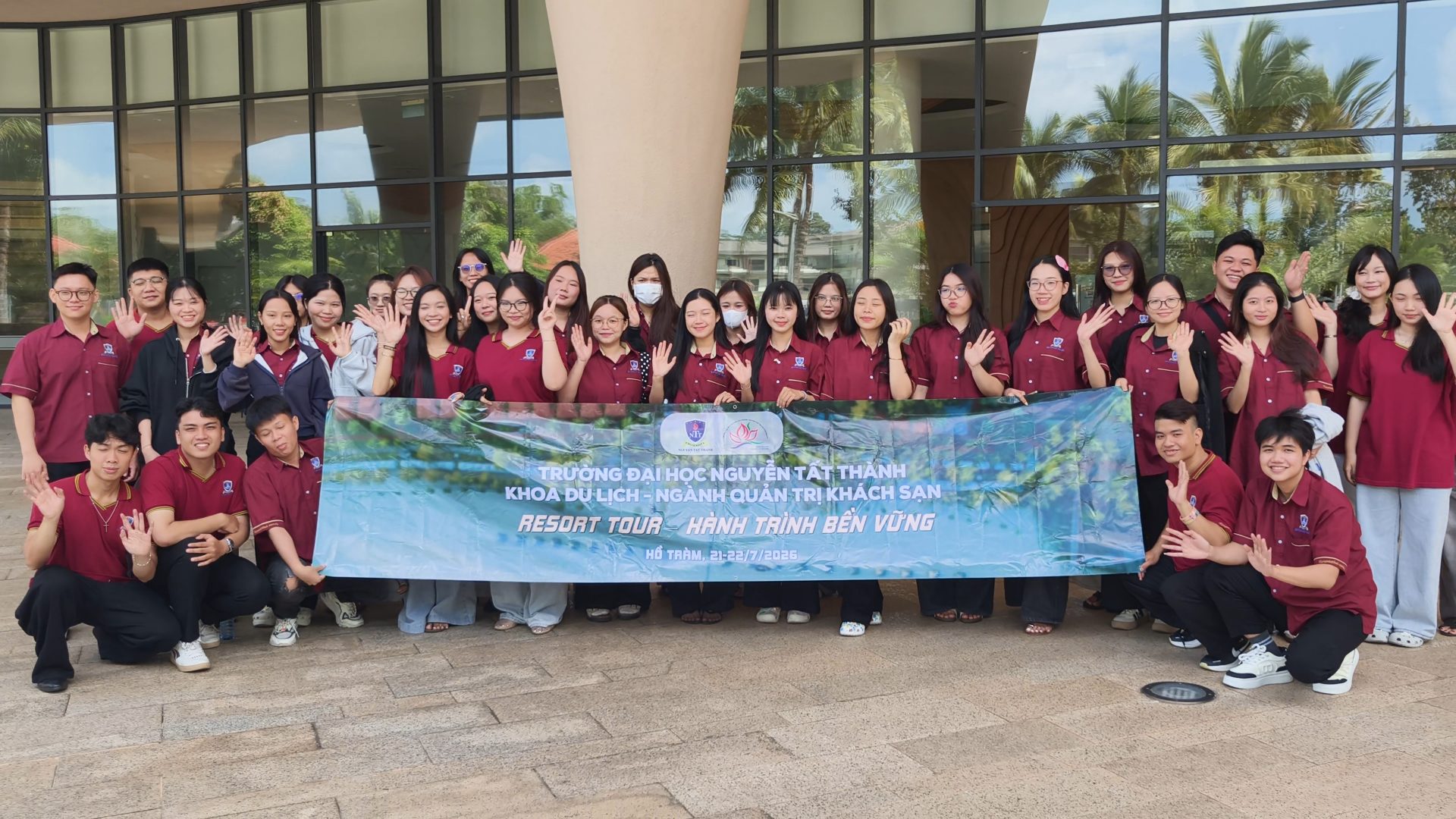
Students majoring in Hotel Management, Faculty of Tourism, Nguyen Tat Thanh University participate in Resort Tour 2026 – Sustainable Journey in Ho Tram
Right from the beginning of the journey, students were warmed up with a knowledge quiz minigame covering Ho Tram landmarks, resort characteristics, hotel management, tourism resources, and sustainable tourism development trends. These short questions helped them review specialized knowledge before direct observation at the destination.
The atmosphere on the bus became more vibrant with socializing and singing activities, creating a connection among members. Beyond the laughter, the program clearly maintained its learning objective: helping students see how classroom knowledge is applied in tourism and hotel operations.
Over two days and one night, the journey took learners to Binh Chau Hot Spring Tourist Area, Seava Resort Ho Tram, and a homestay model. Each stop opened up a different perspective on resources, tourism products, accommodation models, and customer experiences.
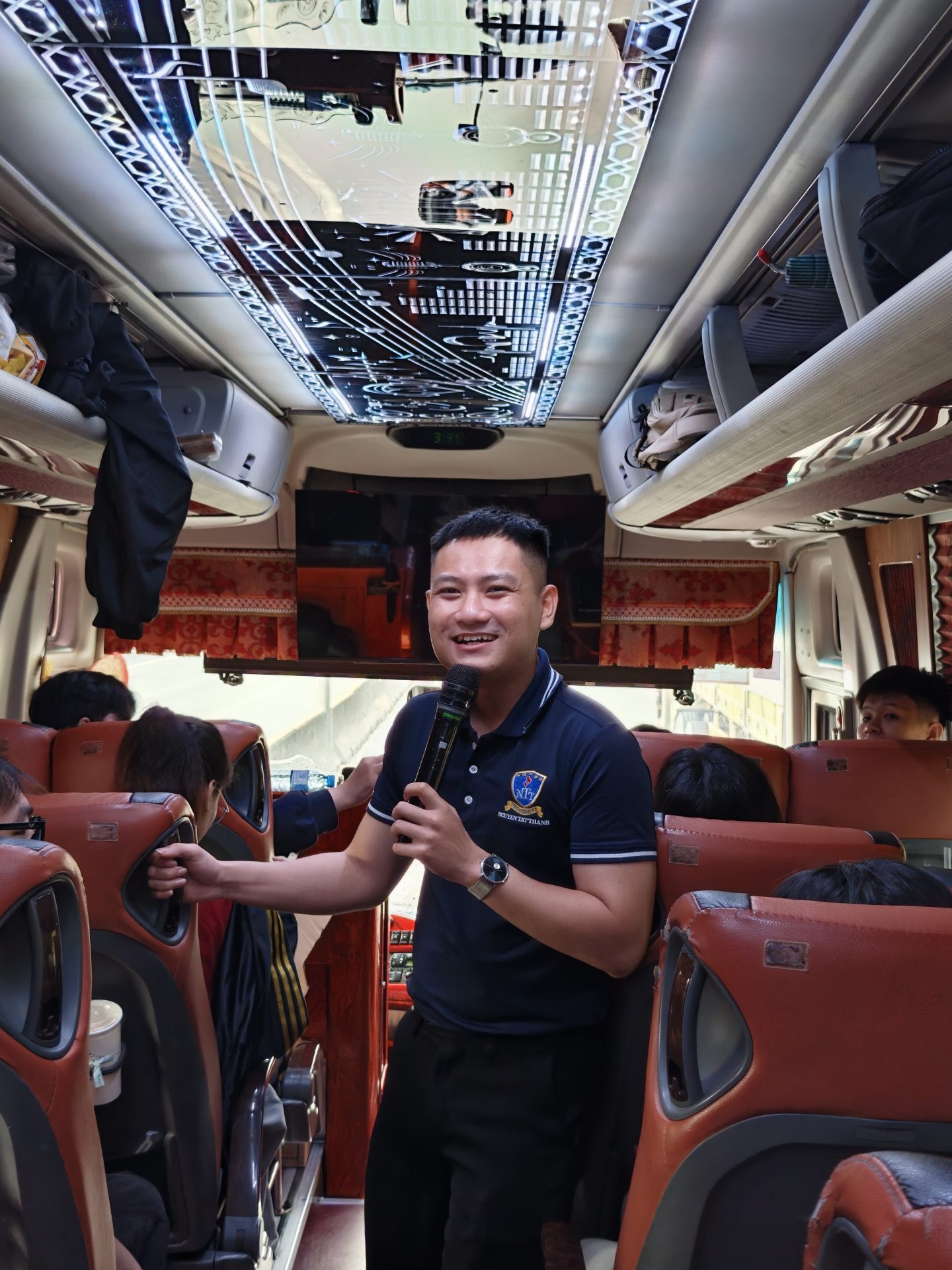
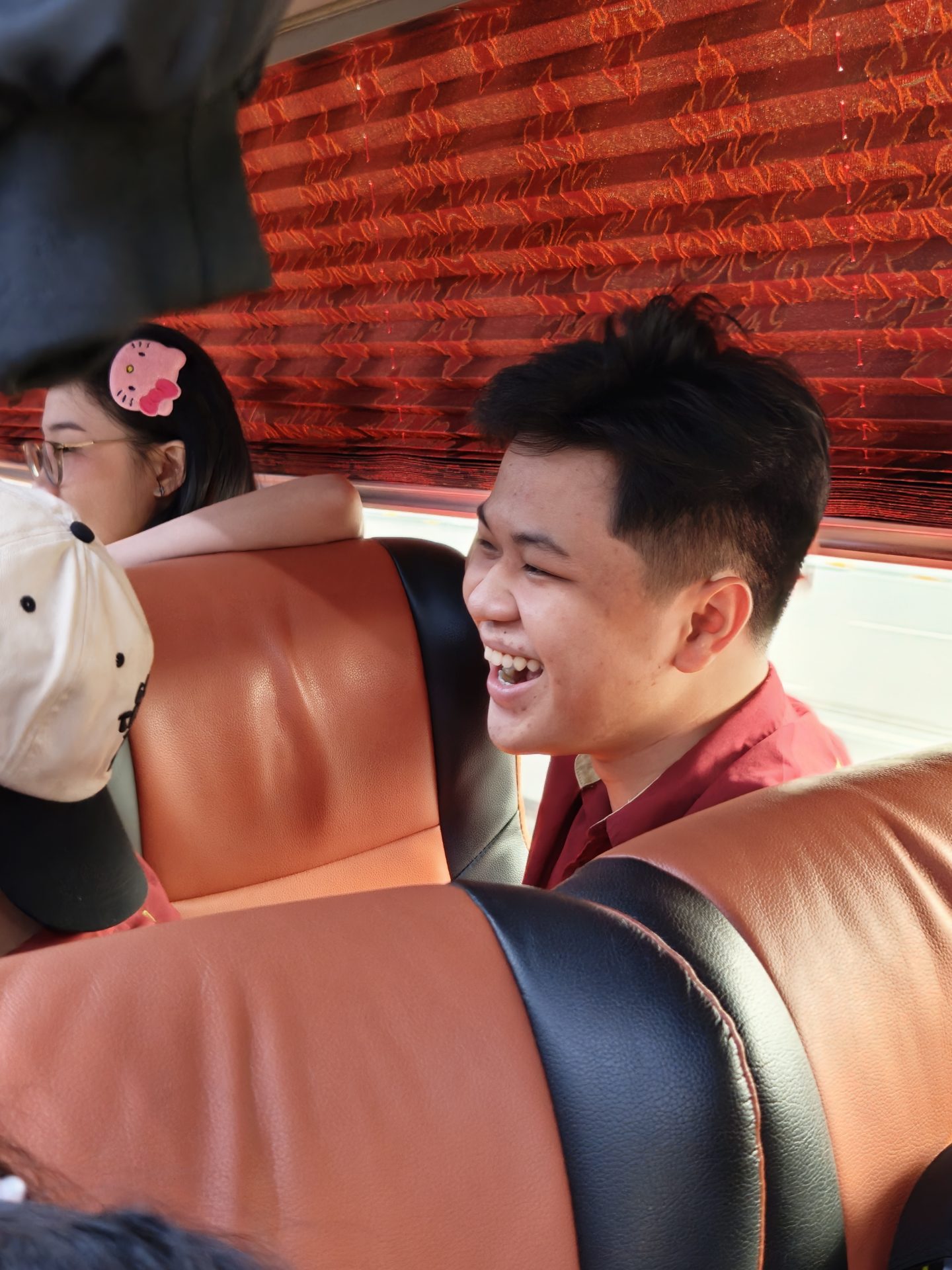
On-bus minigames help students review knowledge about Ho Tram, hotel management, tourism resources, and sustainable tourism development trends
Learning resort operations from the customer’s journey
At Seava Resort Ho Tram, students were given an overview of the operating model, guest rooms, restaurants, swimming pools, event spaces, and guest services.
From their observations, they cross-referenced what they learned about front office, housekeeping, F&B, reservations, and customer care. Contents that were usually approached separately in lectures became concrete when students saw how departments coordinate during guest service delivery.
A vacation does not just begin when guests check in. Visitor experiences are shaped from searching for information, booking services, arriving at the accommodation, using amenities, until completing check-out procedures.
During their time at the resort, students both used services in the role of tourists and observed from the perspective of hospitality trainees. Spatial arrangements, communication attitudes, response times, amenity convenience, and cleanliness all became details for them to note and compare with professional knowledge.
This dual perspective helped students understand that service quality is not created by the front office, housekeeping, or F&B departments alone. It is the result of coordination among multiple positions throughout the customer journey.
Specialized content continued to be reinforced through a post-dinner minigame. Each team took turns conveying keywords through gestures, without using words or sounds, for the final member to guess the answer.
Terms like Front Office, Housekeeping, Concierge, Reservation, Check-in, and Room Service were thus transformed into lively scenarios. The activity created a fun atmosphere while helping students review specialized vocabulary and train their communication and teamwork coordination skills.
Nguyen Minh Dung, a Hotel Management student, shared: “Before the trip, I usually studied front office, housekeeping, or customer care as separate topics. When observing at the resort, I realized a single guest request can involve multiple departments. Just poor guidance or feedback can affect the overall impression. The trip helped me understand the profession better and realize I need to further train my observation, communication, and problem-solving skills.”
Besides exploring operations, students also participated in team-building games on the beach such as tug-of-war, sack racing, and cooperative challenges. These activities provided opportunities for learners to practice communication, task delegation, and team spirit – essential competencies in a hotel environment where individual work is always tied to collective efficiency.
The time spent using the pool, swimming in the sea, and enjoying the resort space also allowed students to directly experience the product from a customer’s viewpoint. The next morning, they continued to experience the buffet breakfast, observe service styles, and use amenities before checking out.
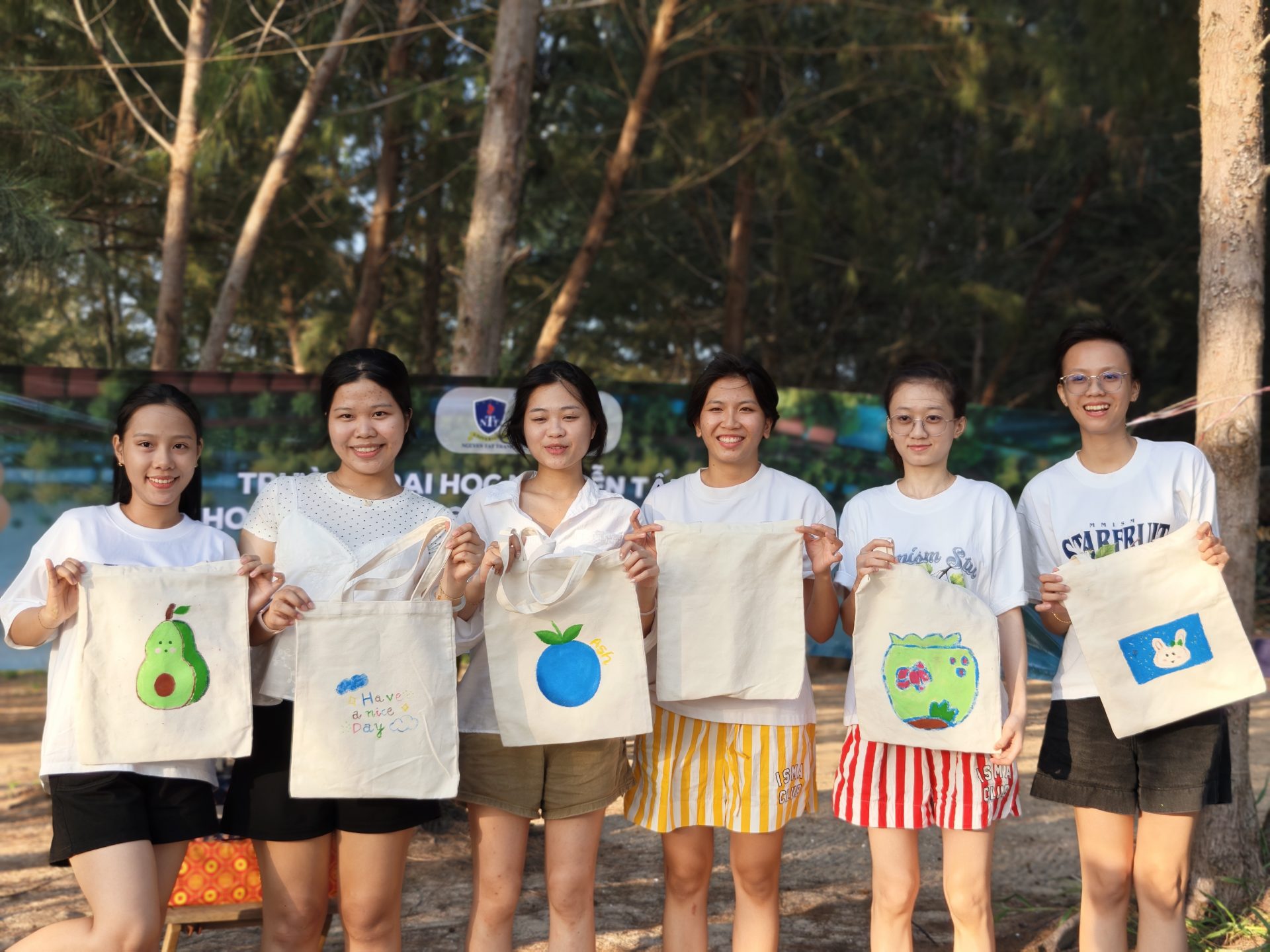
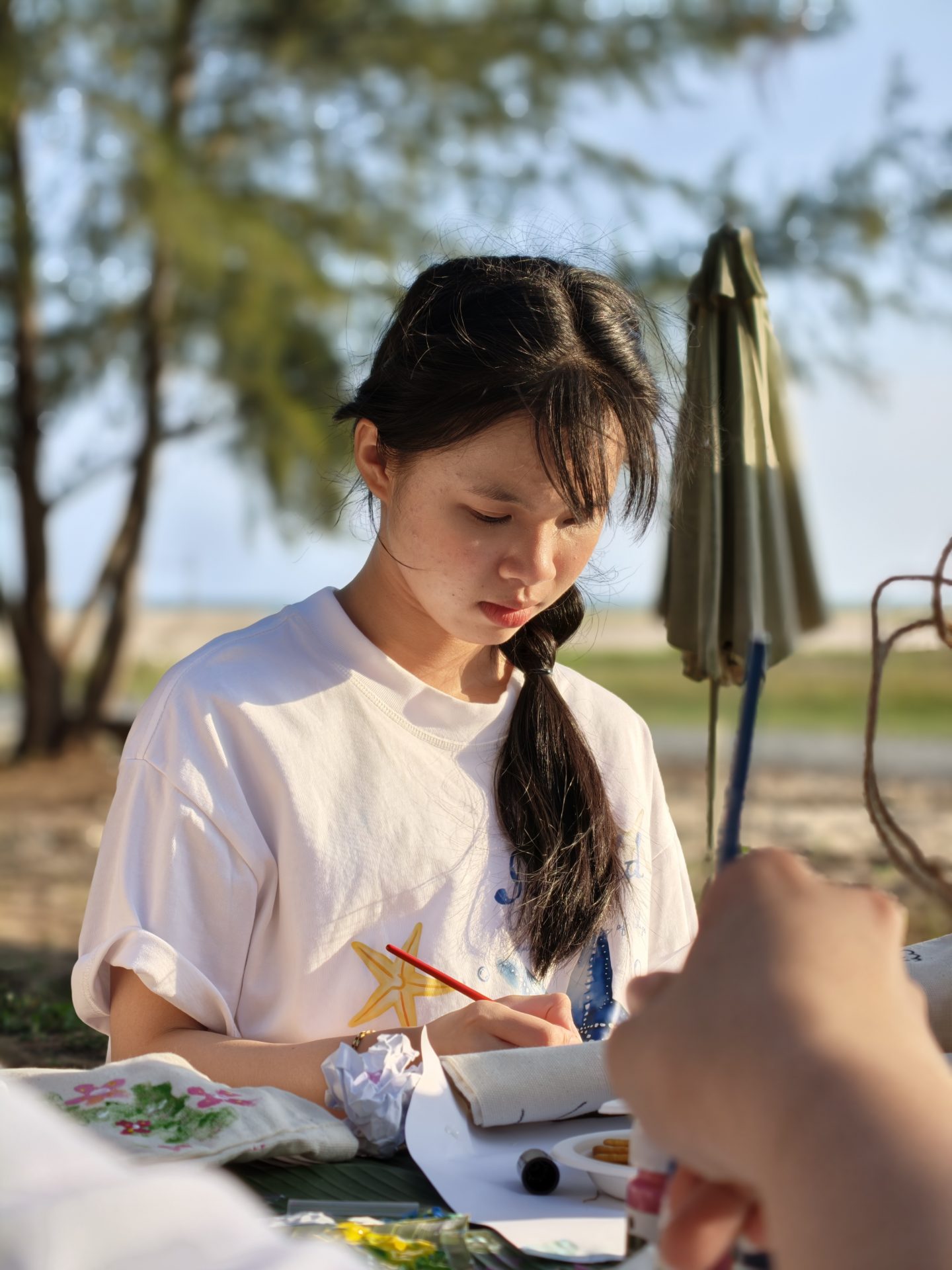
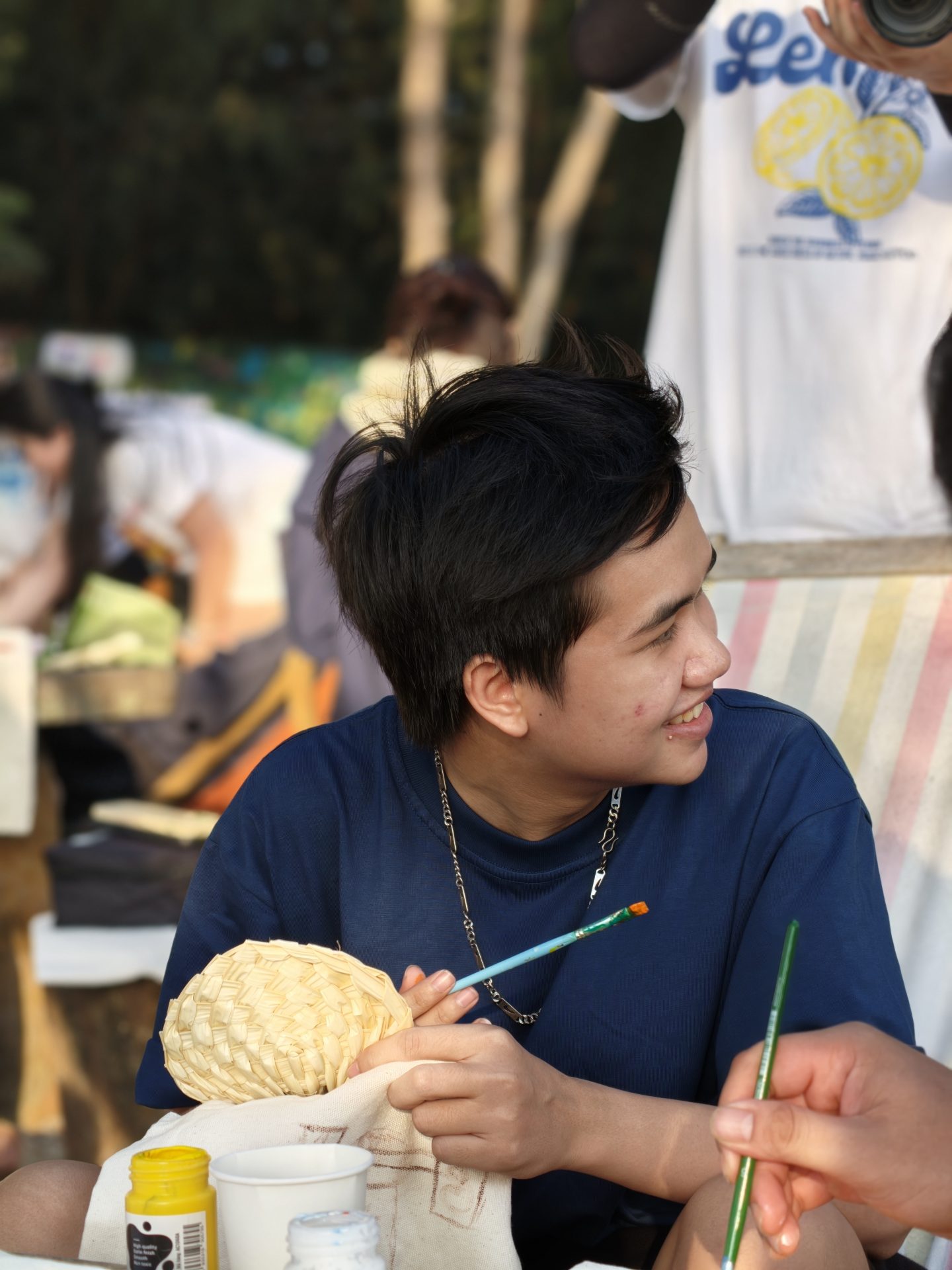
Students manually decorate fabric bags with motifs inspired by the sea and nature, thereby spreading the message of limiting single-use products and connecting tourism-hospitality activities with environmental protection responsibilities
From destination resources to the story of sustainable development
Before arriving at the resort, the group stopped at Binh Chau Hot Spring Tourist Area. Here, students visited the hot spring area, soaked their feet in warm mineral water, and experienced boiling eggs using natural water sources.
These activities helped learners observe how a natural resource is developed into various products to serve visitors. From the destination’s characteristics, businesses organize spaces, build services, and create additional resort-attached experiences.
Through the tour, students gained more basis to identify the relationship between resources, tourist demands, and how tourism products are formed. A destination with natural advantages still needs to be organized and exploited appropriately to maintain long-term appeal.
Conversely, tourism activities without control can put pressure on landscapes, water sources, and the environment. Therefore, hospitality practitioners must not only care about business performance but also consider the responsibility of protecting resources and community benefits at the destination.
This story was further explored in a fabric bag decoration workshop. Under the guidance of the organizers, students hand-crafted personalized bags with motifs inspired by the sea, nature, and the journey in Ho Tram.
From a handicraft activity, the program expanded into a space for exchanging views on exploiting and preserving resources in tourism development. Issues such as limiting single-use products, reducing environmental impacts, and maintaining the natural value of destinations were placed in connection with accommodation operations.
Through this, the concept of “sustainability” did not stop at environmental protection calls. For Hotel Management students, it is also an issue associated with organizing services, utilizing resources, and building responsible experiences for visitors.
Combining resource surveys, accommodation observations, and creative activities prevented the program from separating environmental factors from professional practices. Students approached sustainable development through situations close to their future jobs rather than just memorizing class definitions.
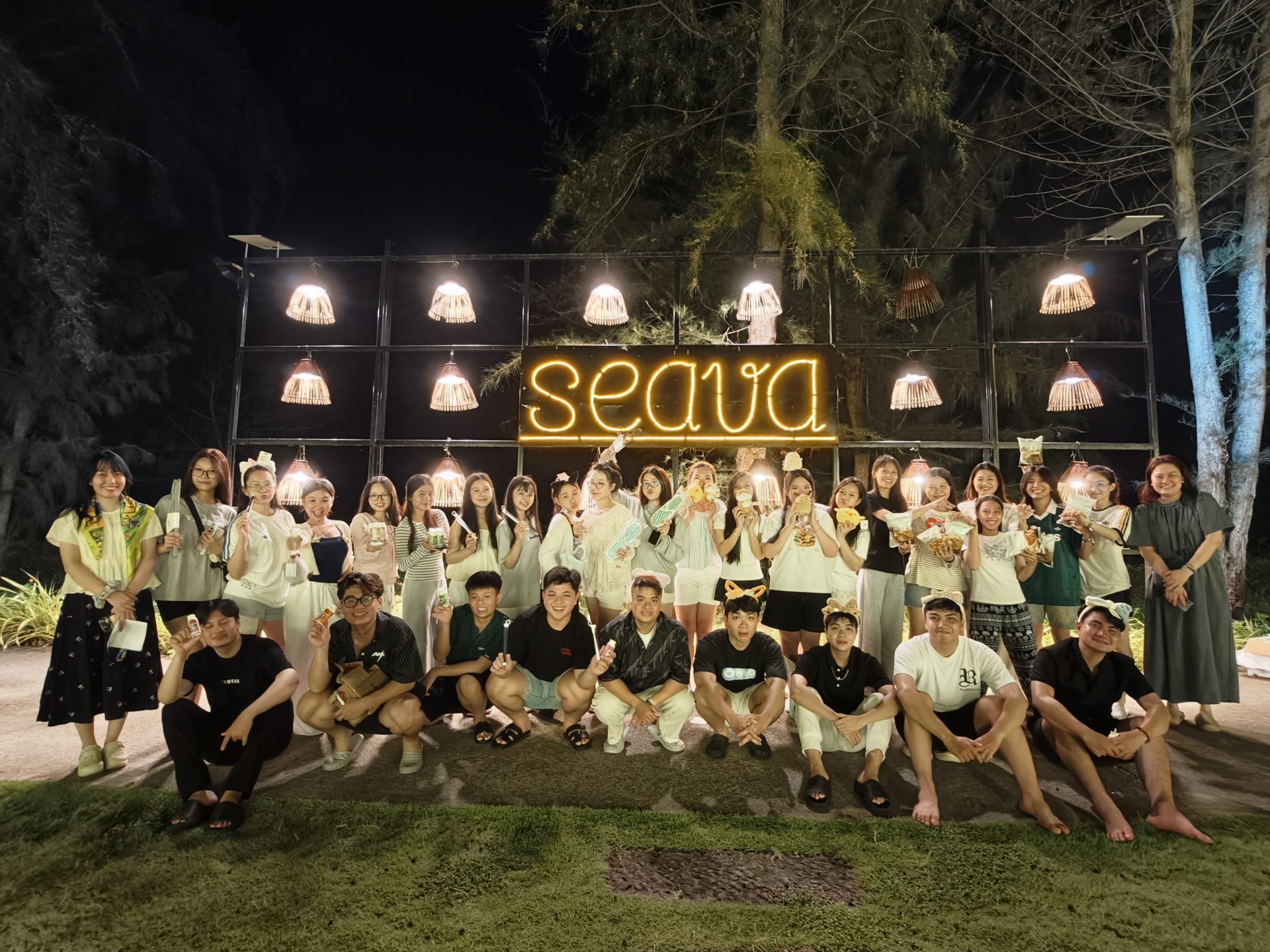
Team activities at Resort Tour 2026 contribute to increasing the connection among Hotel Management students on an out-of-classroom learning journey
From resort to homestay: Each model, a different way to create experiences
On the return journey to Ho Chi Minh City, the group continued to explore a homestay model. Approaching an additional small-scale accommodation type gave students a basis for comparison with the resort experienced earlier.
Through both models, they initially identified differences in scale, utility systems, customer groups, and service organization methods. While resorts usually integrate many utilities into a centralized space, homestays can create impressions through intimacy, local ambiance, and the ability to connect visitors with local life.
Such differences show that Hotel Management is not limited to large hotels or resorts. Each accommodation type targets a specific customer segment, operational approach, and method of building experiences.
Practitioners therefore not only need to master reception or service skills. The job also requires the ability to understand customers, organize personnel, control quality, coordinate among departments, handle situations, and efficiently utilize accommodation resources.
Thai Thanh Dat, a participating student, shared: “What I remember most is observing the resort and homestay on the same journey. The resort has many synchronously organized utilities, while the homestay creates an intimate feeling and reflects local elements more clearly. Through this, I understand each accommodation model has different customer groups and operational ways. The trip helped me visualize the job I can pursue later more concretely.”
The journey also featured a culinary experience with squid hu tieu. More than just a dining stop, the local dish helped students better feel the relationship between cuisine, culture, and visitor experiences at the destination.
After two days and one night in Ho Tram, students gathered practical data to cross-reference with knowledge about front office, housekeeping, cuisine, customer service, and accommodation management.
Binh Chau helped them observe how natural resources are developed into tourism products. Seava Resort Ho Tram opened up perspectives on resort operations and customer journeys. The homestay model added comparisons regarding scale, segment, and local factors in accommodation business.
Connecting multiple destinations in a single journey demonstrates how the Faculty of Tourism at Nguyen Tat Thanh University expands learning spaces for Hotel Management students. Learners do not have to wait until their internship to start approaching the service environment; instead, they observe, question, and form professional mindsets right during their studies.
From the findings on the trip, students gained more basis to identify competencies to improve and proactively prepare for positions in front office, housekeeping, F&B, sales, customer care, and accommodation management.
Resort Tour 2026 thereby contributes to materializing the practical training orientation of Nguyen Tat Thanh University, helping Hotel Management students gradually understand the profession, hone skills, and prepare their mindset before entering the working environment.
Lecturer Ho Nhat Tien – Faculty of Tourism
Cam Thach – Communication Department